As electronic medical records and secure online portals grow, patients are gaining ready access not only to laboratory findings but also to clinicians’ notes. Certain health care providers with EHR systems give their patients direct access to their health information online, which enables patients to keep better track of their care, and get their questions answered immediately, rather than having to wait hours or days for a returned phone call. Quick and easy communication between patients and physicians can also help the latter identify symptoms earlier.
The Washington Post recently reported on an experimental program at Beth Israel Deaconess Medical Center’s pilot project aimed at providing behavioral health patients electronic access to their therapy notes. From March 1, this Boston healthcare center began providing patients with electronic access to their mental health notes written by their psychiatrists, psychologists and social workers.
All 15 clinicians in the hospital’s psychiatry department are participating. Ten percent of their patients (350 people) were offered access to their notes. These patients can access the encryption-protected notes through a secure portal and can read them on their home computers.
According to an article published in the Journal of the American Medical Association (JAMA), primary care patients report that reading their doctors’ notes brings many benefits including greater control over their health care. Though they do worry about EHR and loss of privacy, they thoroughly support making their records more available to them and even to their families.
The pilot project at Beth Israel has urged a debate among mental health professionals as to whether patients should be given electronic access to their psychiatry notes. Some clinicians are wary about the effects that this could have on patients and lead them to misinterpret the notes and believe that their therapist has judged them unfairly. However, supporters of the idea argue that sharing these notes would provide many benefits:
Reduces the stigma and isolation of mental illness
Boosts patients’ self-image
Empowers patients to change their behaviors in positive ways
Beth Israel has made outpatient medical notes available since July 2013 and all except a few of the hospital’s 800 doctors use the system. The physicians who participated in the program did not see many changes in their workflow because they were not overwhelmed with questions from their patients. Moreover, when it comes to documentation, professional psychiatry transcription services can always provide the necessary support.
Though opioid therapy is used to treat chronic pain, accurate and complete documentation of pain management is imperative to reflect the appropriate and legitimate use of controlled substances (substances having the potential for abuse) like opioids, especially when there is increased pressure from regulatory agencies regarding the continuation, or even initial use, of opioids in pain patients. Four domains have been proposed as most appropriate for ongoing monitoring of chronic pain patients who are on opioids — pain relief, side effects, physical and psychosocial functioning, and the occurrence of any potentially aberrant (or non-adherent) drug-related behaviors. These domains are summarized as “4 A’s” and are vital data to enter in the medical record as they provide a framework for the appropriate documentation via a medical transcription service or an EMR of the clinical use of controlled drugs including opioids.
It is required to address and document the “4 A’s” during each visit. The four A’s are the following:
Analgesia
This refers to the effectiveness of pain control. It is possible to set up realistic analgesia goals in the treatment plan. The log of pain levels of the patient with various treatments can then inform management decisions.
Activities
These include activities of daily living and functional activities. The latter activities are chosen according to the patient’s input and they are individualized based on their particular goals. The goals might include the ability to work, engage in hobbies, develop and maintain relationships, be active in home, complete therapy or progress towards life goals.
Adverse Effects
This represents side effects from medicines. It is particularly important since opioids can cause sedation, respiratory depression, constipation and other adverse effects that can result in dangerous complications.
Aberrant Drug-related Behaviors
This domain must be assessed as well as documented in a consistent manner for all chronic pain patients. With urine drug tests, you can provide evidence for or against diversion and use of other substances of abuse. At the same time, through a review of your state’s controlled-substance database, you can provide evidence for or against doctor-shopping.
If there arise issues with any of the parameters related to the 4 A’s mentioned above, they should be managed as soon as possible according to the treatment plan or the plan should be modified based on the physician’s best judgment. The 4 A’s facilitate better communication between chronic pain patients and their pain team and address any obstacles to improving outcomes in each domain. A patient who understands the legitimate use of opioids in medical practice should have a good outcome in all 4 A domains.
Patients often hesitate to disclose the details of their behaviors of which they are ashamed such as the use of illegal drugs, sharing medications and misuse of their prescribed medicines. If the patient fails to disclose the necessary information to clinicians, they will believe the patient is less than completely trustworthy. With careful documentation of 4 A’s in the context of Trust and Verify (physicians know everything about patient history) and appropriate treatment plan, physicians can end their struggle to enforce appropriate care at the right time.
Effective Documentation of 4 A’s
Pain Assessment and Documentation Tool (PADT) has been incorporated by clinicians in whole or part or they are using electronic health records designed to record the 4 A’s. It is a template and preliminarily validated chart notes based on 4 A’s. Though it provides a simple checklist approach to record all four domains and helps clinicians to assess and document their observation easily while treating chronic patients on opioid therapy, it has several imitations such as:
More studies are required to confirm the reliability as well as the validity of individual items and sections
Not possible to capture several characteristics of pain or domains that could be affected by pain and its treatment
Not intended to predict drug-seeking behavior, a quantitative approach to pain management or predict both positive and negative outcomes of opioid therapy
With an approach combining EHR and transcription, physicians can document the 4 A’s more effectively. In this approach, physician’s observations can be transcribed with the help of experienced and professional transcriptionists and then the transcribed data filled in relevant EHR fields. A quality assessment team can check the transcribed data before sending it to the electronic documentation system. This will ensure that the data within EHR is accurate. The combined approach can seize the benefit of narrative description as well.
Chart notes are dictated in various formats such as a History and Physical Examination (H&P) report with similar headings and less depth, as a single paragraph with few sentences, or using SOAP format. Most physicians rely on medical transcription services to ensure accurate and timely patient records.
Benefits of the SOAP Format
Created by Dr. Lawrence Weed in the 1960s, SOAP expands to Subjective, Objective, Assessment and Plan and medical transcriptionists transcribe chart notes with these letters as headings. The SOAP note allows healthcare professionals to assess, diagnose, and treat patients. It helps organize information about the patient’s health status and facilitates communication among health professionals. The SOAP format as it can be tailored to any kind of study or study visit. Its structured documentation provides a checklist and a reference for understanding the patient’s record. SOAP notes are used by almost all healthcare professionals, ranging from medical doctors, to dentists, psychologists, nurses, emergency medical technicians and veterinary practitioners.
Streamline Your Medical Documentation with Our Transcription Services! Contact Us Today
Description of the SOAP Note
Here is a detailed description of the SOAP acronym along with an example of a SOAP Note for a substance use case:
Subjective – The Subjective section of the SOAP note is where healthcare providers document the subjective information provided by the patient or their caregiver. This section focuses on the patient’s personal account of their symptoms, medical history, and other relevant subjective information that cannot be directly observed or measured. Medical history focuses on any current or past conditions The Chief Complaint (CC) or presenting problem is reported by the patient. This can be a symptom, condition, previous diagnosis or another short statement that describes why the patient is presenting on the day. This section describes how the patient has been doing since the last visit and also includes the current visit. It may include no complaints (I feel good) from the patient and specific current complaints (I have low back pain) as well as the complaints (I had diarrhea a few weeks ago) that occurred in the interim and have been resolved. S: Mr. X has been well since last visit and reports no complaints today. He states that he has not used any drugs since the last visit including IV drugs. Current medications and allergies may be included under the Subjective or Objective sections.
Objective – The objective section includes vital signs such as temperature, blood pressure, pulse and respiration, documentation of the physical examination performed, results of laboratory or other studies done during the visit. This section may include a sentence or two about the relevant body part or refer to another document or stuffed with jargon, abbreviations and acronyms to make the documentation as small as possible, which the behavioral medicine transcription service provider should document exactly as dictated. Previous reports may have to be referred to in order to understand the terms. .O: T: 37 C (by mouth); BP: 130/68; P: 70; R: 14.
Exam of arms: well healed linear scars along the antecubital area.
Assessment – This section refers to short assessment of the patient by the clinician based on the subjective information and objective findings gathered earlier. A: 40-year old man enrolled in HPTN XYZ. No evidence of current IV drug use.
Plan – The Plan section of the SOAP note is where healthcare providers outline the course of action for the patient’s care. It includes the recommended treatment plan, management strategies, and any follow-up actions. The Plan section is based on the assessment and diagnosis made in the previous sections of the SOAP note, namely the Subjective, Objective, and Assessment sections. P: Continue with counseling sessions. Client is scheduled to return for Visit 7 on November 12. Client is also reminded to contact or return to clinic if there are any problems before that date.
The assessment and Plan section can be separated or combined (A/P). It is not necessary to number multiple diagnoses unless specifically requested. Also, the transcriptionist does not need to expand diagnoses acronyms in SOAP notes as in other reports. Some dictators may use different sets of abbreviations to refer the same thing such as:
CC: Acronym for chief complaint, equivalent to subjective
PX or PE: Shorthand for physical examination, equivalent to objective
DX: Abbreviation for diagnosis, equivalent to assessment
RX: Abbreviation for prescription, in this case prescribed treatment plan
Sometimes, a physician/nurse may leave certain sections or mix and match headings (for example, the Chief Complaint may be dictated in place of or in addition to Subjective). Headings dictated should be transcribed unless there is a specific instruction to do otherwise.
It is also important to note that there may be certain differences in the information added in SOAP notes in different clinical settings. For example, the Lachman test, a special orthopedic test for ACL injury, may be added to the Objective section by the physical therapist or orthopedic doctor, but not by a nurse.
Outsource Medical Transcription — Ensure Documentation Accuracy
Medical documentation has evolved over the years to meet various needs, leading to longer and more comprehensive medical notes compared to the past. With the shift towards electronic documentation, medical notes have transitioned into digital formats to accommodate these changing requirements. However, note bloat is an unintended consequence of electronic documentation, leading to overwhelming amounts of data to be incorporated into the notes. This can burden busy clinicians and pose risks if the information is not relevant or accurate, potentially leading to harm for the patient. Partnering with a competent medical transcription company can ease the documentation burden for physicians, ensure clinical note accuracy, and allow physicians to focus on patient care.
In view of improved productivity and other benefits, most physicians and health care facilities are increasingly outsourcing their medical transcription work. However, a major worry is on maintaining the security and confidentiality of the patient data. To resolve this, established medical transcription service providers are taking several measures to safeguard sensitive client data with cloud-based solutions – hosted transcription services hosted through a secure Internet connection.
FTP servers are used for data storage and access. With the help of a username and password, clients can access the transcribed documents and make changes if needed. Here are the other benefits of the use of cloud-based technology for medical transcription:
Secure data transmission is assured. Safety with the transfer of any documents is guaranteed and HIPAA guidelines are met while sending, sharing and retrieving voice and data files over the Internet through authentication protocols, encryption, and stringent software-based security measures.
The technology infrastructure is scalable to meet customer demands. Easy integration to EMR/EHR is also possible with cloud-based solutions.
Improved accessibility of data is the highlight of this advancement. Easy interaction with co-workers is possible by simple sharing of data despite time and location.
Transcription would be simple to manage and execute when it is cloud-based, which in turn, enhances the efficiency of the overall process.
The healthcare facility that uses cloud-based transcription will experience great cost savings and higher return on investment within a short time. There is no need to purchase or maintain hardware and software as the cloud provider offers the user these resources and high scalability. Resources are flexible to meet changing client needs. This lowers risks especially during a time of peak demand.
As it is well structured, the transcribed documents are easily accessible within at any time, which improves information management.
Choose an established medical transcription company with a good track record to make the most of cloud-based services.
Though cloud-based EHR systems help to access real-time patient data from multiple locations to enhance clinical documentation and are affordable, there are several risks associated with them. In an EHR system, patient documents are stored on external servers which can be accessed via the web using a computer with Internet connection. You will always have to depend upon cloud vendors to access EHR data and create backups. This reduces your control on data, which leads to potential risks. Let’s take a detailed look at the major risks and how to manage them.
Even though you will require only a monthly subscription for a cloud-based EHR system unlike the system that needs to be updated and upgraded every 5 or 6 months, the following risks exist for a web-based system.
EHR Errors – There are several kinds of EHR vulnerabilities such as fault data entry (50 inches as 50 centimeters), unexpected conversion (4.5 as 45), selection of wrong file or field or repeated mistakes, which may lead to serious medical errors. As physicians constantly copy-paste data within the EHR to save their time without updating daily notes on patients, the minor errors are duplicated and transform into major errors. In the case of a cloud-based EHR, these kinds of errors will spread to all other documents in no time. Once this happens, it will be difficult for you to track the errors and your entire system will remain faulty. Transcribing physicians’ dictations into accurate documents with the help of professional transcriptionists or transcription services and populating the EHR fields with that data through discrete reportable transcription (DRT) technology is the best way to avoid this dilemma.
Internet Failure – Since the cloud-based EHR data is accessed via the web, Internet failure will drastically affect the entire working process. It was reported that in a recent Internet brownout, a number of small physician practices and clinics could not access the Practice Fusion (a free web-based electronic health record company) site and many of them sent their patients and staffs home. As it was not possible to log in to their system, physicians had no information about the patients, their problems or their co-pay involved. Canceling an entire day’s patient visits resulted in considerable financial loss to the practices.
Data Security – Data breach is the most serious risk with a web-based system since the data is controlled by a third party vendor. Your data resides on the same database server thousands of other users are using and patient information may be compromised. Moreover, cloud vendors can mine your clinical data and even sell them to other companies. As per the HIPAA Security Rule, cloud vendors are allowed to create, receive, maintain or transmit electronic personal health information on behalf of a practice only if it has obtained satisfactory assurances that the vendor will safeguard the information in an appropriate manner. Apart from making an HIPAA-compliant contract, you should also include the following things in the contract:
When and how your practice has access to the data and how to obtain that access
How security is assured
Where data backups are stored, how often they are stored and how they are accessed
If the data is stored offshore, what local rules and laws pertain to data security
How frequently the services need to be upgraded and how common downtime is
A 2012 report by the Centers for Disease Control and Prevention says that around 41% of healthcare providers were using cloud based EHR systems in their practice while a study by MarketsandMarkets points out that cloud computing would grow by 20% in healthcare until 2017. As cloud-based EHR adoption is increasing, there is an urgent need for practices to become aware of these risks and take efforts to manage them.
The pressure for EHR (Electronic Health Record) adoption is increasing, thanks to the incentives assured and warnings of reimbursement cuts. Though electronic clinical documentation is said to reduce the relevance and significance of medical transcription, the truth is that EHR has altered the process of transcription, particularly the role of medical transcriptionists (MTs). The most significant impact is the transition of MTs to editors. Let’s take a detailed look at how the role of MTs is changing with widespread adoption of EHR.
While transitioning to an EHR system comprised of point-and-click templates, physicians face several challenges. The templates make them slow down since they have to spend more time for documentation; they lose the quality in the narrative with pre-filled templates; and errors occur while copy-pasting notes. Medical transcriptionists usually flag errors such as wrong drug names, inconsistent findings, dosage and more for physicians to review during their job. Due to this editing step, the transcribed notes would have maximum accuracy when completed. So, even with an EHR system, busy physicians can benefit from the service of medical transcriptionists and ensure that the data within the system is accurate.
Transition to Editors – A Detailed View
EHRs have the ability to interface directly with transcription platforms to parse data. Static information snapshots or flat files that were created by transcription are now replaced with discrete data fields. Now, dictation software having advanced speech recognition capability is required to ensure greater efficiency in data transfer. With speech recognition system, there is no need for a typed document. As a result, medical transcriptionists now edit the medical documents instead of creating them. Since admission, transfer feeds, discharge and clinical dictation can be integrated between systems, patient demographic information can be systematically merged for editing, which also speeds up the turnaround times.
NLP (natural language processing) technology used at present has the capability of understanding spoken dictation and converting it into electronic text that can be parsed and mapped to particular data fields. NLP technology in combination with transcription management software helps providers to integrate dictation into the EHR, based on pre-defined templates that decide where the data should be entered within the electronic record. Professional transcriptionists serving multi-facility systems or outsourced transcription firms will find this system extremely useful. They need not spend time formatting clinical narratives to meet the specific requirements of each hospital. Since formatting is handled by the software, tangible benefits gained include faster turnaround time, excellent productivity and improved standardization.
The Changing Face of Medical Transcripiton
A survey conducted by the American Health Information Management Association and the Association for Healthcare Documentation Integrity in 2013 found that new speech and language processing technologies has led to a fundamental transformation in the way transcriptionists work and around 87 percent of respondents are preparing for new ways of doing things. The survey also revealed that the two major roles into which transcriptionists are transitioning are chart integrity auditor and EHR technician/HIM analyst whose role is to perform direct documentation into the EHR and auditing for accuracy and completeness.
On the whole, medical transcriptionists still play a significant role in medical record documentation. In the backdrop of widespread EHR adoption, the service of skilled transcriptionists will help practices ensure that their electronic health records are accurate. Practices should either give proper training to their transcriptionists to adapt to the advanced technology or obtain support from professional transcription companies that offer the service of transcriptionists skilled in EHR transcription for accurate and complete electronic documentation.
Accurate documentation plays a central role in delivering structured, evidence-based care for patients with obesity. As healthcare providers continue to adopt preventive counseling programs, the need for precise record-keeping becomes more important than ever. Medical transcription services support this process by converting detailed clinical discussions into structured, compliant records that align with regulatory and reimbursement standards.
Intensive behavioral counseling documentation is not limited to recording a patient’s weight or diet plan. It reflects the clinical reasoning underlying treatment decisions, the counseling strategies applied, the duration and frequency of sessions, measurable goals, patient progress, and follow-up plans. Without clear documentation, even well-delivered counseling interventions may not meet compliance or reimbursement requirements.
Understanding Intensive Behavioral Counseling Documentation for Obesity
Intensive behavioral counseling is recommended for overweight and obese patients to encourage sustained weight loss through high intensity interventions on diet and exercise. This approach not only supports long-term weight management, but is also necessary for the prevention or early detection of illness or disability (for example, type 2 diabetes, sleep apnea) associated with obesity.
Intensive behavioral counseling for obese patients typically includes structured sessions focused on nutrition, physical activity, behavior modification, and goal setting. These sessions may occur weekly or biweekly during the initial phase and transition to maintenance visits over time.
Healthcare providers assess body mass index (BMI), evaluate comorbidities, review lifestyle habits, and develop individualized treatment plans. Each interaction contributes to the patient’s longitudinal health record. Therefore, documenting every stage of the counseling process is essential for continuity of care.
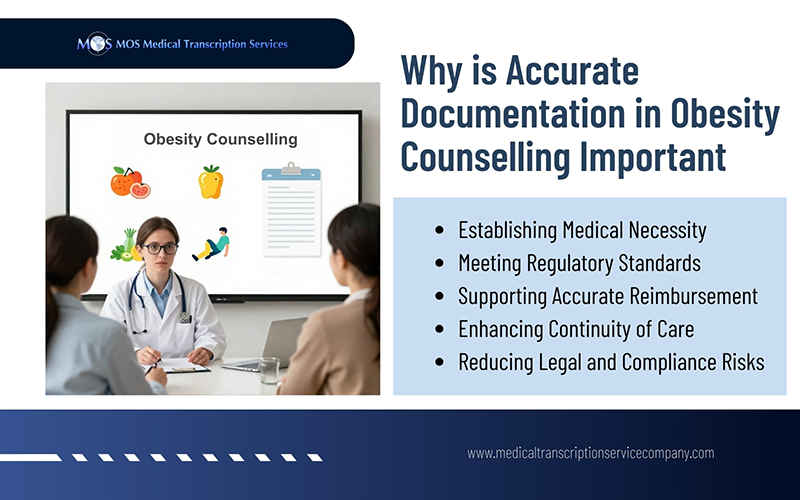
Importance of Accurate Documentation in Obesity Counselling
Establishing Medical Necessity
Clear records demonstrate that counseling services are clinically justified. Documentation should include:
Patient BMI and obesity classification
Risk factors and related comorbidities
Rationale for initiating behavioral therapy
Evidence of patient engagement
Without this information, the medical necessity of services may be questioned during audits or claims review.
Meeting Regulatory Standards
Healthcare providers must adhere to established behavioral counseling documentation requirements set by payers and regulatory authorities. These often include:
Duration of each counseling session
Frequency of visits
Specific behavioral interventions provided
Documentation of patient progress
Incomplete documentation may lead to claim denials or compliance concerns. Proper documentation ensures that services delivered align with defined coverage criteria.
Supporting Accurate Reimbursement
Reimbursement for intensive behavioral therapy depends on correct coding and supporting documentation. When obesity counseling medical records clearly reflect the scope and frequency of services, billing teams can confidently assign appropriate codes. Documentation should specify:
Time spent in face-to-face counseling
Type of intervention (nutrition counseling, activity planning, behavioral strategies)
Measurable outcomes
Follow-up schedule
Structured documentation minimizes revenue cycle disruptions and reduces the risk of denied or delayed claims.
Enhancing Continuity of Care
Obesity management is rarely a short-term intervention. Patients may require ongoing counseling, monitoring, and coordination with other specialists. Accurate clinical documentation for obese patients ensures that each provider involved in care has access to:
Baseline metrics
Documented lifestyle goals
Response to prior interventions
Adjustments to treatment plans
This continuity supports consistent decision-making and avoids duplication of services.
Reducing Legal and Compliance Risks
Incomplete or vague documentation may create vulnerabilities during internal audits or external reviews. Providers must demonstrate that counseling sessions occurred as documented and that treatment plans were individualized.
Comprehensive and structured records strengthen accountability across clinical, billing, and regulatory processes. Ensuring compliance through proper obesity counseling documentation not only supports reimbursement and audit readiness but also reinforces consistent, high-quality patient care.
Challenges in Intensive Behavioral Counseling Documentation for Obesity
Intensive Behavioral Counseling (IBC), also known as Intensive Behavioral Therapy (IBT), is a recommended intervention for obesity management. However, documenting these services remains a major challenge in primary care settings.
Complex Billing and Reimbursement Requirements
Under guidelines from the Centers for Medicare & Medicaid Services, providers must document BMI thresholds, session duration, face-to-face counseling, and measurable weight outcomes to qualify for reimbursement. Even minor documentation gaps can result in claim denials, discouraging providers from fully utilizing these services.
Inconsistent Obesity Diagnosis Documentation
Although obesity is recognized as a chronic disease by the American Medical Association, it is not always formally recorded in patient charts. Missing BMI entries or failure to code obesity properly can disrupt care continuity and affect eligibility for counseling services.
Time Constraints in Primary Care
Primary care visits are often limited in duration. With growing workforce shortages reported by the Association of American Medical Colleges, clinicians must manage multiple chronic conditions, leaving limited time to both provide and thoroughly document behavioral counseling.
Detailed Counseling Documentation Burden
IBC documentation requires recording lifestyle advice, behavioral strategies, patient goals, and follow-up plans. Capturing these structured details within electronic health records can be time-consuming and workflow-disruptive.
EHR and Workflow Limitations
Many systems lack standardized templates for obesity counseling. According to initiatives led by the Office of the National Coordinator for Health Information Technology, structured documentation is essential for coordinated care, yet implementation varies widely.
Care Coordination and Communication Gaps
Obesity management often involves multidisciplinary teams. Incomplete documentation may lead to miscommunication between providers, delayed referrals, or overlooked comorbidities.
This is where expert medical transcription support comes in. Working with a specialized HIPAA- compliant medical transcription company can ensure accurate, detailed, and compliant Intensive Behavioral Counseling documentation, helping providers capture all required elements for proper reimbursement and quality reporting.
The Role of Medical Transcription Services in Behavioral Counseling Documentation
Intensive behavioral counseling sessions often involve detailed conversations about lifestyle habits, psychological triggers, and patient-specific challenges. Capturing these nuances during or after a busy clinic schedule can be challenging for providers.
Medical transcriptionists assist by:
Converting recorded counseling sessions into structured documentation
Organizing notes according to established templates
Ensuring clarity and consistency in terminology
Reducing documentation backlog
By delegating documentation tasks, clinicians can focus more on patient interaction while maintaining complete records. Professional medical transcriptionists format reports to align with clinical and billing standards, supporting both compliance and operational efficiency.
Enhancing Obesity Counseling Documentation with AI-Powered Transcription
Advancements in artificial intelligence (AI) are influencing the way clinical documentation is created and managed. AI-driven transcription tools can:
Convert speech to text in real time
Identify medical terminology accurately
Suggest structured templates
Flag missing documentation elements
For intensive behavioral counseling, AI tools can streamline note creation by capturing session duration, intervention types, and patient goals automatically. These systems support faster turnaround times and strengthen documentation practices, helping to maintain quality standards in patient care.
However, human review remains important to ensure contextual accuracy, especially when documenting nuanced behavioral discussions. A hybrid approach that combines AI technology with trained transcription professionals can enhance efficiency without compromising compliance.
Ensuring high-quality behavioral documentation ensures that clinical decisions, patient progress, and treatment outcomes are clearly recorded. By integrating reliable documentation processes and leveraging medical transcription services, healthcare providers can maintain consistency, improve workflow efficiency, and support regulatory adherence.
Simplify behavioral health and obesity documentation with smarter transcription support.
Accurate recordkeeping and careful documentation are an integral part of efficient nursing practice. However, mistakes may happen while attending several cases a day and documenting the details of each patient quickly. Even though electronic health records (EHR) offer an opportunity to document such details easily with pre-filled templates and fields, there is a great chance to make errors. The better way to avoid errors in documentation is to adopt a combined approach that involves both EHR and transcription. An efficient quality assessment team is also essential in addition to this.
Crucial Nurse Charting Mistakes
Here are some top mistakes that must necessarily be avoided in nurse charting as per the Nurses Service Organization (NSO).
Not Recording Important Health Information – You should record every patient’s food and drug allergies, diseases, and chronic health problems on the admission sheet and in the nurses’ notes so that the physicians receive the right information about the patient’s condition and provide proper treatment or advice. If you neglect to record the patient’s allergy to a particular medicine, the physician will assume that the patient is not allergic to that medicine while administering it and that may lead to severe complications.
Not Recording All Nursing Action – It is required to document everything you do for a patient on the chart. For example, if a nurse finds drainage with the surgical wound and could not document the dressing changed, the care provider will think the dressing has not been changed and change it again unnecessarily. Use the hospital’s standard flow sheet and ensure that all nursing actions are documented.
Not Specifying Given Medications – Every medication given should be documented by the time it is given along with the dose, and route. Suppose a nurse gives heparin to a patient as per the order just before she went off duty and does not record that on the patient’s chart. When another nurse comes, she will find the order, but not see the indication of medication given as there is no record. As a result, the patient will be given another dose of heparin, which may lead to serious complications.
Documenting on Wrong Chart – This error happens often when there are two patients with the same name, same room, same condition or same doctor. If the doctor ordered administration of a medicine in a particular dose for one patient and the nurse mistakenly documents that order on the chart of the other patient with the same name, room, condition or doctor, it will surely cause complications to the latter patient as the wrong medicine may be administered incorrectly. It is better to assign a different nurse to each patient to avoid complications in such cases. The practice of flagging the patient’s names on charts as well as medication records is also effective.
Not Recording Discontinued Medication – If a patient is supposed to discontinue a medication owing to its adverse effects, that order must be documented promptly. Suppose a doctor suspects that his patient developed an ulcer due to the high doses of medication taken for arthritis and orders to discontinue that medication. If the nurse fails to record that order on the medication sheet, other caregivers will assume that this medication is still used and administer it as before, which will deteriorate the patient’s condition. It is important therefore to cross-check the doctor’s orders and the medication sheet before administering the medication.
Not Recording Patient’s Reaction to Treatment – In addition to monitoring the patient’s response to treatment or medication, it is very important to document an adverse reaction or a worsening of the patient’s condition. Otherwise, the physician may fail intervene at the right time and provide appropriate care to the patient. Report the new symptoms shown by the patients as they could develop into adverse reaction.
Documenting Orders Incorrectly – Not only should you promptly record the orders to discontinue medication, but also each and every order of the doctor. If the nurses make errors while transcribing the doctor’s orders, the end result may be the same as in the case of neglecting the order to discontinue medication.
Incomplete Records – Leaving blank spaces, lines or boxes on charts is not a good practice. It can confuse the physician or other nurses about a patient’s condition. Instead of leaving the records incomplete, draw a line on the blank space or write ‘Not Applicable or N/A’. Use abbreviations in the hospitals’ approved list to avoid unnecessary misunderstandings.
Electronic health records are considered to be more accurate and faster systems that free up nurses to spend more time with patients. However, actually nurses complain about several disadvantages of this system such as:
Some nurses believe that EHRs require extra time for documentation with endless logging in and out, duplicate entries, difficulty to find where to chart something, paging through unnecessary screens and increased mandatory documentation. Some of them say the system is slow and cumbersome and prompt them to chart not only what they did, but also what they didn’t do. In order to adjust the time for providing care to patients, many institutions ended up recruiting more nursing staffs.
Many healthcare providers adopt the practice of ‘copy-and-paste’ to save the time they lose unnecessarily for EHR documentation. But if someone copies and pastes data without verifying every word or data point, it is easy to perpetuate errors in patient charts.
Though it is possible to save time by computerized physician order entry system (CPOE) without having to write verbal orders or interpret illegible orders, some nurses complain that this provision has reduced face-to-face communication with physicians so that there is less understanding of the plan of care for patients. Moreover, it prompts them to spend more time to check (double-check, sometime even triple-check) the orders to ensure nothing is missed.
Benefits of Combining EHR and Transcription
EHRs ensure easy access to information thereby improving the ability to make good patient care decisions, timeliness with which patient-related data is available and legibility and clarity of patient care orders. Though EHRs have the potential to improve clinician workflow, efficiency and patient safety, it is not possible to tackle nurse charting mistakes with EHR alone owing to the above mentioned limitations. This is where an approach combining EHR and transcription seems practical. In EHR transcription, physicians’ dictations can be transcribed with the help of experienced professional transcriptionists and the transcribed data populated into EHR fields. Here are the major advantages of this option.
Structured templates limit narrative description. Even though it is possible to set up individual templates, the fine nuances of each case may have to be captured. Due to this, a complete template-based documentation may create readability challenges for the clinician who treats the patient. In such a scenario, EHR transcription is quite useful as it supports narrative description.
With the help of a quality assessment team comprised of proofreaders and editors, you can check the files transcribed by the transcriptionists thoroughly and ensure that the data sent to EHR is accurate. This will help you to copy and paste data without risk. If you are seeking help from a professional transcription company, make sure that they provide three-level quality assessment.
The blended approach allows using different modalities according to physician preference, practice patterns and document types. Populated structured history and physical templates may be apt in one care setting. At the same time, dictated and transcribed narrative report is the best choice for findings, assessments, encounter notes and inpatient discharge summaries. Both needs can be fulfilled with an EHR transcription system.
Worldwide use of mobile phones is rising and along with this, allergic reactions to mobile phones. A group of researchers from California, Arizona and Denmark conducted a comprehensive online literature review to study how mobile phone usage links to allergic reactions. The review summarizes major findings from published case studies on Allergic Contact Dermatitis (ACD) caused by mobile phone and its accessories. It was found the number of mobile phone-associated ACD cases reported have increased rapidly since 2000. The case reports highlight mobile phone-associated ACD in pediatric and adult population and revealed that metal allergens, mainly nickel and chromium, were frequently associated with mobile phone ACD. It has been reported nickel release seems to be characteristic of both cheap and expensive mobile phones.
The review of the literature, conducted through the National Library of Medicine with appropriate medical subject headings and keywords, found thirty-seven cases of mobile phone-related ACD and six studies evaluating allergen release from mobile phones. The nickel dimethylglyoxime spot test (DMG) was used to evaluate nickel release in amounts that are sufficient to elicit ACD in nickel-sensitized individuals. The major goals of the review were as follows:
Present published cases of mobile phone-related dermatitis
Identify and summarize the studies which investigated nickel and cobalt release from mobile phones through screening spot tests
Provide a basic understanding of etiology, clinical presentation and mobile phone ACD prevalence to dermatology, immunology or pediatric specialists
The study’s highlights are as follows:
Majority of the mobile phone ACD cases reported from 2000 to 2008 were related to nickel exposure. Seven additional nickel-induced dermatitis case reports were published from 2009 to 2011 examining reactions in 15 patients in which all patients had a positive patch test to nickel or their mobile phone, a positive DMG spot test, or both. It was found that the dermatitis got resolved on discontinuation of the use of mobile phones. Out of the 37 patients reported with mobile phone dermatitis, 10 patients had positive chromium patch test results. There were case reports which implicated iridium, cobalt and plastics/glues as the causes for ACD.
Excessive nickel release was identified in 18 to 45.5% of the tested products while considering four identified studies of DMG testing of mobile phones. Data on cobalt release from mobile phones was found to be inconsistent. Even after adding mobile phones to the EU Nickel Directive in 2009, rates of DMG test positive phones remained unchanged between 2008 and 2011 in Denmark. The studies suggest that, as the use of mobile phone increase among all economic groups, nickel exposure induced by mobile phones will continue to rise and putting consumers at ACD risk
Out of the 34 patients whose age was reported in the review, 14 were aged 18 years or younger. It is estimated that patch test reactivity to nickel affects up to 17% of women and 3% of men while nickel sensitization is common in children with ACD prevalence ranging from 17% to 33%. Though nickel is the most common allergy found in patch-tested children, mobile phone dermatitis cases are likely underreported among pediatric patients. It is expected that a greater number of younger adults will develop mobile phone ACD with the increased use of smartphones
Since the review highlights several presenting symptoms and characteristic distributions such as face (especially preauricular and cheek), hands, thighs and chest/breasts, the researchers point out that clinicians should suspect mobile phone dermatitis in patients with dermatitis in these distributions, especially when the patients have unusual mobile phone habits, occupational mobile phone use, or a new mobile phone. With the exponential rise in mobile phone usage, allergy transcription services can help meet physician documentation needs as they focus on their core task of patch and spot testing for proper diagnosis and treatment.
Surgery is a commonly used treatment option for patients with laryngeal cancer. However, the effectiveness of this option depends also on proper surgical documentation. Though there are different surgical operations used to remove the cancer (for example, laser surgery, laryngectomy, cordectomy), otolaryngologists recommend procedures depending on the stage and location of the cancer. Unless the patients’ medical reports contain details about the development of laryngeal cancer, surgeons can’t determine which surgical procedure will be appropriate for their patients and the wrong choice will adversely affect the patients’ health.
A study published in the August issue of JAMA Network Journal says that surgical therapy leads to better survival rates with the patients having advanced (Stage III or IV) laryngeal cancer compared to non-surgical therapy (for example, chemoradiation). It was found the patients who had surgery had 2-year and 5-year disease-specific survival and 2-year and 5-year overall survival compared to patients who did not undergo surgery. Now, the challenge is how to determine whether it is advanced laryngeal cancer. Prognosis of laryngeal cancer is always associated with the size and site of the lesion and hence the documentation of size and site of the lesion is very important for determining advanced cancer. Unless the exact anatomic site and size of cancer is properly documented, otolaryngologists can’t determine how severe the cancer is and whether surgery will be an effective option. If the cancer is in its very early stage, preventive measures or chemoradiation may be effective.
The risks and side effects associated with the surgery is a major issue. Patients who had a laryngectomy typically lose their ability to speak normally and it can also lead to the development of a fistula, which may require another surgery. Surgeries affecting the throat or voice box may result in gradual narrowing of the throat or larynx (if it retains after surgery), which could affect breathing in some cases. Larynx surgeries may also affect the patients’ ability to swallow in certain cases which will affect how they eat and may require a permanent feeding tube in some cases. Detailed documentation of treatment and follow up of patients who have undergone surgery is quite important to address these issues. Surgeons can then understand the exact problems patients have from their medical documents and take efforts to find the right solutions. They can check the patients’ response to the solutions and look for opportunities of improvement.
Electronic Health Records (EHRs) provide you with standardized documentation that will help enhance communication between patients and physicians as well as between family practice physicians and surgeons. This will also enable surgeons to find out more about the cancer development and decide whether surgery will be effective. The automated data entry method will improve the speed of decision making. Surgeons can also access the treatment details and recommend remedies quickly. However, the major disadvantages with this system are:
Physicians may copy and paste data within EHR vigorously to save time and this may result in missing information, duplication or other data errors which will lead to erroneous data in EHR fields. If the information in the EHR fields happens to be incorrect, it will be quickly transferred to other parts of the system as it may autopopulate fields with the data derived from a prior report.
The use of drop-down menus, point-and-click lists, autofill, templates, and canned text within the electronic system can produce redundant and formulaic information so that significant clinical information may remain unnoticed.
The best alternative is the combined use of EHR and transcription. Professional transcriptionists can transcribe physicians’ and surgeons’ dictations and enter the transcribed content into the appropriate fields through the use of Discrete Reportable Transcription (DRT) technology. Efficiency and accuracy of the documentation can be ensured at the same time with this system.
 As electronic medical records and secure online portals grow, patients are gaining ready access not only to laboratory findings but also to clinicians’ notes. Certain health care providers with EHR systems give their patients direct access to their health information online, which enables patients to keep better track of their care, and get their questions answered immediately, rather than having to wait hours or days for a returned phone call. Quick and easy communication between patients and physicians can also help the latter identify symptoms earlier.
 Though cloud-based EHR systems help to access real-time patient data from multiple locations to enhance clinical documentation and are affordable, there are several risks associated with them. In an
  The pressure for EHR (Electronic Health Record) adoption is increasing, thanks to the incentives assured and warnings of reimbursement cuts. Though electronic clinical documentation is said to reduce the relevance and significance of medical transcription, the truth is that EHR has altered the process of transcription, particularly the role of medical transcriptionists (MTs). The most significant impact is the transition of MTs to editors. Let’s take a detailed look at how the role of MTs is changing with widespread adoption of EHR.
 Worldwide use of mobile phones is rising and along with this, allergic reactions to mobile phones. A group of researchers from California, Arizona and Denmark conducted a comprehensive online literature review to study how mobile phone usage links to allergic reactions. The review summarizes major findings from published case studies on Allergic Contact Dermatitis (ACD) caused by mobile phone and its accessories. It was found the number of mobile phone-associated ACD cases reported have increased rapidly since 2000. The case reports highlight mobile phone-associated ACD in
  Surgery is a commonly used treatment option for patients with laryngeal cancer. However, the effectiveness of this option depends also on proper surgical documentation. Though there are different surgical operations used to remove the cancer (for example, laser surgery, laryngectomy, cordectomy), otolaryngologists recommend procedures depending on the stage and location of the cancer. Unless the patients’ medical reports contain details about the development of laryngeal cancer, surgeons can’t determine which surgical procedure will be appropriate for their patients and the wrong choice will adversely affect the patients’ health.