
Accurate documentation plays a central role in delivering structured, evidence-based care for patients with obesity. As healthcare providers continue to adopt preventive counseling programs, the need for precise record-keeping becomes more important than ever. Medical transcription services support this process by converting detailed clinical discussions into structured, compliant records that align with regulatory and reimbursement standards.
Intensive behavioral counseling documentation is not limited to recording a patient’s weight or diet plan. It reflects the clinical reasoning underlying treatment decisions, the counseling strategies applied, the duration and frequency of sessions, measurable goals, patient progress, and follow-up plans. Without clear documentation, even well-delivered counseling interventions may not meet compliance or reimbursement requirements.
Understanding Intensive Behavioral Counseling Documentation for Obesity
Intensive behavioral counseling is recommended for overweight and obese patients to encourage sustained weight loss through high intensity interventions on diet and exercise. This approach not only supports long-term weight management, but is also necessary for the prevention or early detection of illness or disability (for example, type 2 diabetes, sleep apnea) associated with obesity.
Intensive behavioral counseling for obese patients typically includes structured sessions focused on nutrition, physical activity, behavior modification, and goal setting. These sessions may occur weekly or biweekly during the initial phase and transition to maintenance visits over time.
Healthcare providers assess body mass index (BMI), evaluate comorbidities, review lifestyle habits, and develop individualized treatment plans. Each interaction contributes to the patient’s longitudinal health record. Therefore, documenting every stage of the counseling process is essential for continuity of care.
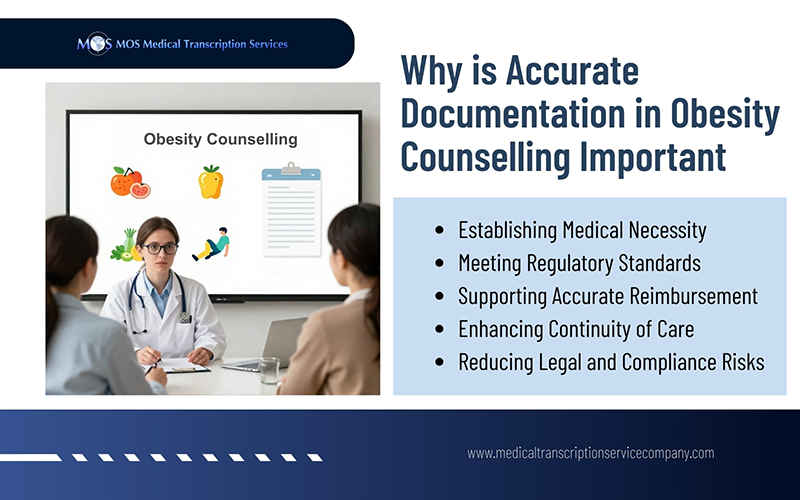
Importance of Accurate Documentation in Obesity Counselling
- Establishing Medical Necessity
Clear records demonstrate that counseling services are clinically justified. Documentation should include:
- Patient BMI and obesity classification
- Risk factors and related comorbidities
- Rationale for initiating behavioral therapy
- Evidence of patient engagement
Without this information, the medical necessity of services may be questioned during audits or claims review.
- Meeting Regulatory Standards
Healthcare providers must adhere to established behavioral counseling documentation requirements set by payers and regulatory authorities. These often include:
- Duration of each counseling session
- Frequency of visits
- Specific behavioral interventions provided
- Documentation of patient progress
Incomplete documentation may lead to claim denials or compliance concerns. Proper documentation ensures that services delivered align with defined coverage criteria.
- Supporting Accurate Reimbursement
Reimbursement for intensive behavioral therapy depends on correct coding and supporting documentation. When obesity counseling medical records clearly reflect the scope and frequency of services, billing teams can confidently assign appropriate codes. Documentation should specify:
- Time spent in face-to-face counseling
- Type of intervention (nutrition counseling, activity planning, behavioral strategies)
- Measurable outcomes
- Follow-up schedule
Structured documentation minimizes revenue cycle disruptions and reduces the risk of denied or delayed claims.
- Enhancing Continuity of Care
Obesity management is rarely a short-term intervention. Patients may require ongoing counseling, monitoring, and coordination with other specialists. Accurate clinical documentation for obese patients ensures that each provider involved in care has access to:
- Baseline metrics
- Documented lifestyle goals
- Response to prior interventions
- Adjustments to treatment plans
This continuity supports consistent decision-making and avoids duplication of services.
- Reducing Legal and Compliance Risks
Incomplete or vague documentation may create vulnerabilities during internal audits or external reviews. Providers must demonstrate that counseling sessions occurred as documented and that treatment plans were individualized.
Detailed documentation protects healthcare organizations by:
- Establishing a clear clinical timeline
- Demonstrating adherence to coverage policies
- Supporting medical necessity claims
- Reducing exposure to compliance penalties
Comprehensive and structured records strengthen accountability across clinical, billing, and regulatory processes. Ensuring compliance through proper obesity counseling documentation not only supports reimbursement and audit readiness but also reinforces consistent, high-quality patient care.
Challenges in Intensive Behavioral Counseling Documentation for Obesity
Intensive Behavioral Counseling (IBC), also known as Intensive Behavioral Therapy (IBT), is a recommended intervention for obesity management. However, documenting these services remains a major challenge in primary care settings.
- Complex Billing and Reimbursement Requirements
Under guidelines from the Centers for Medicare & Medicaid Services, providers must document BMI thresholds, session duration, face-to-face counseling, and measurable weight outcomes to qualify for reimbursement. Even minor documentation gaps can result in claim denials, discouraging providers from fully utilizing these services.
- Inconsistent Obesity Diagnosis Documentation
Although obesity is recognized as a chronic disease by the American Medical Association, it is not always formally recorded in patient charts. Missing BMI entries or failure to code obesity properly can disrupt care continuity and affect eligibility for counseling services.
- Time Constraints in Primary Care
Primary care visits are often limited in duration. With growing workforce shortages reported by the Association of American Medical Colleges, clinicians must manage multiple chronic conditions, leaving limited time to both provide and thoroughly document behavioral counseling.
- Detailed Counseling Documentation Burden
IBC documentation requires recording lifestyle advice, behavioral strategies, patient goals, and follow-up plans. Capturing these structured details within electronic health records can be time-consuming and workflow-disruptive.
- EHR and Workflow Limitations
Many systems lack standardized templates for obesity counseling. According to initiatives led by the Office of the National Coordinator for Health Information Technology, structured documentation is essential for coordinated care, yet implementation varies widely.
- Care Coordination and Communication Gaps
Obesity management often involves multidisciplinary teams. Incomplete documentation may lead to miscommunication between providers, delayed referrals, or overlooked comorbidities.
This is where expert medical transcription support comes in. Working with a specialized HIPAA- compliant medical transcription company can ensure accurate, detailed, and compliant Intensive Behavioral Counseling documentation, helping providers capture all required elements for proper reimbursement and quality reporting.
The Role of Medical Transcription Services in Behavioral Counseling Documentation
Intensive behavioral counseling sessions often involve detailed conversations about lifestyle habits, psychological triggers, and patient-specific challenges. Capturing these nuances during or after a busy clinic schedule can be challenging for providers.
Medical transcriptionists assist by:
- Converting recorded counseling sessions into structured documentation
- Organizing notes according to established templates
- Ensuring clarity and consistency in terminology
- Reducing documentation backlog
By delegating documentation tasks, clinicians can focus more on patient interaction while maintaining complete records. Professional medical transcriptionists format reports to align with clinical and billing standards, supporting both compliance and operational efficiency.
Enhancing Obesity Counseling Documentation with AI-Powered Transcription
Advancements in artificial intelligence (AI) are influencing the way clinical documentation is created and managed. AI-driven transcription tools can:
- Convert speech to text in real time
- Identify medical terminology accurately
- Suggest structured templates
- Flag missing documentation elements
For intensive behavioral counseling, AI tools can streamline note creation by capturing session duration, intervention types, and patient goals automatically. These systems support faster turnaround times and strengthen documentation practices, helping to maintain quality standards in patient care.
However, human review remains important to ensure contextual accuracy, especially when documenting nuanced behavioral discussions. A hybrid approach that combines AI technology with trained transcription professionals can enhance efficiency without compromising compliance.
Ensuring high-quality behavioral documentation ensures that clinical decisions, patient progress, and treatment outcomes are clearly recorded. By integrating reliable documentation processes and leveraging medical transcription services, healthcare providers can maintain consistency, improve workflow efficiency, and support regulatory adherence.