Expanding Role for Teledermatology in Healthcare

Importance of Teledermatology in Modern Healthcare

Telemedicine is one of the most significant technological developments that leverages information and communications technologies to deliver patient care over a distance with minimal hassles. Teledermatology, a subspecialty of telemedicine, facilitates visual diagnoses and treatment of many skin conditions without face-to-face consultation. According to the National Psoriasis Foundation 2022, more than 8 million Americans have psoriasis. Dermatology telemedicine allows physicians to provide remote care for patients with such complex skin conditions, regardless of their location.

This blog explores. how teledermatology is transforming modern healthcare and the significance of transcription services for this speciality.

Ensure accurate, up-to-date teledermatology records with our medical transcription services!

Call (800) 670-2809 today!

One of the key challenges of providing virtual dermatology consultations is that it requires meticulous documentation of each case, including patient history, diagnostic results, treatment plans, and follow-up recommendations. Specialized dermatology transcription services can ensure prompt, accurate, and efficient medical documentation of these virtual interactions to meet regulatory requirements.

Growing Demand for Teledermatology

The demand for teledermatology services is growing at a fast pace. According to a report from Allied Market Research, the global teledermatology market was valued at $9.5 billion in 2022 and is expected to soar to $38.9 billion by 2032, with a compound annual growth rate (CAGR) of 15.2% from 2023 to 2032. Key factors fuelling this expansion include rising patient preference for remote care, enhanced access to healthcare services, and technological advancements supported by improved internet connectivity.

How Teledermatology Works

The process begins with patients initiating a consultation through a teledermatology platform, typically using a smartphone, tablet, or computer. They upload images of their skin conditions and complete a medical history questionnaire to provide context. Dermatologists review the submitted images and information, formulate a diagnosis and recommend a treatment plan, which is communicated to the patient through the platform. Follow-up consultations are scheduled as needed. In one survey, up to 93% of patients said they felt at ease throughout the consultation.

In addition to consultation, teledermatology is used for patient education, second opinion, and monitoring medical conditions. The process works through two main methods:

  1. Asynchronous Store-and-forward: In this method, patients or their primary care providers send images and videos of skin issues, medical history, demographic data, or lab reports to dermatologists for evaluation. The dermatologist responds at a convenient time.
  2. Synchronous platforms: This involves live virtual consultations between patients and dermatologists.

Telehealth for dermatology offers many benefits for patients and physicians:

  • Accessibility: Streamlines the consultation process, enabling quicker diagnosis and treatment plans.
  • Patient convenience: Allows patients to consult the physician from the comfort of their homes and reduces off-time from work.
  • Reduced wait times: Decreases wait times and in-person referrals
  • Facilitates remote care: Allows for treating patients in remote or underserved areas
  • Enhances patient monitoring: Allows physicians to continuously track patients with chronic conditions
  • Supports patient education: Allows physicians and their staff to discuss various matters with patients and educate them
  • Reduces costs: Eliminates travel expenses and other costs

Telehealth documentation is crucial for ensuring patients receive appropriate care while enhancing communication between providers and patients. This is where dermatology transcription plays a significant role.

Medical transcription services play a vital role in teledermatology documentation by accurately converting audio or video interactions, diagnoses and treatment plans into well-structured medical records.

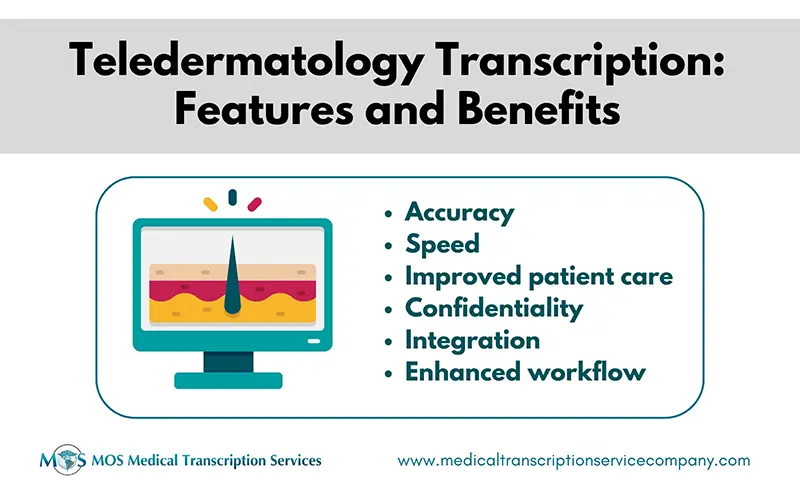
Teledermatology Transcription Services – Features and Benefits

Specialized US based medical transcription services support dermatologists and healthcare providers by documenting telemedicine consultations. They ensure that critical patient information is accurately captured, organized, and made accessible for ongoing care and medical records.

The key features and benefits of telemedicine transcription for dermatology are:

  • Accuracy: Experienced transcriptionists can ensure high-quality transcription, ensuring that all patient interactions are documented accurately, minimizing the risk of errors in medical records.
  • Speed: Rapid turnaround times allow healthcare providers to receive transcripts quickly, facilitating timely decision-making.
  • Improved patient care: Accurate and timely documentation helps in creating comprehensive treatment plans and follow-up care instructions.
  • Confidentiality: Adherence to HIPAA and other regulatory standards ensures that patient information is kept secure and confidential.
  • Integration: Transcription services can be integrated with Electronic Health Records (EHR) systems for seamless data entry and management.
  • Enhanced workflow: By outsourcing transcription, dermatology practices can focus on patient care rather than administrative tasks.
Teledermatology Transcription Services

Outsourcing medical transcription can also reduce overhead costs associated with in-house staff and technology.

With the rising demand for teledermatology, the need for efficient documentation support has become increasingly critical. However, there are various challenges in using telemedicine for skin disease management.

Connectivity problems during virtual consultations can lead to incomplete or unclear records. The effectiveness of medical transcription for teledermatology can vary based on the provider’s expertise and technology used. Partnering with an expert can minimize documentation challenges. Specialized HIPAA-compliant, US-based medical transcription services help physicians in maintaining accurate and timely EHR documentation for remote dermatology consultations. This ensures seamless care delivery, supports compliance, and enhances overall patient outcomes.
Simplify your EHR documentation and focus on patient care with our specialized dermatology transcription solutions.

Contact us today!

New Interactive Personal Health Records can Improve the Approach to Preventive Care

Studies report that Americans are receiving only half of the preventive care services they require, says the Agency for Healthcare Research and Quality of the U.S. Department of Health and Human Services. A new study says that this problem can be solved by new information technologies and offered a patient-centric Personal Health Record (PHR) to encourage preventive care. Incorporated into the patient’s electronic health records (EMR), the PHR offered patients one-to-one assistance on preventive care services.

The interactive PHR addressed 18 different clinical preventive services and was adopted by primary care practices successfully. The researchers included the receipt of immunizations, cholesterol tests, colonoscopy and more. Patients were asked to do a health risk assessment to fill in data which may not be in the medical record. To acquire wide range of preventive services that are user specific, the PHR provide users with customized profiles with reminders. Each patient got a customized profile and reminders to get the preventive services they needed and the explanations of the benefits (EOB).

Between 1.5 percent and 28.3 percent of patients across the 14 practices selected for the study used the PHR within 6 months. Patients reported that the system was easy to use and were happy to see their health-related information in one place. Furthermore, each practice was able to include the PHR into the patient visits. Preventive care providers used the PHRs to develop preventive care plans for patients and explain test results. In addition, the PHRs offered the providers information about overdue care and complete annual Medicare wellness visit requirements.

PHR and electronic health records (EHR) provide physicians with immediate access to their patients’ complete medical record during visits. They also help educate patients, provide prescriptions, observe patient progress, and complete other tasks. Medical transcription companies offer excellent documentation solutions for healthcare providers with feeds to EHR.

Data Security and Confidentiality with Cloud-based Transfer

For every transcription service provider, protecting and maintaining the security and confidentiality of sensitive client data such as medical records is the highest priority. With advance in Information Technology (IT), storage of important data has become hassle-free with introduction of cloud-based transfer. This form of data storage features a secure web server hosted by third parties.

Many reputable medical transcription companies use cloud based FTP servers for storage. Clients can access the transcribed documents with a username and password provided to them. The hosted web servers are maintained by an administrator that monitors all the clients at the same time.  Cloud-based storage offers many benefits:

  • Secure and HIPAA-compliant – HIPAA compliance is a necessity when it comes to medical transcription. The sharing and retrieving of important information has to comply with HIPAA regulations. With cloud-based storage systems, a transcription company can safely host anything from to progress notes to patient discharge summaries.
  • Access data anytime, anywhere – To access your transcribed documents from cloud-based storage, all you need an internet connection to download/upload information share information with your co-workers.
  • Utilizing storage space – It is essentially waste of money when you back your records on a hard drive and used only a fraction of the disk space. In a cloud-based storage, you pay only for the space that you require on the server.
  • Well organized and easy to search – It is easy for you search for transcribed documents from the cloud-based storage system. The uploaded documents are clearly named and well organized for easy search and access.

Need for Quality Critical Care Documentation

Critical Care Documentation

When every second counts, access to the right information at the right time is crucial. The critical care setting houses patients recovering from major surgery and those with serious ailments or life-threatening injuries. Critical illness or injury is illness or injury that impairs one or more “one or more vital organ systems such that there is a high probability of imminent or life-threatening deterioration in the patient’s condition,” according to the American Medical Association (AMA). Documenting patient information in the critical care environment has an important stake in patient care and safety. Medical reports should be transcribed accurately and in minimum turnaround time. High healthcare documentation quality is critical to deliver timely and appropriate interventions. Medical reports should be transcribed accurately and in minimum turnaround time. However, this can be a challenge in fast paced ED situations. That’s where critical care medical transcription services come in. Experienced transcriptionists can ensure accurate and timely EHR documentation, meeting multiple components for delivering critical care in the ED — while also helping institutions meet critical care documentation standards.

Reduce your critical care documentation workload with expert medical transcription services!

Get started now- call (800) 670-2809!

What Critical Care Documentation Includes

Different types of medical reports are generated in critical care units, such as:

  • patient progress notes
  • vital signs logs
  • medication administration records
  • laboratory results
  • imaging reports
  • critical incident reports
  • shift change reports

Specific types of reports include:

  • Critical incident report: Documentation of any unexpected or potentially harmful event, including medication errors, equipment malfunctions, or falls, to identify areas for improvement.
  • Shift change report: A concise summary of a patient’s current status, including vital signs, recent interventions, and planned care, given to the incoming healthcare team.
  • Specialty assessments: Depending on the patient’s condition, specific assessments like APACHE (Acute Physiology and Chronic Health Evaluation) or SOFA (Sequential Organ Failure Assessment) scores may be used to monitor organ function and overall severity of illness.

Key Aspects of Critical Care Records

Critical care Electronic Health Record (EHR) documentation of patient information in intensive care units (ICUs), emergency departments, and other high-acuity settings plays a vital role in patient safety, clinical decision-making, and compliance with healthcare regulations. The key aspects of critical care reports are:

  • Timeliness:Accurate and timely documentation is crucial for rapid decision-making.
  • Clarity and conciseness:Reports should be easy to understand and readily accessible to all healthcare team members.
  • Standardized format:Using a standardized reporting system ensures consistent information capture and facilitates comparison across patients.

Why Quality Critical Care Documentation Matters

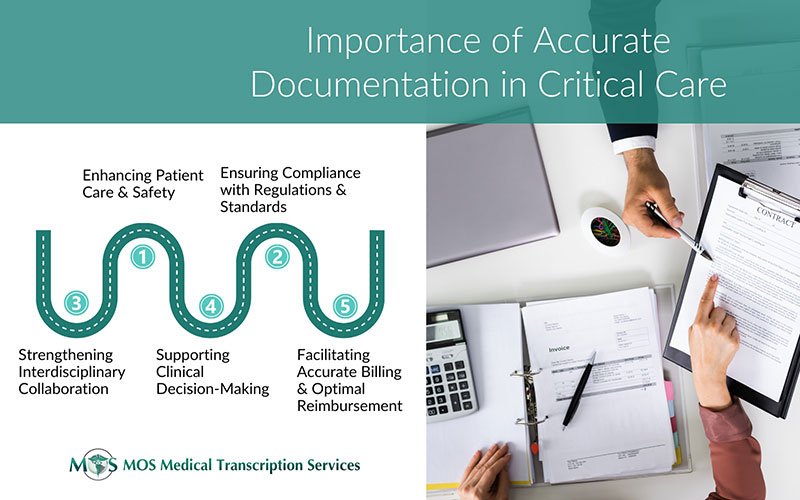
Quality documentation in critical care is the foundation of safe, effective, and responsive care in high-acuity settings. From supporting urgent clinical decisions to enhancing communication among care teams, accurate and timely documentation helps ensure that every patient receives the best possible treatment. It is essential for ensuring patient safety, effective clinical decision-making, regulatory compliance, and optimal reimbursement.

Patient Care and Safety

Critical care patients require continuous monitoring, and precise documentation ensures timely interventions. Accurate recording of vitals, medications, and procedures minimizes the risk of medical errors. Clear documentation supports effective communication between healthcare providers and improves critical care note-taking.

Clinical Decision-Making

Quality documentation provides a comprehensive view of the patient’s condition, helping clinicians make informed decisions. Real-time access to lab results, imaging, and treatment history aids in diagnosing and managing critical conditions. Structured notes help providers identify trends and anticipate complications.

Compliance with Regulations and Standards

Adhering to the critical care documentation standards of CMS, The Joint Commission, and other regulatory bodies is crucial for legal protection. Proper documentation supports quality reporting programs such as MIPS (Merit-Based Incentive Payment System). Clear records protect healthcare providers in cases of legal disputes or malpractice claims.

Accurate Billing and Optimal Reimbursement

Critical care services often involve complex billing requirements. Detailed documentation ensures proper coding and prevents claim denials. Time-based documentation (e.g., for ventilator management or sepsis treatment) is necessary for justifying higher reimbursement levels. Insurance providers rely on detailed records to verify the medical necessity of ICU treatments.

Interdisciplinary Collaboration

Critical care teams, including physicians, nurses, respiratory therapists, and pharmacists, depend on well-documented patient data to coordinate care. Standardized documentation formats ensure that all team members have a shared understanding of the patient’s status. Efficient documentation reduces communication gaps and enhances care transitions.

Improving patient outcomes with better critical care documentation means fewer errors, faster interventions, and enhanced recovery — all of which are vital in life-threatening conditions.

Critical Care

Outsource Transcription for Quality Critical Care Documentation

Outsourcing critical care transcription ensures documents and reports that are accurate, standardized and completed in custom turnaround time. Trained and experienced transcriptionists handle the transcription process, ensuring proficiency in medical terminology, industry-specific style, punctuation, and grammar. QA managers meticulously review and edit transcribed documents, comparing them against the original dictation to enhance accuracy and clarity. Outsourcing reduces the documentation burden and frees up clinicians to focus on patient care. By utilizing structured templates, voice recognition, and AI-powered tools, a medical transcription company can streamline documentation and reduce the workload on clinicians.

Outsourcing reduces the documentation burden and frees up clinicians to focus on patient care. By utilizing structured templates, voice recognition, and AI-powered tools, a medical transcription company can streamline documentation and reduce the workload on clinicians.

Furthermore, the need for standardized critical care documentation procedures is increasingly recognized as a cornerstone of hospital quality and compliance. Partnering with expert transcription providers ensures consistency in note-taking, reporting, and communication among care teams.

Struggling with documentation challenges?

Our critical care medical transcription services ensure accurate, timely, and compliant records.

Contact us today!

Utilizing Mobile Medical Apps

Mobile apps in the healthcare sector are now in great demand because these allow healthcare professionals to easily record or document, communicate and access vital patient information at the point of care through mobile point of care solutions. With healthcare service providers migrating to electronic medical record (EMR) systems following the regulations issued by the federal government, mobile apps are becoming handy for healthcare professionals these days.

Mobile applications enable healthcare professionals to easily access on-screen and stored patient medical reports / histories on their iPhones whenever they like. Clinical information can be obtained at the point-of-care on the latest mobile devices. These devices can facilitate easy access to records related to admission, consultation, procedures, discharge and more. Physicians and other healthcare professionals can share or contribute EMRs through mobile apps. Vital health images of patients and other reports can be sent or received over wireless mobile networks, in case providers need to consult among themselves or for reference purposes.

With the arrival of secure mobile medical apps, doctors have started sharing challenging and interesting medical information. Interestingly, even patients now tend to share their healthcare data with their treating physicians via mobile medical applications. Communication among doctors as well as that between doctors and their patients is becoming digital. The positive side of this is that doctors can now provide timely and better care for their patients, being alerted to their requirements in an opportune manner.

Doctors can even dictate their notes into their Smartphones, but many of them prefer to have a reliable medical transcription company take care of their transcription. This is mainly because of the accuracy and efficiency ensured by an experienced medical transcription firm compared to the many hassles involved in doctors dictating into a mobile app – issues such as speech recognition accuracy, physician workflow and physicians’ lack of enthusiasm to edit the transcription.

Medical Transcription – Challenging but Definitive Role Ahead

The medical transcription and healthcare documentation industry has been in existence for quite some time, successfully serving the needs of medical service providers. There is much debate about the future of the industry. However, despite the many challenges it faces, the medical transcription and documentation sector has a definitive role ahead. Here’s why:

  • Employment Options – According to the Bureau of Labor Statistics, there are good employment opportunities for certified medical transcriptionists, with job prospects expected to grow by 11 percent through 2018. The Department of Labor says that the demand for more health documentation professionals is due to the rising number of baby boomers reaching retirement age.
  • EMRs – All healthcare facilities and practices are required to have Electronic Medical Records (EMR) in place by 2014, according to health reform.  This will not impact medical transcription companies negatively as most offer documentation systems that integrate with EMR. In fact, industry experts believe that the EMR system could result in support roles for medical transcriptionists.
  • Advantages of outsourcing medical transcription – U.S. based medical transcription companies outsource medical transcription to Asian countries such as India and Philippines due to many advantages such as availability of skilled medical transcriptionists, reduced labor cost, quick turnaround time, and competitive pricing. These advantages will continue to be experienced in the future too.
  • Adapting to changeMedical transcription companies and teams of skilled transcriptionists are adapting to the changing technological landscape. Medical transcription will survive even with the advent of speech recognition software. The documents produced by this software are far from perfect and physicians need the help of medical transcriptionists to review, proofread and edit them.  By taking on these new tasks, these skilled professionals can ensure the survival of the medical transcription industry.

Determining the Right Dictation Tool for Your Transcription Process

Transcription Process

Medical professionals are constantly seeking efficient ways to streamline their documentation and record-keeping processes. One critical aspect of this is the use of dictation tools to generate medical records, reports, and other necessary documentation. As the demand for accurate and timely medical transcription services continues to grow, it’s essential for healthcare providers to carefully evaluate the various dictation tools available and determine the best fit for their specific needs.

Use of Telephone Dictation

Advantages

One common and established technique in medical transcription services is telephone dictation. By using this technique, medical experts can transcribe their notes over the phone to be edited by a transcriptionist. The ease of use and accessibility of telephone dictation are among its main benefits. Healthcare professionals no longer need specific hardware or software to dictate their notes-they can use any phone. Time is of utmost importance in fast-paced medical contexts, where this ease of use is especially helpful. Additionally, telephone dictation enables continuous, instantaneous dictation, which can improve information flow and lower the possibility of data being overlooked. Since it doesn’t rely on complicated technology or internet access, which could malfunction or have problems, it is also a dependable way.

Drawbacks

But there are disadvantages to telephone dictation as well. Background noise, a weak signal, or inadequate phone lines can all degrade the audio quality, making transcribing more difficult and time-consuming. Furthermore, a lack of visual signals may cause patient details and complicated medical language to be misunderstood or misinterpreted.

Emergence of Speech to Text Software

Advantages

A more modern method of dictation that makes use of advances in machine learning and artificial intelligence is speech-to-text software. These systems provide a rapid and effective technique to create medical records by converting spoken words into text in real time. Well-known speech-to-text programs have large medical vocabularies and the capacity to detect and reliably transcribe technical medical terms; they are specifically made for use in medical settings. Time savings is one of the main advantages of speech-to-text software. Healthcare professionals can quickly check and edit their notes after they are automatically transformed to text thanks to automation of the transcription process. This instantaneity can speed up medical paperwork turnaround and increase efficiency.

Drawbacks

Speech-to-text software has drawbacks in addition to its benefits. The usage of unusual medical terminology, speech patterns, background noise, accents, and other variables can all affect how accurate these tools are. Even with continuous development, these systems are still unable to achieve the almost flawless accuracy needed for medical transcription.

The Essential Role of Medical Transcriptionists

Addressing the Limitations of Automated Transcription

Speech-to-text software can greatly accelerate the transcribing process, but it is not a complete substitute for the knowledge and experience of human medical transcriptionists. Since automated transcribing methods have limits, medical transcriptionists are essential to ensure the completeness and quality of medical information.

Automated systems frequently have trouble understanding complex medical jargon and homophones, which are words that sound the same but have different meanings. The expertise and experience of a medical transcriptionist are crucial for understanding these phrases and making sure the dictations are appropriately transcribed to convey the intended meaning. In addition, they proofread and edit the transcriptions produced by speech-to-text software, fixing any mistakes or discrepancies that might have occurred during the automated procedure.

Choosing the Right Dictation Tool

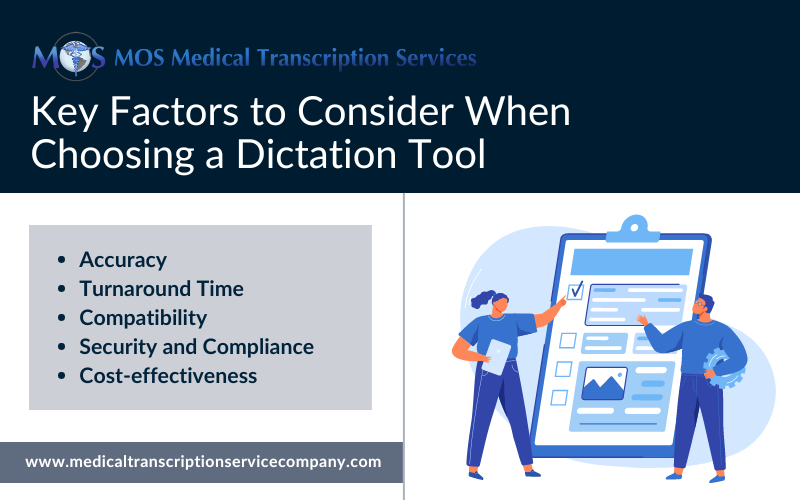
Key Factors to Consider When Choosing a Dictation Tool

When determining the right dictation tool to use for medical transcription, it’s essential to consider a range of factors, including:

  • Accuracy: Evaluate the performance of the speech-to-text software or the quality of the medical transcription service in terms of the accuracy and consistency of the final transcripts.
  • Turnaround Time: Consider the speed and efficiency of the transcription process, as timely delivery of medical records is crucial in healthcare.
  • Compatibility: Ensure that the dictation tool seamlessly integrates with your existing healthcare technology infrastructure and workflows.
  • Security and Compliance: Verify that the dictation tool and/or transcription service comply with relevant data privacy and security regulations, such as HIPAA in the United States.
  • Cost-effectiveness: Assess the overall cost of the dictation tool or transcription service, including any ongoing fees or subscription costs, and compare it to the potential savings in terms of time and resources.

By carefully weighing these factors and prioritizing the specific needs of your healthcare organization, you can make an informed decision on the right dictation tool to support your medical transcription process. This, in turn, can lead to improved efficiency, enhanced patient care, and a more streamlined documentation workflow.

Combining Technology and Human Expertise

The most effective approach to medical transcription often involves a combination of advanced technology and human expertise from a reliable provider of medical transcription services. By integrating speech-to-text software with the skills of professional medical transcriptionists, healthcare providers can achieve high accuracy and efficiency in their documentation processes. This hybrid approach leverages the speed and convenience of automated tools while benefiting from the meticulous review and editing capabilities of experienced transcriptionists. Whether you choose telephone dictation, speech-to-text software, or a hybrid approach, the goal remains the same, to produce accurate, reliable, and timely medical records that support high-quality healthcare delivery.

Enhance your medical documentation accuracy today!

Partner with our expert medical transcription service.

contact us today!

Medical Transcription vs. Computer-based Voice Recognition Software

Though it is catching up as a preferred method of inputting text into a computer, voice recognition software has certain problems that override its merits. It needs a number of requirements such as desktop workspace, hardware and software. It requires a keyboard, microphone, screen, speakers, headphones and a computer.

Voice recognition software has been posed as a tough competitor for medical transcription, but this needn’t be the case. Dictating medical details is easier with medical transcription, because you need only a telephone or mobile, word processing software, and a medical transcriber.

In order to do transcription using advanced voice recognition software a less noisy working environment is required. Voice recognition cannot work with formatting types such as bold, italics, automatically numbered lists, bulleted lists and tables. It cannot properly place the required punctuations.

Limitations of Voice Recognition Software

Need of a silent environment: A voice recognition program needs a silent environment for correct interpretation of the spoken words, when you do not own a microphone that filters out ambient noise. In a noisy environment, voice recognition software may fail to recognize your voice, and in addition, it may generate text from loud voices in your background.

Vocal strain: You may find it difficult to speak rather loudly when using the voice recognition software.

Inaccuracy: Although voice recognition software may interpret your spoken words correctly most of the time, proofreading and correction are necessary after dictating a file. You will have to make corrections in the punctuation. Voice recognition software will not be able to recognize certain words such as brand names or unfamiliar surnames until you add those words to the program’s library.

Difficulty in interpretation of unfamiliar voices: Each user needs to “train” the voice recognition software after completing the installation. In the training process you need to read out different passages in a loud voice. The software may not work well or provide the required level of accuracy when used by people with unusual or foreign accents.

Outsourcing your transcription works to a medical transcription company that offers services at cost-effective rates is in many ways more practical and economical than going for expensive and time-consuming voice recognition software.

Five Things to Look for in a Neurology Transcription Service

Neurologists diagnose and treat of disorders of the brain, spinal cord and peripheral nerves, interacting closely with related specialties. Diagnosis is based on clinical principles, closely attending to patient history and detailed physical examination.Medical transcription services for neurology are focused on providing these specialists with quality reports for a wide range of disorders – from bradykinetic disorders, cervical spine disorders, cranial nerve disorders and cognitive disorders to tumors, headaches, strokes, epilepsy, sleep disorders, and more.

Accurate and timely medical documentation is critical to the success of neurology treatment. Here are five things critical to a neurology transcription service:
<ul

  • High quality documentation: Accurately transcribed reports depend on the transcription process that the medical transcription company has in place. The service provider should have a team of trained and experienced transcriptionists well-versed in neurology transcription on the job, and not rely on speech recognition software. Multiple dictation options such as via telephone and digital machines are significant benefits. Stringent quality control processes are also important for accuracy levels of up to 99%.
  • Turnaround time: Customized turnaround time is important. A 24-hour turnaround time is necessary to ensure speedy diagnosis and treatment. Some medical transcription companies may charge more for faster turnaround.
  • EMR compatibility: It is important that the neurology transcription service complies with the electronic medical record system of the practice. New law necessitates migration to electronic health records by 2014. A professional service provider can assure automatic updating of EMR by directly uploading files into the system as well as quality document flow management for end-to-end data tracking.
  • HIPAA compliance: This is critical for ensuring confidentiality of medical records and patient information. Transfer of files through FTP and browser-based multiple encryption protocols would ensure security.
  • Competitive pricing: The billing method is important. The rate charged is typically 65 characters per line. Volume rates are often offered for large scale projects. A neurology transcription service that can save the specialist up to 30-40% compared to in-house transcription is a great choice.

Medical transcription is here to stay. A neurology practice that is discerning enough to look for the right qualities in a medical transcription company can ensure efficient patient care and higher revenues.

How to Select a Good Radiology Transcription Service Provider

Medical transcription is an essential service in the healthcare field. With reliable transcription services provided by established medical transcription companies, documenting and maintaining medical records has become simple. HIPAA compliant transcription services are provided for all medical specialties. Radiology transcription firms provide excellent support to radiologists, hospital ancillary departments, imaging centers and medical facilities.

Important Things to Consider

  • Your partnering firm should have the latest advanced technologies in place
  • They should ensure timely delivery of transcripts
  • The transcripts generated should be error-free and accurate
  • Customized turnaround time is important to ensure that you receive the transcripts when you need them
  • Excellent quality assurance measures are mandatory
  • The services should be offered at an affordable rate
  • They should be able to work inside a Radiology Information System (RIS) that facilitates the management of radiological records and related data in multiple locations
  • The transcriptionists and editors should be professionally trained and experienced
  • The firm should be HIPAA compliant to stay assured that the information you share with them remains confidentialv
  • The medical transcription company’s years of professional experience in this field is important

These are the main things to consider when assigning your medical transcription jobs to a transcription company.

Online Transcription Companies for Reliable Services
Reputable online medical transcription companies maintain very good security standards. They have on staff trained and experienced transcriptionists. All computers are password protected. Files sent across the internet are encrypted to prevent data leak. Backups of data are created periodically. Secure FTP and email accounts are important for secure file transfers.

There are some highly regarded medical transcription companies that offer free trial option for their services. This is good because prospective clients can evaluate their service quality, turnaround time and other important details before asking for their radiology transcription services.

  • KEY FEATURES

    • 3 Levels of Quality Assurance
    • Accuracy Level of 99%
    • All Specialties Covered
    • Competitive Pricing
    • Digital Recorder Dictation
    • Electronic Signatures
    • Feeds for EHR or EPM
    • HIPAA Compliant Service
    • Quick Turnaround Time
    • Toll Free Phone Dictation
    • Transcription Management Software
    • Volume Rates Available
  • RECENT BLOGS

  • Categories

  • Quick Contact


    • Infographics