Better Discharge Summaries to Reduce Hospital Readmission Risk

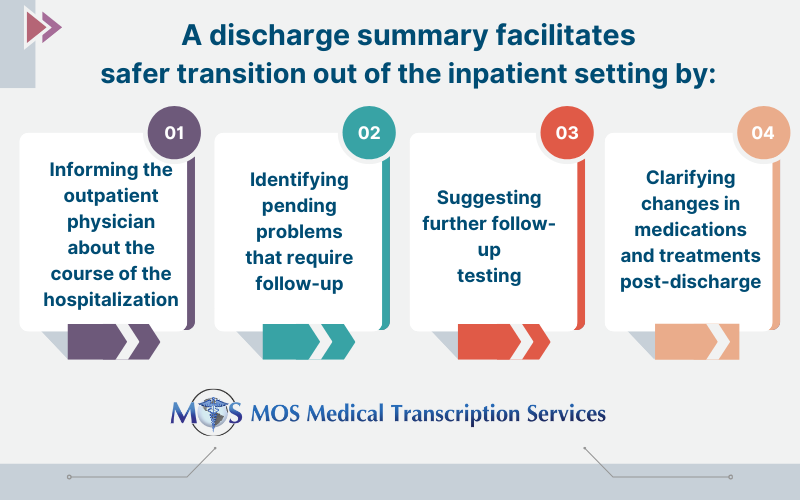
Discharging patients from the hospital is a complex and challenging process.  Every year, over 35 million hospital discharges occur in the United States. When a patient moves from an acute care setting to other levels of care such as a Skilled Nursing Facilities (SNF), it requires efficient communication among all caregivers. This is where the discharge summary comes in. One of the important clinical reports that a medical transcription company helps hospitals create, the discharge summary provides a comprehensive overview of the patient’s hospital stay. Effective discharge summaries can reduce risk of readmission.

Ensure timely and precise EHR documentation with our medical transcription services.

Call (800) 670-2809 today!

Improving Discharge Processes Reduces Risk of Rehospitalization

Many providers and patients face communication challenges and gaps in care when a patient discharged from hospital transitions to other levels of care. This can lead to gaps in care that cause delays in care, treatment errors, unwanted procedures and potential readmissions. The Hospital Readmission Reduction Program under the Affordable Care Act (ACA) imposes penalties for unwanted hospital readmissions.

The National Guidelines recommended components of a discharge summary are:

  • Patient details
  • Hospital details
  • Recipients
  • Author
  • Presentation details
  • Problems and diagnosis
  • Procedure
  • Clinical summary
  • Allergies/adverse reactions
  • Medicines on discharge
  • Ceased medicine
  • Alerts
  • Recommendations
  • Follow-up appointments
  • Information provided to the patient

discharge summary

Readmission to the hospital could be due to worsening of disease or new conditions. In many cases, new medication routines or lifestyle changes after being sent home can increase the chance of returning to the hospital.

Approximately 15% of elderly patients are readmitted within 28 days of discharge, according to a study published in Future Healthc J in 2019. The study discusses the short-term risk (within 30 days) and longer-term risk (within 180 days) of hospital readmission for older Americans who have recently had major surgery.

A recent Yale study reported that older Americans had an increased risk of hospital readmission within 180 days of undergoing major surgery, and that this risk was more acute for people who are frail or have dementia. A previous study by the same Yale team noted that that discharge summary quality was associated with hospital readmission.

A 2021 study published online in Cancer Rep (Hoboken) found that while most discharge summaries met the national guidelines quite well by including most of the recommended components, they still lack quality in some areas. The researchers referenced studies which had found that delayed, incomplete discharge summaries or discharge summaries carrying incorrect information led to increased risk of rehospitalization, complications due to medication error, morbidity and mortality.

Good discharge summaries alleviate these issues by making reliable and timely patient context available. They address communication issues that can occur when patients leave the hospital, ensuring effective and timely care post-discharge. Medical transcription services play a key role in helping healthcare providers craft effective discharge summaries that meet recommended guidelines.

Outsource Medical Transcription and Ensure Effective Discharge Summaries

An experienced medical transcription service provider can ensure comprehensive discharge summaries that include all the major components, promoting continuity of care and reducing risk of complications:

  • Reason for hospitalization – helps subsequent providers understand the reason why the patient was admitted to the hospital.
  • Procedures performed – procedures, tests, or treatments the patient received during the hospital stay.
  • Medications – new/changed medications the patient should take after leaving the hospital.
  • Follow-up plans – recommended follow-up appointments, tests, or therapies
  • Patient education – instructions given to the patient on dietary changes, activity restrictions, or warning signs to watch for.

Discharge documentation should include this comprehensive information. This will enable the patient’s primary care provider and other caregivers to better manage the patient’s post-discharge care, reducing risk of rehospitalization.

Outsource medical transcription and save time and money!


Contact us today!


Surgical Errors on the Rise, Keep Your Operative Reports Accurate

Surgical ErrorsA new state report covering Connecticut hospitals found that the number of adverse events in hospitals and other healthcare facilities reached 500 in 2013 i.e. double the number of 244 incidents reported in 2012. When it comes to surgical adverse events, there is a large increase in perforation during surgery. The number of patients harmed by perforations during surgical procedures reached 79 in 2013 compared to 55 in 2012. Around half of the perforations that seriously injured or killed patients occurred during colonoscopies, while others occurred during endoscopies, hernia repair or other surgical procedures.


The report also states the number of wrong-site surgeries has also increased from 9 to 13. Accurate surgical reports are necessary to prevent surgical errors. No matter how well a surgical procedure is performed, an incomplete or inaccurate operative report can lead to flawed decision-making by follow-up medical teams. The increasing error rates imply that there is a growing need to improve the accuracy of surgical reports. An accurate surgical report significantly impacts aftercare and outcomes and is critical to patient care. The accurate data within a surgical report will help you improve surgical processes, identify problem areas within your facility and better explain treatment decisions.

Tips to Enhance the Accuracy of Surgical Reports

  • Record Data Immediately after Surgery – The important information will be clearer in the surgeon’s mind just after the surgical procedure rather than hours or days later. Implement a system that allows surgeons to easily record critical data when it is fresh. This will reduce the chance of omissions or misremembered details.
  • Employ Clear and Consistent Format – Each surgeon’s reports may be a bit different. Ensure that all your reports are in a clear and consistent format. This will help you identify errors and solve them immediately. Otherwise, you will have to study each and every report. This will be time-consuming and there will be a greater chance to overlook errors.
  • Control Data Entry – Illegible handwriting, unclear speech, an uncommon manner of phrasing or even a typographical error can make the records confusing. Make sure that the data entry method you choose can bring you accurate results.

EMR Transcription with Quality Assurance

Rather than traditional transcription that involves simply transcribing the dictated surgical notes into operative reports, EMR-based transcription with thorough quality checking is more effective to ensure the accuracy of surgical reports. This method involves transcribing the surgeon’s dictations (recorded right after the surgery) with the help of professional transcriptionists, thoroughly checking the quality of the transcribed data with proofreaders and editors and finally populating the accurate data into corresponding EMR fields utilizing the latest advanced technology. This will ensure that accurate data is entered into your EMR system in the first place and very effectively address data entry issues.

Synoptic reporting with responsive templates is another effective method. However, if you are not choosing the right synoptic software, it can create a number of issues that would impair the accuracy of the surgical reports and cause delay in turnaround times.

How to Prevent Pathology Documentation Errors

Pathology Documentation Errors

A pathology report is an important document that guides diagnostic and prognostic decisions. Pathology report accuracy is therefore critical to provide appropriate and high-quality patient care. Outsourcing is a practical solution to ensure this. Professional medical transcription support helps in generating error-free pathology records. Incomplete and inaccurate pathology reports can have a negative impact on patient care. Clinical research reviews show that even minor typographic errors can greatly change the meaning of a report. Let’s take a look at the types of errors that commonly occur and how these can be prevented.

Pathology errors are divided into three types according to their occurrence during the three phases of analysis such as pre-analytic, analytic and post-analytic.

Pre-analytic Errors

Common pre-analytic documentation mistakes in pathology occur during the ordering, transferring, preparing and accessioning of samples. Some of them are: obtaining the specimen from the wrong patient, providing inadequate tissue for diagnosis, and placing the specimen in the wrong fixative media. Serious errors including specimen loss, untimely delivery of a specimen, and delivery of a specimen to the wrong site can drastically affect patient care and are magnified if difficult, dangerous, or impossible to obtain suitable specimen.

Prevention Tip:

Most pre-analytic errors happen outside of a pathology lab’s control. Pathologists need to understand the context of the analysis to prevent such errors and for that clear communication is a must. Poor communication from surgeons or primary care physicians causes great confusion during accessioning and analysis. The College of American Pathologists (CAP) recommends establishing standard procedures such as mutually developed lists of acceptable abbreviations, acronyms, and symbols for better communication with the care team partner. In addition to this, pathology labs should also determine how referring physicians can deliver (and receive) reports, whether through system-to-system interfaces or standardized codes. Procedures that are unique to different physicians or wards should be established before ordering tests.

Analytic Errors

Analytic errors occur during histologic or cytologic specimen processing, in the gross room, at the microscope, and by clerical personnel in the laboratory. Histology errors include slide labeling errors and numerous problems stemming from specimen contamination, while errors in the gross room include incomplete or incorrect gross examination, poorly worded description of the gross examination of a specimen, poor or incorrect sampling of tissue for microscopic analysis, and block mislabeling. Errors at the microscope include slide mix-ups, mistakes caused by cognitive problems and poorly worded or poorly formulated reports. Mistakes in the pathology reporting process such as assignment of a report to the wrong patient, clinical and typographic errors are also  critical.

Prevention Tip:

Pathologists believe they are particularly responsible for errors at the microscope as they are always directly involved in the processes. They need to be very careful during the analytical phase to prevent pathology reporting mistakes. In addition to that, it is vital to generate pathology reports that are more complete, consistent and accurate. Typographic errors in particular can be difficult to detect and it is very important to thoroughly analyze the reports generated. The report should be standardized while adapting to the specific needs of different labs, physicians and patients.

Post-analytic Errors

Post-analytic errors occur when the results of the analytic phase are communicated to the caregivers so that they can use that information for patient care. These include delivery of reports or information to the wrong clinician, untimely delivery of reports, treating physician misunderstanding the information in the report, and caregivers failing to see the report at all. Post-analytic errors are linked to the shortcomings in the previous phases. If some of these errors stem from pre-analytic labeling and accessioning error, some stem from poorly formulated reports, some relate to operational issues present in the report delivery process, and others relate to clinician office practices.

Prevention Tip:

For error-free pathology reporting, you should ensure immediate and accurate distribution of data through referring providers’ preferred methods. The use of interoperable EMRs can streamline this process. Thorough checking of pre-distribution error is a must.

Synoptic Reporting vs. Medical Transcription

Synoptic reporting or electronic medical reporting through entry of clinical data into discrete fields improves communication and workflow and is effective in preventing errors at all three phases of the pathology process. With standard structure and language, synoptic reporting prevents problems that are commonly found in dictated and narrative reporting such as typographic errors, inconsistent formats, incomplete information, and turnaround delays. Moreover, pathology templates provide the right balance of standardization and customization to generate consistently complete reports. Using the right synoptic software allows administrators to aggregate and search reports, review performance and develop quality assurance measures, which further prevent pathology report errors and ensure patient safety.

However, there are certain drawbacks with synoptic reporting. Sometimes, this reporting system may flood your pathology reports with unnecessary data fields and the advantage of time saving will quickly vanish. If the synoptic software won’t enable you to configure new data and free text fields, it can produce errors when handling complex cases. Mobility, compatibility, interoperability and user interface issues are other problems. Using the right synoptic software can help solve these issues. But if you find this option too costly and difficult to implement, EMR transcription with quality assurance can be a good choice. In this approach, pathology reports at each stage of analysis are transcribed by experienced transcriptionists. Quality control in pathology transcription ensures the reports are thoroughly checked by the quality assurance team involving proofreaders and editors, which will eliminate possible errors. Accurate data thus obtained is populated into the corresponding EMR fields. This will provide the advantage of efficiency with electronic reporting and narrative description.

How Professional Voice-to-Text Services for Physicians Ensure Accurate Pathology Transcripts

Medical transcription services play a pivotal role in accurate pathology recordkeeping. It converts complex medical jargon, findings, and diagnoses into clear, structured, and error-free reports. Expert transcriptionists, equipped with medical knowledge and a deep understanding of pathology terminology, ensure that every detail is transcribed precisely. They utilize advanced transcription tools and double-check pathology reports to ensure they are error-free.

Outsourcing transcription for pathology labs offers several advantages:

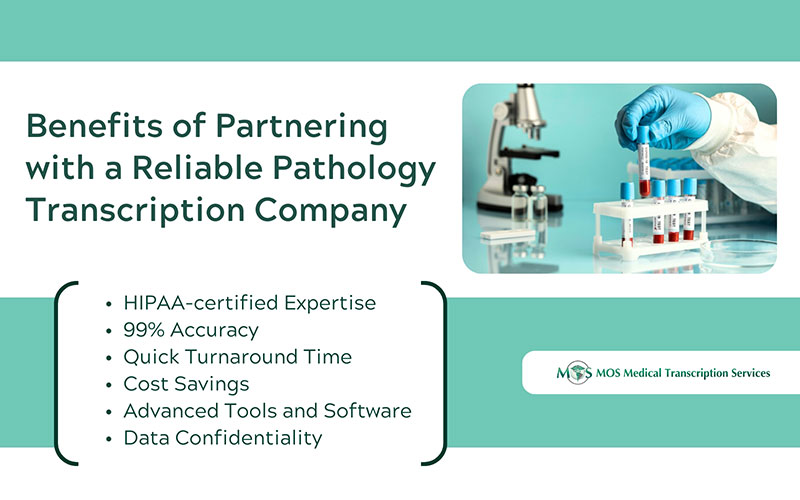
  • HIPAA-certified Expertise: A skilled team with expertise in medical terminologies and report formatting ensures compliance with HIPAA regulations, safeguarding patient confidentiality.
  • 99% Accuracy: Precision in transcripts is guaranteed through rigorous quality assurance processes.
  • Quick Turnaround Time: Delivering reports within 24 hours ensures timely patient care and efficient operations.
  • Cost Savings: Clients can save up to 30 to 40% on transcription costs, making it a cost-effective solution.
  • Advanced Tools and Software: The use of state-of-the-art transcription technologies enhances efficiency and reduces errors.
  • Data Confidentiality: Legal binding agreements ensure the complete confidentiality of medical records.
  • Improved Efficiency: By reducing reporting errors in pathology, documentation experts improve lab documentation workflow.

Pathology Transcription

Reducing reporting errors in pathology is essential for quality patient care and streamlined workflows. Professional voice-to-text services for physicians can help healthcare providers maintain high standards of documentation while optimizing time and costs. They follow the best practices to ensure error free pathology transcription.

Get accurate and timely pathology reports with our expert medical transcription services. To streamline your documentation process, contact us today!

EHRs Not Sufficient to Improve the Quality of Stroke Care

EHRsElectronic health records (EHRs) are supposed to enhance the clinical outcomes with faster data input, exchange and retrieval. EHR is regarded as an effective clinical documentation tool to improve the quality of care for conditions for which guidelines are quickly evolving and timely care is crucial. However, this system doesn’t seem to be an outstanding solution to provide quality care for stroke patients, a study confirms. The study says EHRs may be necessary for a high-tech, transparent healthcare system, but do not appear to be sufficient to improve the clinical outcomes for stroke, as currently implemented.

The purpose of this study published in the Journal of the American College of Cardiology was to find out whether hospitals with EHRs differed in quality or outcome measures for ischemic stroke from those without EHRs. The researchers studied 626,473 patients from 1,236 U.S. hospitals in Get with the Guidelines-Stroke (GWTG-Stroke) from 2007 through 2010, associated with the American Hospital Association annual survey as a part of the study for understanding the presence of EHRs. At the end of the study period, a total of 511 hospitals were found to have EHRs. Those hospitals were larger and were more often teaching hospitals and stroke centers.

After controlling for patient and hospital characteristics, the overall study of hospitals with and without EHRs revealed that patients who were admitted to hospitals with EHRs had similar odds of receiving ‘all-or-none’ care, of discharge home and of in-hospital mortality compared to hospitals without EHRs. Moreover, the odds of having a length of stay more than four days were slightly lower at hospitals with EHRs than in hospitals without EHRs. This proved that the electronic record system was not associated with either higher-quality care or better outcomes for stroke care.

Though the electronic health record system is effective and has been heavily subsidized under the American Recovery and Reinvestment Act, its capability in handling complex cases like stroke is in doubt, with these study findings. The lead author of this study, Dr. Karen Joynt says EHR interfaces are not capable to link people together to care for complex patients. Patients require rehabilitation care, potentially occupational therapy, speech therapy, physical therapy and get their medications correct to survive the stroke. EHR doesn’t take care of all that.

As per John R. Windle, who wrote a corresponding editorial comment to this study, the first priority of EHRs must be giving support to clinical care, not documentation for billing and reimbursement that adds burden and results in neither value, nor patient health or safety. A new policy statement from the American College of Physicians also suggests the need to focus less on lists of check boxes and reimbursement while paying more attention to narrative entries and the designs that enhance patient care. According to this statement, documenting clinical information with drop-down lists, check boxes, macros, and templates can be distracting and disruptive to vital clinical thinking as well as storytelling. This will lead to over-structuring the clinical record and overloading it with irrelevant data.

Overall, a more comprehensive approach for clinical documentation is necessary to ensure patient safety. Here comes the significance of a hybrid approach involving EHR and medical transcription. In this approach, the dictations are transcribed with the help of experienced transcriptionists and the transcribed data is entered into the corresponding EHR fields. This supports narrative description as well as improves the accuracy of clinical data.

How to Properly Document Medical Decision Making (MDM)

patients electronic accessMedical Decision Making (MDM) documentation is as significant as the other two components of documentation (History and Exam) in assigning an evaluation and management (E/M) service level. The end result of MDM is complexity level or severity of presenting complaint. MDM indicates the intensity of the cognitive labor carried out by the physician. The very purpose of MDM is to make you aware of how you got from the presenting complaint through the evaluation and management to the disposition of the patient. With well-documented MDM, you can increase your reimbursement and stay safe from inevitable audits. Let’s consider how you can document MDM properly.
Specify the Problem with the Plan

As auditors may not have the ability to infer the severity of a case without proper documentation, it is very important to formulate a complete and accurate description of the patient’s condition with equivalent plan of care for each encounter. Specifying problems without the corresponding plan of care does not support physician management of those problems and could result in relegating complexity. Listing problems with brief, generalized comments can also diminish the complexity and efforts taken by the physician. You should clearly document the care plan. The care plan should specify the problems that are personally managed by the physician, along with those that must be considered while formulating management options, even if another physician is primarily managing the problem. Both the quality and quantity of problems should be addressed. Physician documentation should:

• Identify all problems that are managed or addressed at the time of each encounter
• Identify the problem as stable or progressing, when appropriate
• Indicate differential diagnose if the problem remains undefined
• Indicate the management/treatment option(s) for each problem
• Note management options to be continued somewhere in the progress note for that encounter when the documentation indicates a continuation of current management options.

Give Focus to Relevant Data

Data actually comprises pathology/laboratory testing, radiology and medicine-based diagnostic testing that contributes to diagnosing or managing patient problems. Though pertinent orders or results may appear in the medical records, most of the background interactions and communications involved with testing are missed out while reviewing the progressive note. In order to receive credit, you should:

• Specify the tests ordered and rationale in your progress note or make an entry that indicates another auditor-accessible location for ordered tests and studies.
• Clearly document test review along with a brief entry in the progress note. Credit is not given for entries that are short of a comment on the findings..
• Summarize key points when reviewing old records or obtaining history from someone other than the patient.
• Specify that images, tracings or specimens have been ‘personally reviewed.’ Otherwise the auditor will assume that you only reviewed the written report. Include a comment on the findings.
• Summarize any discussions of unexpected or contradictory test results with the physician performing the diagnostic study or procedure.

Don’t Undervalue Patient’s Complexity

A general lack of understanding of the MDM component of documentation may lead to physicians undervaluing their services. Physicians may consider a case to be of ‘low complexity’ simply due to the frequency with which they encounter the case type. Therefore, it is very important to better identify the risk involved for the patient. Patient risk is categorized as minimal, low, moderate or high based on pre-assigned items related to the presenting problem, diagnostic procedures ordered and management options selected.
Chronic conditions involving exacerbations and invasive procedures involve more patient risk compared to acute, uncomplicated illnesses or noninvasive procedures. Stable or improving problems are perceived as ‘less risky’ compared to progressing problems. Conditions that pose a threat to life/bodily function outweigh undiagnosed problems where it is difficult to determine the patient’s prognosis. Medication risk for a particular drug remains the same whether the dosage is increased, decreased or continued without any change. Physicians should:

• Provide the status of all problems in the plan of care and indicate them as stable, worsening or progressing (mild or severe) when appropriate
• Document all diagnostic or therapeutic procedures considered
• Indicate surgical risk factors involving co-morbid conditions that place patients at greater risk compared to the average patient, when appropriate
• Correlate the lab tests ordered to monitor for toxicity with medication to the corresponding medication

Accurately Indicate Complexity Level

MDM is rooted in the complexity of the patient’s problem addressed during a given encounter. Complexity is categorized into straightforward, low, moderate and high. It directly correlates to the content of physician documentation. The auditors only consider the plan of care for a given service date while reviewing MDM. To be more specific, auditors review three areas – the number of diagnoses and/or treatment options, the amount and/or complexity of data ordered/reviewed and the risk of complications/morbidity/mortality. So, it is very important to specify the complexity level correctly.

NLP to Ensure Quality of Colonoscopy

ColonoscopyA new study by a group of researchers from the Regenstrief Institute and the Indiana University School of Medicine shows that natural language processing or NLP accurately tracks colonoscopy quality. The presence of adenomas in the colon predicts the patient’s risk of developing colon cancer later and its detection rate is considered as a critical measure of a high quality endoscopist (who performs colonoscopy). The study found computerized natural language processing was correct about the type and location of an adenomatous polyp while comparing with human expert reviewers. NLP software performs the same task in interpreting and correlating colonoscopy and pathology reports as human reviewers, but the software does it faster, reproducibly and far less expensively.

For the study, the researchers considered 42,569 colonoscopies with pathology records from 13 medical centers. From this group, 750 paired colonoscopy and pathology reports were randomly sampled and compared by human reviewers utilizing 19 measurements related to quality and procedure interval determination. Meanwhile, the remaining 41,819 paired reports were processed through NLP using the same 19 measurements. The critical study results are given below.

  • The error rate within 500 test documents was 31.2% for NLP and 25.4% for the paired annotators.
  • The error rate was 3.5% for NLP and 1.9% for the paired annotators at the content point level within the test.
  • While removing eight vaguely worded documents, 125 of 492 (25.4%) were incorrect by NLP and 104 of 492 (21.1%) by the initial annotator.
  • For majority of measurements, the rates of pathologic findings calculated from NLP were similar to those calculated by annotation. Test set accuracy was 99.6% for CRC. In the case of adenoma, the test accuracy was 95% for advanced adenoma, 94.6% for non-advanced adenoma. When it comes to polyps, the accuracy was 99.8% for advanced sessile serrated polyps, 99.2% for non-advanced sessile serrated polyps, 96.8% for large hyperplastic polyps, and 96.0% for small hyperplastic polyps. High accuracy of 87.0 to 99.8% was shown for lesion location while accuracy for number of adenomas was 92%.

Thus, NLP was proved to be an efficient way to accurately track the documentation errors and complications or symptoms related to cancer to ensure the quality of colonoscopy performed.

How NLP Complements EHR Documentation

Compared to speech recognition that simply converts spoken words into digital text, NLP gathers the meaning behind those words. NLP is therefore crucial for the preservation of important narrative information that could be lost through structured documentation with electronic health record or EHR system. Though structured documentation created through templates is easy to analyze and understand, it does not capture the nuances of each unique patient’s condition. Natural speech documentation capture combined with NLP provides the opportunity for physicians to capture the complete story of each patient with all subtitles and make all the clinical facts available for the EHR system to operate in an optimal manner. In this way, NLP combines the best of structured and narrative documentation and helps physicians to ensure that patients’ medical records are comprehensive.

Natural language processing also complements EHR transcription (which involves filling the EHR fields with transcribed data) by reducing the effort to create narrative description. However, NLP requires someone to review the data produced and ensure all clinical documentation is tagged and parsed into the correct EHR fields. Thus, it changes the role of transcriptionists from that of mere transcribers to data reviewers/validators.

Documentation Errors Affect Pediatric Patient Safety

Documentation ErrorsAccurate pediatric documentation is not only essential for effective care and treatment for the child, but also plays a significant role in ensuring patient safety. A UK based study identified different types of pediatric safety incidents and found documentation-related errors among the most frequently cited contributory factors to patient harm. The family practice patient safety reports from a national UK repository between April 2003 and June 2012 were evaluated as part of a study and 1788 incident reports involving patients younger than 18 years were found. Out of these reports, 763 pointed out instances in which children were harmed, including nine reports of severe harm and eight reports of death.

The study published in Pediatrics, the official Journal of the American Academy of Pediatrics identified four key safety incident types within the reports such as:

  • 34 reports highlighted delayed diagnosis and insufficient assessment that resulted in harmful outcomes with four deaths and 14 cases of moderate to severe harm
  • 57 reports pointed out treatment and procedure-related incidents that resulted in harmful outcomes related to incorrect treatment decisions, especially during the treatment of patients with asthma or diabetes
  • Referral-related incidents were highlighted in 66 reports with the most harmful outcomes related to the failure to refer children with developmental delays, acutely unwell children, or those with child protection concerns
  • There were medication-related incident reports as well. The cause of most harmful outcomes in this regard was medication overdose resulting from inappropriate dispensing or prescribing

The authors found inaccurate medical records as one of the primary causes for patient harm. The other causes were resource issues (staffing, staff cognitive issues), and clinical skills errors (inadequate patient assessment). They suggest that this information can be used to improve patient safety and the recommended improvements include – mandatory pediatrics training for all family physicians, using electronic tools for diagnosis, management and referral decision-making and using technological adjuncts such as barcode scanning to reduce medication errors.

While responding to these findings, the president of the American Academy of Family Physicians noted that pediatric training is already a requirement in family medicine residency education in the United States. The transition to team-based care, and the use of electronic records and other patient-centered protocols aimed at enhancing quality of care and patient satisfaction are also improving the communication that can reduce medical errors.

However, there are drawbacks with electronic health records such as limitations to narrative description and the risk of copy – paste errors. Narrative description is essential to assess complex cases properly and provide appropriate treatment. Though copy pasting data within EHR can save physicians valuable time, they may overlook the mistakes within the data. This would compromise the accuracy of data in the medical records and drastically affect patient safety. EMR transcription wherein professional transcriptionists transcribe physicians’ dictations and enter the transcribed data into appropriate EMR fields is the best option to ensure the quality and accuracy of medical records.

Documentation to Prove Medical Necessity for Urology Procedures

Urology ProceduresAccurate clinical documentation that supports medical necessity is essential for getting proper payments for urology procedures. Medical necessity of a service is defined as an overarching criterion for payment apart from individual requirements specified for a CPT code. You should consider three things to determine medical necessity such as the level of decision making as defined by the documentation guidelines, definition of severity of the illness or problem as defined by the CPT and finally the standard of care. Thus, it is very important to document completely all services provided as well as the issues discussed or considered during your thought process to deal with the patient’s problems and prove medical necessity.

You should analyze whatever you are doing until clinical matters are more clearly defined during documentation. Many services are under documented during the process if you are not providing complete attention and this will not clarify medical necessity in the end. Lack of understanding regarding electronic health records or EHRs can encourage over-documentation or inaccurate documentation of services rendered. Therefore, you should first of all modify the way you use electronic records. Do not copy and paste the previous encounter. All encounter documentation requires a unique history of present illness for that particular visit, documentation for all services rendered during that day and the diagnosis applied for issues dealt with at the time of that encounter. In other words, every encounter must be judged on their own.

Now, let’s come to some particular cases. In the case of diagnostic tests, it is required to document the order for the tests and specific reasons for ordering those tests, that day for that particular patient. You should also document the results and how they affect your decision making on the day they are interpreted. Common tests including post-void residual and urinalysis are considered to be over-utilized by many payers. Most of the payers won’t pay for routine screening tests and demand clear and medically connected reason for these tests. These tests should be ordered specifically for that patient on that visit either on the day of the visit or at the time that patient scheduled for the visit if you know you want to use those tests to monitor the patient’s progress. Once the results are read, you should specifically document the residual results of urinalysis and how they affect your medical decision making.

According to payers, critical information of medical necessity is often missing from urethral stent insertion documentation, especially the results of urinalysis. As per the American Urological Association (AUA), untreated bacteriuria can result in infectious complications and possible urosepsis when combined with urinary tract obstruction, endourologic manipulation including the placement of urinary stents or shock wave lithotripsy. Infectious complications of endourologic manipulation such as urosepsis can increase the direct costs of hospitalization, length of stay, required level of care and lead to increased morbidity and mortality. Urine analysis, urine culture or urine dipstick testing is highly recommended prior to endourologic manipulation while appropriate antibiotic therapy should be administered before intervention in case of suspected or proven infection. The documentation of urinalysis results and antibiotic therapy, if used, is therefore crucial for medical necessity and even supported by the best practice guidelines of the AUA. The pre-operative identification as well as treatment of a urinary tract infection reduces the risk of developing bacteremia during and following the procedure. Documentation of these factors is vital to support the fact that the procedure was medically necessary at the time it was performed.

Overall, you can challenge the medical necessity denials only with good medical practice and accurate and complete documentation. Professional transcription companies can provide the much needed transcription and documentation support. Outsourcing to a transcription service provider is a good option if you still prefer to dictate your notes. EMR transcription service providers transcribe your reports and enter the necessary details into your electronic medical record system. This will facilitate timely and accurate documentation and compliance with Meaningful Use requirements.

Transformation of Medical Transcription Openings

Transformation of Medical Transcription OpeningsMedical transcription – a task which every healthcare institution is burdened with, and is therefore outsourced en masse, is probably heading in another direction, that of increasing automation. It would probably come as a revelation that the years from 2007 to 2013 have seen a 56% decrease in medical transcriptionist (MT) postings. But these facts need not set the alarm bells ringing – MTs are still needed, but this is just an indication of the direction the healthcare industry is headed.

From In-house MTs to Software Solutions

Conventionally, MTs function along with physicians for converting patient details to digital records. While earlier it was the physician or any healthcare professional dictating to the MT, now the trend seems to towards employing software solutions. The introduction of EHRs (electronic health records) has led to the influx of software for entering data into the record. While some physicians do find it challenging to get used to the software, it would only get better with time. This has led to hospitals and other healthcare institutions reducing the number of in-house MTs.

More Medical Transcription Outsourcing

But this trend has also resulted in increased medical transcription outsourcing. While MTs and MT trainees would continue to be in demand in medical outsourcing companies, hospitals and other healthcare institutions would need professionals who have diverse skill sets – transcription, coding and administration. A healthcare administration associate degree covers medical transcription, EHRs, ICD coding, and other procedures and processes involved in a medical office.

With the US Department of Labor (DOL) projecting a 23% growth in medical administrative positions through 2022, healthcare administration professionals, who’d also be good in transcription, have a bright future. They have a comprehensive set of skills to provide to their prospective employers.

Outsourcing Here to Stay

Meanwhile, outsourcing of medical transcription continues. It is a vital service that healthcare organizations cannot do without. HIPAA-compliant medical transcription services serve the needs of hospitals, nursing homes and individual physicians, and with increasing administrative, coding and other procedural responsibilities burdening practices, outsourcing is set to stay on.

National Medical Transcriptionist Week, May 17-23

National Medical Transcriptionist WeekThis year, National Medical Transcriptionist Week will be celebrated from May 17 to 23. Sponsored by the Association for Healthcare Documentation Integrity (AHDI), this event mainly aims at recognizing and celebrating the contributions of healthcare documentation specialists (HDSs). The spotlight will also be on the importance of verifying the accuracy of medical records and building awareness about speech recognition errors.

According to the AHDI, healthcare documentation specialists play a critical role in the accurate capture and documentation of patient encounter information. They partner with HDSs to develop their workforce continually, offer and promote the significance of becoming credentialed and advocate on patients’ behalf. As per AHDI, documentation specialists as essential members of the healthcare team can ensure patient safety through complete and accurate documentation.

Critical Role of Healthcare Documentation Specialists

Healthcare documentation specialist is an umbrella term given to medical transcriptionists, speech recognition editors, QA specialists and others involved in clinical documentation and data capture. Their knowledge is vast and includes pharmacology, human disease process, anatomy and physiology and various technologies that are used to capture healthcare data. They also understand the requirements of HIPAA and HITECH, workflow and processes. Serving as the guardians of data integrity, healthcare documentation specialists help clinicians produce accurate, secure and meaningful health records that will help ensure quality patient care and safety. HDSs take account of information-rich narrative, which is the keystone in clinical decision making and coordination of patient care.

HDSs possess leadership, management and medical knowledge which can be utilized in different areas of a healthcare organization. Blending their expertise in data integrity and medical language, clinicians can optimize their time, coding and revenue, and reinforce and strengthen the data governance strategy. Documentation specialists provide front-line document risk management, monitoring documents for:

  • Wrong patient/wrong content (demographic mismatches)
  • Wrong provider name
  • Wrong dates of service
  • Incorrect work types
  • Medication dosage errors
  • Right/left, male/female inconsistencies
  • Medical contradictions
  • Other missing elements and speech recognition errors

The crucial role of HDSs in facilitating successful transition to speech recognition technology and the EHR is important as well. They are knowledgeable in identifying important quality issues around changes in healthcare documentation process. Speech recognition technology (SRT) works best if there is an expert HDS, who accurately captures whatever is being dictated without making structural or major formatting customization changes. Even though customization is activated, SRT software may produce errors due to the clinician’s mistakes or noisy environment while recording. An expert HDS can easily identify such errors and ensure accurate documentation.

  • KEY FEATURES

    • 3 Levels of Quality Assurance
    • Accuracy Level of 99%
    • All Specialties Covered
    • Competitive Pricing
    • Digital Recorder Dictation
    • Electronic Signatures
    • Feeds for EHR or EPM
    • HIPAA Compliant Service
    • Quick Turnaround Time
    • Toll Free Phone Dictation
    • Transcription Management Software
    • Volume Rates Available
  • RECENT BLOGS

  • Categories

  • Quick Contact


    • Infographics