Best Practices to Improve Accuracy in Medical Transcripts

Medical records are a combination of both self-reported patient information and a physician’s notes on the diagnosis, care and treatment given to the patient. When a patient visits a physician, the latter makes a diagnosis and dictates the patient’s medical condition via a digital recording machine. Many doctors use medical transcription services to transcribe these recordings into accurate medical records. Now EHR systems have been implemented in most provider facilities, and with HL7 interface transcriptionists can access the physician’s EHR and upload accurate medical records. Medical records should be documented in a timely and error-free manner.

Medical Records

Accuracy is a prime requirement for medical records. Only with accurate medical records, healthcare providers can develop an appropriate treatment plan and provide the necessary care. Errors in medical transcription can have grave financial, legal, and patient health impacts. In addition, important processes such as medical coding and billing, backup for potential audits, Meaningful Use attestation, all are dependent on the integrity of medical records. For good quality transcription, good quality audio is indispensable.

Tips for Achieving Excellent Quality Medical Transcripts

Here are some tips to ensure good quality audio and other requirements needed to achieve excellent quality medical transcripts.

  • Speak clearly: Talk in a normal tone and depending on the microphone used, the recorder should be about ¾” from your mouth in an upright position. This helps the sound to go over the microphone and not directly into it. If you are using a smartphone or tablet as your recording device, ensure that the mics are not covered by your hand.
  • Avoid a noisy environment: Choose a secure and quiet location for better results. Avoid areas that have background noises and cause distraction. Avoid telephone rings, music, vacuums, and beepers that can distract dictation and compromise quality.
  • Be careful with difficult words: Medical terminology is complex, and new words are being added frequently. Then there are similar-sounding words that create confusion or lead to spelling mistakes. Be extra careful when using such words. Ideally, medical transcriptionists should use references resources like Stedman’s Medical Dictionary for double checking. They should never try to guess a word as it can lead to misinterpretation. If the words are not clear, then the best practice is to leave a blank space in the transcript till the term is clarified. Any doubts related to numerical description or units of measure should also be cleared.
  • Be familiar with your device: Know how to use your recording system and basic functions such as Record, Pause, Play, Insert, Overwrite, Send etc. Make sure that the device is powered on. Give it a moment before you start speaking.
  • Begin with complete and accurate demographics: Patients should be unambiguously identified and all their data should be available at the time of dictation. Begin dictation by mentioning their record number, appropriate dates and the report type. This will avoid confusion and documentation of wrong patients.
  • Medical transcriptionists should have the updated list of names: MTs should have a complete list of all names, including dictating authors, and referral doctors. If you are using an electronic signature, make sure that you provide the medical transcription company, ahead of time, with the appropriate permission in writing and a copy of your handwritten signature if necessary.
  • Send only encrypted files: Heavy penalties are imposed on data breaches. HIPAA compliance is very important and patient privacy must be safeguarded at all costs. All files must be encrypted for transmission to the transcription provider. Follow your facility’s and the medical transcription company’s protocol for sending and receiving files. For long recordings, the medical transcription company may provide proprietary software. Do not use emails to transfer files because they may not provide the required safety.
  • Quality Assurance is a must: Quality should not be compromised as it will risk patient safety and quality of patient care. Make sure that the medical transcription company you partner with follows reliable QA standards. Learn about their QA measures and what guarantees they offer.
  • Give timely feedback to the MTs: When working with a new MT, this is important. It will help improve the quality of the transcript. Ensure that the MTs are well qualified to successfully understand various accents and ESL dictators. Consider giving a sample dictation as a test when making a selection.

Accurate medical reports are essential for any hospital, clinic or healthcare unit and outsourcing medical transcription tasks is a practical solution to ensure that. The above-mentioned tips can help ensure more clarity in the transcripts. Apart from generating clear audio, to achieve excellent quality transcription maximum attention should be given to workflow details such as providing complete and correct information, alerting the transcriptionist to any special instructions, clear identification of STAT or amended reports, and secure file transmission.

Why is Good Documentation Important in Nursing Homes? Common Mistakes and Legal Significance

Charting is a necessary element of nurses’ daily tasks. In addition to charting, nurses have numerous roles and responsibilities and outsourcing medical transcription is a practical strategy to maintain error-free EHR documentation. According to the American Nurses Association (ANA), clear and accurate documentation is essential for safe, quality, evidence-based nursing practice. Proper charting prevents errors, supports accurate assessment and diagnosis, and improves patient outcomes.

Good Documentation

When it comes to nursing documentation, knowing how to accurately document a patient in the EHR is critical, meaning the nurses should be EHR-savvy. They should be well aware of the risks of erroneous and incomplete documentation. Improper documentation can lead to legal issues. An article published in American Nurse noted that nursing documentation with incorrect patient information is responsible for up to 72% of all electronic health record (EHR) related risk issues.

Optimize EHR documentation with our nursing transcription services!

Call: 1-800-670-2809 today!

What are the Features of Good Quality Nursing Documentation?

Documentation of nurses’ work is critical as well for effective communication with the healthcare team. According to the ANA, high quality nursing documentation is that which is:

  • Accessible
  • Timely
  • Contemporaneous
  • Concise
  • Thorough
  • Organized
  • Confidential
  • Reflective of the nursing process
  • Legible/readable (particularly in terms of the resolution and related qualities of EHR content as it is displayed on the screens of various devices)
  • Retrievable on a permanent basis in a nursing-specific manner

Good documentation provides a chronological record of the patient’s progress, the care provided, and how the patient responded to that care, noted Cherlyn Shultz-Ruth, Dean of Nursing at Arizona College of Nursing — Dallas Campus in an article on the Importance Of Quality Charting In Nursing published by the Arizona College of Nursing.

Legal Significance of Nursing Documentation

Nursing records have immense legal significance. Meticulous charting plays a vital role in ensuring both patient well-being and professional integrity. Experts highlight that by maintaining effective documentation, nurses not only safeguard patients and improve care outcomes, but also protect themselves.

Nurses’ record-keeping practices are under increasing scrutiny. Nurses should stay up to date with the legal requirements and best practices in record-keeping. They should ensure that the health care record provides an accurate account of treatment, care planning and delivery states a Nursing Times article. In the event of malpractice litigation, providers need to present evidence of proper charting and documentation to show that standards of care were maintained. From the legal perspective, Nursing Times states that the documentation should demonstrate:

  • The nurse’s assessment and the patient care planned and provided
  • Pertinent information about the patient’s condition at any point
  • Measures taken by the nurse to meet the patient’s needs
  • Evidence that the nurse has taken all appropriate steps to care for the patient and that patient safety has not been compromised by any action or omission
  • Documentation of arrangements made by the nurse for the continuing care of the patient

Nursing records that are incomplete, inaccurate, untimely, illegible or inaccessible, or that are false or ambiguous can obstruct legal fact finding, endanger the legal rights, claims, and defense of both patients and health care providers, and increase risk of liability of the healthcare organization and providers.

Medical Records – Common Mistakes to Avoid

EHR Documentation

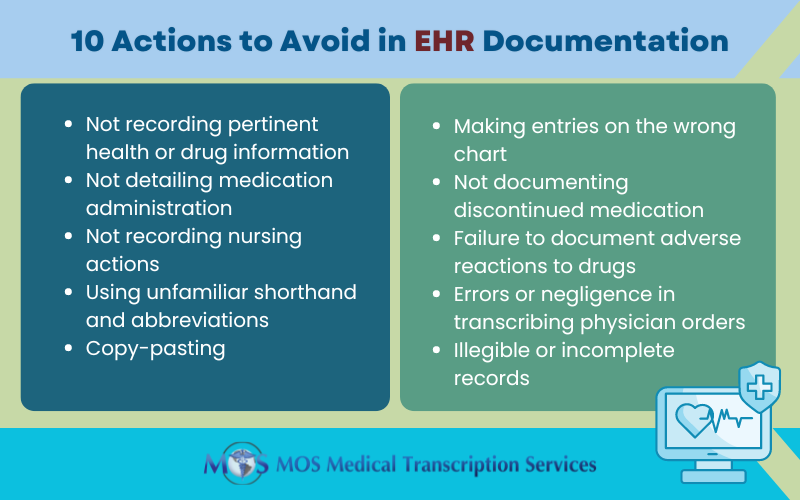
Here are 10 actions to avoid during EHR documentation

  1. 1. Not recording pertinent health or drug information: Effective charting means avoiding fragmented documentation and providing information necessary for the continuity of care. It’s necessary to document food and drug allergies, diseases, or chronic health problems. Nurses should record such information in their notes and on the admission sheet, and alert other staff members to do so. Not doing so could result in the nurse being accused of negligence.
  2. 2. Not detailing medication administration: Nurses should record the dose, route, and time of every medication given to the patient. They should ensure that only medications that are prescribed are administered and investigate if they suspect that medication may have been given but not recorded.
  3. 3. Not recording nursing actions: To ensure timely recording of all care provided, experts recommend inserting flow sheets in the patient’s chart for review at the end of each shift. This will provide a starting point for each staff member at the start of and through the shift.
  4. 4. Using unfamiliar shorthand and abbreviations: As far as possible, nurses should avoid using unfamiliar shorthand and abbreviations and don’t clearly convey the patient’s condition.
  5. 5. Copy-pasting: Nurses should avoid copy-pasting from other team members. Make your own assessment of the patient and document it.
  6. 6. Making entries on the wrong chart: Recording on the wrong chart can occur, for example, if two patients have same last name, share same room, suffer the same condition, or see the same doctor. This error can become part of a permanent record, resulting negligence and medical malpractice. Best practice is to highlight patients’ names on charts and medication records and check their identity before administering medications.
  7. 7. Not documenting discontinued medication: If the physician discontinued a medication and the nurse did not document this, the patient may continue receiving the drug – with disastrous medical consequences. The nurses can be sued for negligence. To avoid this, the nurse should crosscheck the physician’s orders and medication sheet before giving any medication.
  8. 8. Failure to document adverse reactions to drugs: Nurses should be vigilant for adverse effects in patients. Certain drugs can lead to harmful reactions in some patients. Nurses should document such adverse reactions and follow them with the physician.
  9. 9. Errors or negligence in transcribing physician orders: Nurses receive physician orders face-to-face, and via telephone or voicemail. These verbal orders should be transcribed into the patient’s medical record or onto a prescription pad as they are being communicated. Nurses can be held responsible if they transcribe or carry out an order as it is written or if they suspect something is wrong. For instance, entering “hyper” instead of “hypo” or vice versa, and typing “he” instead of “she” are common EHR-related transcription mistakes. Outsourcing medical transcription is a feasible strategy when it comes to avoiding such documentation errors. As they are knowledgeable about medications, terminology, and procedures, experienced medical transcriptionist can detect and avoid such mistakes. They will only use abbreviations that are on the hospital’s approved list of abbreviations.
  10. 10. Illegible or incomplete records: This is another documentation disaster. Incomplete documentation can affect patient safety. Specificity and completeness in documentation is crucial to avoid legal issues as well as to ensure proper reimbursement.

Importantly, nurses should document only the facts. “Stick with what you’re seeing or experiencing versus what you feel and what you think,” said Natalia Cineas, Senior Vice President and Chief Nursing Executive at New York City (NYC) Health and Hospitals in the Arizona Nursing College article “[Because a] medical record medical record is subject to review – whether it’s by a regulatory agency or from a legal perspective,” Cineas noted.

Addressing the Challenges

Adequate training in EHR use, including drop-down menus, flow charts, and free texting, is critical to ensure quality nursing documentation.

Employers should also pay attention to nurses’ concerns about documentation. For instance, if there are different platforms where nurses need to enter the same information multiple times, it can lead to double documentation – an entry in the patient record of information that already exists. Double documentation results in wasted time and work overload.

To make charting seamless, it’s important that nursing documentation interfaces with the EMR. Relying on a medical transcription company that provides EHR-integrated transcription services can accurate and up-to-date charting that enhances nursing workflow.

Ease your EHR documentation process!

Free up time for your patients!

Contact us today!

Tips for Patients and Physicians to Optimize the Office Visit [Infographics]

Optimizing the office visit is critical for patients and physicians, as it can improve patient care and improve practice efficiency and productivity.

Optimizing an office visit requires participation from both doctors and patients. Busy physicians often rely on medical transcription companies to ease EHR data entry and outsource their medical billing tasks.

Tips for Patients and Physicians to Optimize the Office Visit [Infographics]

Why Patients Lie to Doctors and How It Affects Their Care Plan

Proper communication between patients and healthcare providers is vital for better patient care. Patients should feel free to express their feelings to their physician because this can ensure better outcomes. A genuine concern at present is the EHR, which forces the physician to look away from the patient and make entries in the electronic health record. While documentation requirements can be met by hiring a good medical transcription service, physicians have to do more to ensure their patients are actively engaged and value their opinion.

Patients Lie to Doctors

A major problem that physicians face and which affects the patient – doctor relationship is patients lying to doctors. For patients, going to their doctor and facing uncomfortable questions about their bad habits can be stressful. The information that a patient tells a doctor plays a crucial role in providing maximum care. The main reason why patients lie to their doctors are embarrassment, simple ignorance, fear of being judged etc, but whatever the reason, this can be dangerous for their health.

The following are the common lies that patients tell doctors.

  • They lie about taking supplements: Many patients take nutritional supplements and herbs, but do not admit this to the doctor. Many of these supplements can be harmful and interfere with the medicines and drugs physicians prescribe and this can distort test results and reflect in the physician’s diagnoses.
  • Smoking: Patients lie about smoking and also about how they smoke. This is very dangerous for their health, especially for heart patients because any nicotine and tobacco derivatives in the body can slow down the process of healing. Patients feel ashamed about their habit of smoking and don’t want to discuss it.
  • Lie about their sugar intake: Diabetes is very risky, especially for patients who have surgical wounds and uncontrolled sugar levels can affect the patient’s recovery. Some patients with diabetes are unaware of their blood sugar levels or can’t recall it. It is important for patients to track their blood sugar levels because they are at more risk of developing eye diseasessuch as cataract, glaucoma, and diabetic retinopathy that goes undetected sometimes and chronic diabetes can even lead to heart diseases and strokes etc.
  • Women lie about heavy menstrual periods: Women often feel embarrassed about heavy periods when they have to change pads or change clothes several times a day. They try to hide their need for frequent bathroom visits. Many of them believe that there is no safe treatment for vaginal issues and this can lead to severe health issues. They are also worried about surgical treatment on such sensitive areas.
  • About their drinking habits: This is a very common lie that patients tell their doctors. Consuming more than 12 ounces of beer, 5 ounces of wine, or 1.5 ounces of distilled spirit can be harmful and negatively affect the treatments provided. It will increase the chances of hospitalization.
  • About exercise: Some doctors advise their patients to exercise and be physically active. It is a therapy and a treatment of diseases and also helps in preventing diseases. However, many patients lie about exercise saying they exercise regularly when in fact they do not. Exercise is very important for patients who are obese, which can later lead to increased diabetes, coronary diseases etc.

Another important thing people don’t reveal to doctors or lie about is their financial hardships. A recent report from the University of Texas’s South-western Center for Patient-centered Outcomes Research reveals that low-income individuals don’t always tell their doctors the truth about their financial hardships, or that they are choosing to pay for their food and rent rather than medications and other healthcare. When patients do this, doctors feel they are not following the instructions given. The study authors say that as a solution to this problem, doctors and patients should have more open discussions regarding the cost of medicines and find one that the patient can afford. They could also identify medications that patients can safely skip. Medical transcription outsourcing companies have a role to play in studies such as these. Typically, physician-patient conversations that are recorded need to be transcribed and studied to find out how physicians are handling individual cases, and what changes can be brought about to ensure smoother, and more open communication between the provider and the patient.

Why Healthcare Providers Should Focus on Reducing Preventable ER Visits

ER Visits

Working in the emergency room (ER) can be quite stressful, requiring constant attention and caution to ensure that patients receive the best possible care. Ensuring proper documentation is a critical but draining task. The aims of emergency room documentation are to summarize and communicate the patient’s ER visit effectively. This would mean covering all the important details like history, physical exam, review of systems, social and family history, medications, and allergies. It is also necessary to list any consultations, interpret lab and X-ray results, and document clinical decision-making, next steps, discharge instructions (if needed), new prescriptions, and the plan for follow-up care. Many ER physicians choose to outsource the documentation task to a medical transcription company to reduce stress and save time.

Most emergency rooms are overcrowded and understaffed and it is important that unnecessary ER visits are reduced.

Preventable ER Visits are on the Rise

What is a preventable emergency room visit? It is when a patient visits an ER for a health condition that could have been treated in a non-emergency setting or prevented by helping the patient maintain his/her health earlier on.

The Centers for Medicare and Medicaid Services (CMS) strongly recommends that reducing unnecessary emergency department (ED) visits should be a goal of all primary care and specialty practices. “Unnecessary ED visits burden the health care system as they are costly and consume resources that other individuals with more acute needs may need”, notes CMS.

The Agency for Healthcare Research and Quality (AHQA) has stated that nearly half of EDs report operating at or above capacity, and 9 out of 10 hospitals report holding or “boarding” admitted patients in the ED while they await inpatient beds.

According to a study published in JAMA Network Open, there was a significant increase in the number of potentially preventable ED visits from 1.8 million to 3.2 million during the period from 2012 to 2019. Pain (36.9%) was the most common reason for the potentially preventable ED visits among adults with cancer. The researchers noted that more than 50% of these more than half of ED visits potentially could have been prevented. The study highlights the need for evidence-based interventions to better manage cancer treatment complications.

Given that treatment in an ER is typically more expensive than a primary care visit, people should be encouraged to avoid unnecessary ER visits. However, patients experiencing a medical emergency should seek emergency care.

Tackling Unnecessary ER Visits

To tackle the problem of unnecessary visits to the emergency department proactively, a practice can work on gaining a better understanding of their patient population. This involves anticipating and addressing the reasons why patients might end up in the emergency room.

In the case of non-emergent issues, the primary reasons for ER visits are often related to accessibility challenges. These include:

  • Lack of a relationship with a primary care provider or care team
  • Difficulties in accessing a provider after hours or in a timely manner, or
  • transportation issues
  • Insufficient chronic care management
  • Gaps in coordinating care across multiple locations

The main reasons for ER crowding are, according to Dr. Rick Ludwig, Pacific Medical Centers’ Medical Director of U.S. Family Health Plan, the difficulty of finding a primary care physician and changing societal attitudes. Common unnecessary ER visits include those made by patients with respiratory infections, urinary tract infections, headache, and mild dizziness. If such non-emergent visits could be redirected to more appropriate medical caregivers, ER staff and resources could better handle the emergencies.

Pacific Medical Care Center recommends that if an incident occurs during after-hours, then the patient can make an initial call to someone at their facility to discuss their concerns. That discussion will help them determine whether the health concern can be dealt with at a clinic, whether it can wait till morning, or whether it is not an issue at all. In case of a medical emergency, the patient should call 911 and immediately visit the emergency room.

To avoid huge inflow of patients into the emergency room, Dr. Ludwig suggests that it is important to create awareness among patients. At the time of check-in, patients are given a card with the usual information on the front and a reminder about the clinic’s after-hour accessibility. At the time of checkout, patients are reminded about after-hour access. Pacific Medical Care Centre staff said they were surprised to understand that many people did not know they could access medical assistance even after-hours. That information has made them even more vigilant to let their patients know about such conveniences.

Emergency Room Visits: What Patients Should Know

Emergency Room Visits: What Patients Should Know

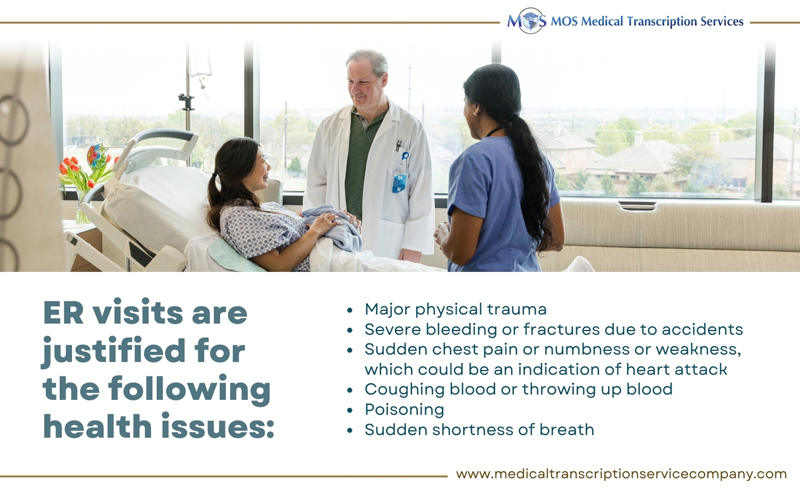
Health issues like cold, flu, sore throat, minor cuts or burns that can be treated at home using self care measures or at a primary care clinic do not necessitate an ER visit.

Best Practices to Reduce Unnecessary ER Visits

Older cognitively impaired adults face an increased risk of hospitalization and mortality after emergency department visits, revealed by a BMJ Open study. To curb these incidents and related ED presentations in community-dwelling adults, a deeper understanding of avoidable incidents is crucial. The study identified five types – falls, burns, transport accidents, harm due to self-negligence, and wandering. Except for transport accidents, cognitively impaired seniors were more prone to the other four types. The study suggests multi-factorial interventions involving professionals like pharmacists and fire-fighters to reduce incidents. Primary research screening for cognitive impairment and involving paramedics is essential to comprehend avoidable incidents leading to ED visits, aiding in the development of tailored preventive measures for older cognitively impaired adults.

Unnecessary ED visits and hospitalizations are debilitating for cancer patients, but are very common and costly for the U.S. healthcare system. To help prevent such visits, researchers at the University of Pennsylvania’s Abramson Cancer Center, the Leonard Davis Institute of Health Economics, and the Wharton School identified 5 best practices:

  • Identifying patients at high risk of unplanned acute care (unnecessary ED visits)
  • Improving access and care coordination among health professionals
  • Standardizing clinical pathways for symptom management
  • Developing urgent cancer care tactics
  • Employing early palliative care

These findings and recommendations of the study are published in the April 2018 issue of the Journal of Oncology Practice. Penn Medicine and the Abramson Cancer Center are already using some of these strategies and the results are promising. The Abramson Cancer Center has developed pathways that divert cancer patients from the ED to a more specialized urgent care clinic. Studies show that more than half of cancer patients who present at the ED are admitted to the hospital, often during normal clinical hours. As an alternative, the researchers suggest, developing sites that provide these patients an alternative to seek care.

Continued research into avoidable ER visits reveals their detrimental effects on specific patient communities and the escalation of healthcare costs. Healthcare providers, companies offering medical transcription services and other stakeholders, must recognize the importance of steering clear of unnecessary ER visits. As new payment models evolve in the healthcare landscape, physicians should prioritize efforts to minimize avoidable ER visits and patient hospitalizations.

Discover how our medical transcription services can streamline your workflow and improve patient care.

Contact us today

How to Ensure Accuracy During Medical Record Documentation

Medical Record Documentation

Medical records are a combination of both self-reported patient information and the physician’s notes on diagnosis, care and treatment given to the patient. Complete and accurate patient record documentation is necessary to promote quality and continuity of care. It also supports proper claims payment when you completely and correctly document the services you provide. That’s why accuracy and reliability are the main features to look for in your medical transcription services provider. By enabling communication between providers, proper documentation supports patient safety, preventive health services, treatment, planning, and delivery of care.

Optimize your EMR documentation with our reliable medical transcription services!

Call (800) 670-2809 today!

Electronic medical records (EMRs) tell the story of each patient’s medical condition—their diagnosis, the treatment they’ve received, and the physicians who saw them. They include physician notes, X-rays, test results, immunization reports, and other important medical documents and information. Ensuring accuracy in medical records requires effort on the part of healthcare providers across the board.

Accuracy Matters: Follow Best Practices to ensure Quality Medical Records

Here are some best practices to help ensure accuracy in medical documentation and avoid errors.

Medical Record Documentation Best Practices

1. Keep a unique, individual record for each patient

Each file should include:

  • Patient demographic informationthe patient’s name, birth date, and social security number.
  • Medical history-past diagnoses, treatments and medical care, and allergies, if any.
  • Medications-what medications the patient is taking, what medicines work and don’t work, and what might cause an allergic reaction.

2. Ensure clarity

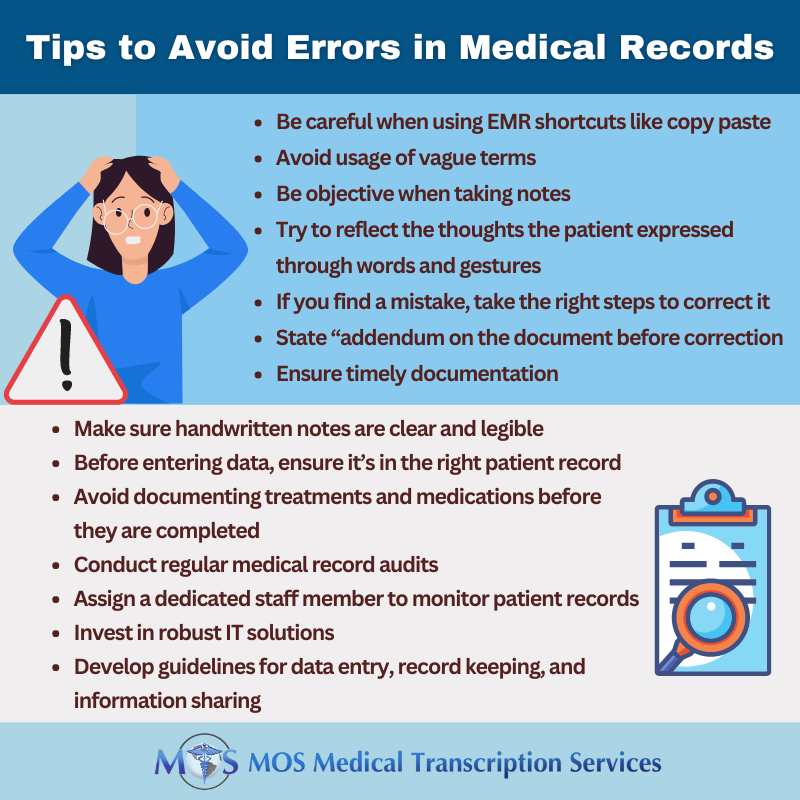
Although EMRs are the norm, documentation can be handwritten by the physician or the nurse and scanned into the record. Handwritten notes should be legible and easy to read. If there’s anything that lacks clarity, take steps to correct it. For example, if there is a mistake on a handwritten note, cross it out with a single line and enter the correct information. Don’t scribble over the erroneous text or use whiteout. Add an amendment to correct a mistake in the EMR.

3. Watch out for charting errors

Make sure medical history and medication instructions are entered correctly.

Medical errors that lead to unreliable healthcare documentation include:

  • Incomplete or missing data
  • Unnecessary blank space in forms within the medical records
  • Misplaced medical documentation
  • Not entering new medical conditions or symptoms
  • Misuse of copy and paste function in the EHR
  • Errors due to illegible physician’s handwriting or misunderstood dictation
  • Entry in wrong charts of files
  • Duplication of medical records
  • Failure to document omitted treatments/medications

In a patient survey study published in in 2020, 1 in 5 patients who read a note reported finding a mistake and 40% considered the mistake serious. Even small errors or omissions in a patient’s medical record can have grave consequences and cause patient harm with legal consequences for your practice.  For example, if an order is illegible, a patient could get the wrong medication, test, item or service which could put their health and safety at serious risk.

   4. Ensure organized record-keeping

Make sure all documents are organized in chronological order and easily retrievable for review and available for use at each patient visit or whenever needed. Each office visit should be recorded separately – don’t copy paste in electronic medical records. Ensure that both paper and electronic patient records are secure and accessible only to authorized individuals.

5.Maintain comprehensive documentation

Provide comprehensive health information about the patient – keep in mind that “if it isn’t written down, you didn’t do it. Provide as much detail as possible so that the next physician seeing the patient will know exactly what the patient was being treated for, including the future plan of action.

6. Use standardized terminology

Natural language allows for rich expressiveness but create ambiguity and a lack of standardization in EHRs To ensure consistency and minimize ambiguity, use standardized medical terminology. Resources that contain standardized medical terminology include SNOMED CT (Systematized Nomenclature of Medicine Clinical Terms), Logical Observation Identifiers Names and Codes (LOINC), and the International Statistical Classification of Diseases and Related Health Problems (ICD). Using standardized language  improves interoperability between different systems and applications, and reduces risk of miscommunication and errors in clinical decision-making.

   7. Sign Healthcare Record Notes

Every note entered into the EMR, including electronic notes, should be signed and dated. Include a digital signature and stamp with the date. If there is unused space on a signature line, draw a single solid line across the remaining space. This helps prevent unauthorized modifications of the signature or other documentation.

Medical Records

If dictated notes are transcribed by a third party, review them for transcription errors and ensure that entries are signed before they are added to the patient’s record.

Outsource Medical Transcription to an Expert

If you outsource medical transcription, the importance of partnering with a reliable service provider cannot be overstated. Errors in medical documentation and transcription can have a far-reaching impact, affecting patient safety and care across the continuum.

A 2020 JAMA study compared 105 encounter notes or transcripts to audio recordings from 36 physicians to identify discrepancies. The researchers found 636 documentation errors, including 181 charted findings that did not take place, and 455 findings that were not charted. Ninety percent of notes contained at least 1 error.

Key considerations when choose a medical transcription company include:

  • Make sure that the company can provide quality transcripts. Ask about their QA measures and what guarantees they offer.
  • Ensure that their team is well qualified and can successfully understand various accents and ESL physicians or dictators. Leading companies offer prospective clients a free trial to help them make an informed decision.

On your part, make sure your dictation is clear. For good audio recording, speak in a normal tone, ensure proper mic placement, and choose a quiet environment. Be extra careful when using similar sounding words that can create confusion or lead to spelling mistakes (for example, perfusion/profusion; cord/chord).

Experienced transcriptionists will verify the transcript while listening to the audio recording. They will look for each element in the transcript in the corresponding physician’s note, to see whether it is present, missing or inaccurate, and make the necessary corrections. Partnering with a HIPAA complaint medical transcription company will ensure that all healthcare data you entrust them with remains secure and confidential.

Ensure precise, secure, and compliant medical documentation!

Contact us to discuss your specialty’s requirements!

Virtual Access to Specialists can help PCPs Deliver Better Liver Disease Care, Finds Study

The widespread adoption of modern technology such as electronic health records (EHRs) has greatly enhanced a physician’s ability to deliver better care and enhance practice efficiency. Outsourcing medical transcription to a technologically advanced service provider helps physicians maintain EHR documentation integrity.
Liver Disease Care
Face to face conversations are the best way to deliver health care. However, the reality is that many remote patients are unable to get the care they need because they cannot travel to the city to see their specialist. Recent research has found that technology can come to their rescue. Michigan Health Lab recently reported ona study published in Hepatology which found that video conferencing with specialists can help primary care providers (PCPs) enhance care delivery for remote patients with liver disease. The study found that providing PCPs with virtual access to specialists boosted survival rates by 54 percent.

According to the Centers for Disease Control and Prevention (CDC), liver diseases such as hepatitis C, nonalcoholic fatty liver disease and liver cancer are on the rise. Experts predict that the number of people diagnosed with liver disease will double by 2025, resulting in 25million Americans suffering from chronic liver disease.

The symptoms of liver conditions can vary and often depend on the extent of the damage to the liver. Symptoms can also fluctuate over the course of a week. As a result, people with liver disease require constant monitoring to adjust medications or manage complications. With the fluctuating course of complications, treatment of chronic liver disease requires a team of highly skilled and well-trained physicians.

All of these factors make liver disease management even more challenging for people who live in rural areas. Even when patients are able to see their PCP, issues could crop updue to several reasons:

  • Frontline providers may have knowledge gaps in treating patients with liver disease.
  • They may lack means of proper communication with the patient’s specialist.
  • Time constraints can also affect quality of care.

According to the VHA Liver Telehealth Resource Guide, VHA patients with liver disease who live in rural areas do not get the care they need. The report notes that about 30% of VHA patients with HCV-associated liver disease reside in rural areas. These rural veterans tend to have a lower quality of life, higher prevalence of disease, higher hospital readmission rates, and diminished access to specialty, and other services as compared to their urban counterparts. Barriers to care include lack of specialists in rural areas, lack of transportation, and distance to major medical centers.

The Veterans Health Administration has implemented a program called Specialty Care Access Network-Extension of Community Healthcare Outcome (SCAN-ECHO). The VA Ann Arbor Healthcare System was one of the first organizations to utilize the SCAN-ECHO program for chronic liver disease.

Based on her own experience, University of Michigan gastroenterologist Grace L. Su, M.D. examined how the technology could be applied to reach more rural patients and their physicians. The study was based on 62,237 veteran patients with liver disease in Michigan, central Indiana and northwest Ohio between 2011 and 2015. The researchers noted that:

  • Of the 62,237 veteran patients with liver disease, only 513 had a PCP who used a SCAN-ECHO consultation about their case.
  • These consultations involved videoconferencing to link primary care providers and specialists.
  • Individual patient cases were discussed at the virtual consultations, and treatment plans and recommendations were made in real time.
  • Patients of PCPs who engaged in video consultations with liver disease specialists had a 54 percent higher survival rate than patients whose primary doctors did not participate in those exchanges.

Patients whose cases involved video consultations were more likely to be younger, live in rural areas, and have more severe liver disease, including evidence of cirrhosis. The team concluded that conducting consultations with specialists in liver or gastroenterology can help PCPs in routine monitoring as well as management of complex clinical problems in patients with chronic liver disease.

“It seems that primary care providers who participated in the SCAN-ECHO were more likely to follow the guidelines for cirrhosis and perform the screening for esophageal varicose veins and liver cancer in the patients who need it,” the lead author said.

US News recently reported that many experts see virtual visits as the future of medicine. The report describes how virtual visits can provide a positive experience for people with epilepsy by overcoming significant geographic and transportation barriers. Video conferencing allows patients to alleviate some of the stress of living with epilepsy and to also maintain their personal relationship with their physician. By seeing patients virtually, physicians can expand their services and provide consistent care for patients who live in remote areas.

Just as with face-to-face consultations, careful and comprehensive documentation should be made of the video consultations between the PCP and the specialists, including assessment and management plans. Capturing all this information can significantly change the course of the treatment. Gastroenterology transcription service providers can ensure accurate and concise documentation of these discussions. Experienced medical transcription companies follow best practices to provide error-free, timely EHR-integrated documentation.

Sentiments in Nursing Notes can Predict ICU Survival, Says Study

Comprehensive and accurate nursing notes are vital to make good therapeutic decisions. In fact, medical transcription outsourcing companies help the healthcare team ensure timely, error-free nursing notes. When in the intensive care unit, patients get individualized care from a specialized team. Each patient is assigned a specially-trained nurse who keeps round-the-clock vigil, closely monitoring the patient’s condition. A new study from the University of Waterloo in Ontario suggests that sentiments in healthcare providers’ nursing notes can be good indicators of whether intensive care unit (ICU) patients will survive. The research was published recently in the journal PLoS ONE.

Nursing Notes

Severity of illness scores help hospitals predict the 30-day survival of ICU patients. These scores are gathered within 24 hours of admission and include lab results, vital signs, and physiological and demographic characteristics.

  • Lab results: Critically ill patients People admitted to the ICU will have a wide variety of tests done on different body fluids, such as blood and urine. Testing is done on admitted to ICU, and then every day, and in some cases, tests may be repeated. The results are expected to help diagnose potential medical problems or to assess how effectively their treatment is working.
  • Vital signs: Vital sign bedside monitors monitor heart rate, blood pressure, intracranial pressure, oxygen levels and more. They quickly identify changes and complications in the patient’s condition, and alert the health care team so that appropriate action can be taken.
  • Physiological and demographic characteristics: demographic variables such as age and sex, weight, body fat, mobility, muscle strength, balance, and other related factors, co-morbid conditions, prior treatment details, lead time of admission to hospital and ICU, and so on.

The researchers used a large publicly available ICU database to assess patient data from 2001 to 2012. The analysis covered 27,000 patients as well as the nursing notes. Nursing notes are a crucial component of the medical record created a nurse and provide an accurate picture of nursing assessments, changes in patient conditions, care provided and other important information necessary to help the clinical team deliver proper care.

Applying an open-source sentiment analysis algorithm, the researchers extracted adjectives in the text to establish whether the adjectives and statements in the nursing note are positive, neutral or negative. They then used multiple logistic regression model to examine the relationship between the measured sentiment and 30-day mortality, while controlling for gender, type of ICU, and simplified acute physiology score.

According to Joel Dubin, an associate professor at Waterloo, the physiological information collected in those first 24 hours of a patient’s ICU stay is really good at predicting 30-day mortality.

“But maybe we shouldn’t just focus on the objective components of a patient’s health status. It turns out that there is some added predictive value to including nursing notes as opposed to excluding them,” he said.
The researchers reported that:

  • The sentiment analysis provided a perceptible improvement for predicting 30-day mortality in the regression model for this patient group.
  • A clear difference was also found between patients with the most positive messages who had the highest survival rates, and the patients with the most negative messages who had the lowest survival rates.

“Mortality is not the only outcome that nursing notes could potentially predict,” said Dubin. They might also be used to predict readmission or recovery from infection while in the ICU.

The results of the study highlight the importance of the subjective components of these notes for predicting the 30-day survival of ICU patients. Besides providing a clear and accurate picture of the patient while under the care of the healthcare team, nursing notes are required to comply with federal, state, and institutional regulations broad guidelines to determine if a nurse’s action was reasonable and prudent.

Nursing notes should include the following information:

  • Interventions initiated and the patient response when documenting an acute abnormality found during assessment
  • Detailed documentation a body system abnormality in each assessment, including description and size of wounds if any
  • Whether the assessment was visual, audible, and/or tactile
  • Reconciliation of mismatched objective and subjective assessment findings
  • Documentation of the patient’s baseline mental status
  • Assessment of the patient at the time of discharge or transfer

RN.com points out that documentation reveals the care nurses provide their patient. Nursing notes help nurses organize their thoughts and identify problem areas for planning and evaluating care. Such documentation is crucial to communicate with other team members. It also allows the nurse to take credit for the services provided and ensures reimbursement. Nursing notes are used in research, to support decision analysis, and in quality improvement. In addition to assessing proper medical care, nursing notes can be used for malpractice litigation.

EHRs help nurses ensure nursing notes are complete and accurate. Advanced EHR systems are designed to alert nurses to any missing, incomplete, or possibly inaccurate nursing notes. EHRs also ensure proper management of nursing notes including safe storage and easy accessibility when needed.

EHR-integrated medical transcription services go a long way supporting efficient documentation of nursing notes. Experienced service providers provide error-free transcripts of history and physical reports, clinic notes, office notes, or operative reports all nursing specialties.

How to Improve Patient Satisfaction Scores and Reduce Malpractice Risks

Patient-centered care is an adage that has been always upheld by healthcare providers. Today, it is growing in prominence with patients turning into consumers and the move from the fee-for-service to the fee-for-performance reimbursement models. Medical transcription outsourcing plays a key role in improving the patient experience by helping physicians with their tedious EMR-EHR documentation tasks so that they can communicate effectively with their patients. There are many other drivers of patient satisfaction. A recent Physicians Practice article says that focusing on good patient satisfaction can reduce malpractice risks.

Malpractice Risks

Patient Satisfaction Surveys

Industry leaders support the use of patient satisfaction surveys to assess patient satisfaction and identify opportunities for quality improvement. The Centers for Medicare & Medicaid Services (CMS) reinforces the idea of assessing and achieving strong patient satisfaction scores by incorporating Hospital Consumer Assessment of Healthcare Providers and Services (HCAHPS) scores into its inpatient prospective payment system. The HCAHPS survey incorporates 18 patient perspectives on care that cover eight central topics:

  • Communication with doctors
  • Communication with nurses
  • Responsiveness of hospital staff
  • Pain management
  • Communication about medicines
  • Discharge information
  • Cleanliness of the hospital environment
  • Quietness of the hospital environment

Conducting Patient Satisfaction Surveys

A study published in the Oman Medical Journal reported that patient surveys are around 94 percent accurate when it comes to revealing how patients feel about the quality of care received at a practice. But reliable and valid patient satisfaction measurement tools are necessary to collect patient feedback effectively. To encourage participation and get quality information, it’s important to ensure that the questions are easy to understand and unbiased. Some of the key areas to cover are:

  • Ease of scheduling an appointment
  • Quality of care – whether the patient was satisfied with the care provided
  • Communication – ease and quality of physician and staff communication
  • Convenience – Experiences in getting services from multiple providers and navigating the different components of the system
  • Overall comfort – whether the patient was comfortable throughout the visit

Make sure that the survey is not too long and that the questions are short and simple. Asking constructive questions and asking for suggestions will allow changes or improvements to be made based on the answers.

Once the questionnaire is designed, providers have to think of how to conduct patient satisfaction surveys. There are several ways to do this:

  • The questionnaire can be distributed at the reception desk. Patients can complete the anonymous survey while they are in the office and drop them in the designated box.
  • Full length surveys can be sent out on a regular basis by mail. The Physicians Practice report recommends sending surveys within 24 hours to 48 hours of a visit and also between visits for the best reach.
  • A simple one-question survey conducted after each visit can provide a quick impression of patients’ satisfaction and loyalty and help physicians track their “net promoter” score (NPS). This strategy involves asking patients to rank their responses on a scale from 0 to 10 – low scores would indicate a lack of enthusiasm to provide referrals and recommendations, and a higher score would reveal that the patient would indicate a willingness to recommend the physician and the practice.
  • Focus groups and patient interviews are also recommended to gauge patient perceptions on various issues. Offering incentives to patients could encourage them to participate in these in-depth discussions.

Other strategies include conducting telephone surveys, using a free online free survey service, and partnering with a company that specializes in conducting surveys for medical practices.

Finally, it is important to remember that the information that the patient surveys provide would be meaningless unless the results are assessed and followed through with improvements.

A Health Catalyst report notes that Clevel and Clinic is one of the organizations that has successfully made use of patient satisfaction surveys to improve the patient’s experience of care. Driven by low patient satisfaction scores, they hired an outside firm to conduct a comprehensive quantitative and qualitative survey to see exactly what patients wanted. The analysis of the results revealed that the top patient concerns were: respect, good communication between caregivers, and happy providers.

  • Respect – Patients wanted providers to treat them like individuals and communicate with them on a personal level. They felt that such providers will make fewer mistakes!
  • Communication between caregivers – Patients tend to perceive smooth communication between physicians and nurses as a measure of the type of care they are receiving.
  • Happy providers – Patients are wary about physicians who are in a rush or seem to be angry. If a nurse or physician appears to be angry when they walk into the patient’s room, it will affect patient engagement.

By making proactive changes based on the study results, Cleveland Clinic achieved amazing progress with their overall patient satisfaction scores

Strategies to Improve Patient Satisfaction

  • Communicate: Effective patient-clinician communication is crucial to patient satisfaction. However, electronic health records (EHRs) have cut physicians’ face-time with patients and turned them into “data entry clerks”. Healthcare providers need to make efforts to connect with patients, make eye contact, and actively listen to their concerns. Developing a good bedside manner will go a long way in improving patient satisfaction and trust.
  • Decrease long wait times: Starting on time and implementing strategies such as efficient scheduling can cut wait times and help practices gain a competitive edge, enhance care, and boost patient satisfaction. One survey showed that Patients who are forced to wait for a long time are likely to leave without seeing their physician, tell family and friends to avoid visiting the practice, and even switch to another doctor.
  • Increase family involvement: Communicating with the family and keep them in the loop is an important aspect of patient-centered care. This would help reassure patients in times of uncertainty, anxiety or vulnerability, according to the Patient-Center Care Improvement Guide. Family members or people who are close to the patient can provide information about the patient’s history, routines, symptoms, and more. Such information is crucial for providing proper care.
  • Get all the staff on the same page: Make sure to hire positive, happy people who are good at interacting with patients. Physician practices should also ensure that all of their staff is focused on patient satisfaction. This will enhance the patient experience, boost referrals and increase retention.
  • Set patient expectations: To better align patient expectations with patient experiences and score better on quality surveys, educate patients about your practice. Share faqs about important concerns such as information on medication refills, appointment scheduling, follow-up visits, test results, after-hours needs and other matters on your website.
  • Technology and outsourcing: Providers of all specialties can build technology-enabled practices by adopting innovative models such as telehealth visits, house-calls, and digital health apps. Medical transcription services are a viable strategy to manage EHR documentation and provide more convenient and improved care to patients. These measures can also improve providers’ work-life balance.

Patient satisfaction surveys are a useful tool to understand what patients are unhappy about. Taking the right measures to improve patient satisfaction scores can turn things around and reduce the risk of malpractice lawsuits.

Improving Standardization can Optimize Care Quality and Reduce Costs

Optimize Care Quality

Improved standardization helps healthcare organizations reduce time, effort and money, and importantly, optimize care quality and patient safety. Variation in the delivery of healthcare is a major concern as the lack of standardization directly affects the ability to ensure safe care. Organizations need to maintain high standards for documentation and management of health care records and many rely on medical transcription outsourcing to achieve this goal.

Studies show that care variation along with differences in costs and outcomes is prevalent across hospitals, states, and regions. Physicians are often hesitant and even unable to standardize their offerings as they need to provide a personalized health care experience to attract and retain a patient base. However, with the shift to value-based care, they are recognizing the importance of collaborating with administrators to cut uneconomical care variations and improve the quality of care.

Save Time and Improve Patient Care with Reliable Medical Transcription Solutions.

Get a Free Trial!

Variation in care processes can increase the incidence of errors. Standardizing the way critical tasks are performed every time can reduce errors especially in stressful environments such as the labor and delivery suite or operating room, according to the American College of Obstetricians and Gynecologists (ACOG). In fact, as the ACOG points out, eliminating variation in processes has been the foundation of improved performance and reliability in commercial aviation, military flight operations, and the nuclear energy industry.

Mayo Clinic and the Tennessee Medical Center are among the leading healthcare organizations that have adopted various strategies to standardize care across their networks. In 2015, the Advisory Board reported on how Mayo Clinic standardized the clinical operations across their 22 emergency departments in Minnesota to improve financial and quality opportunities. The project involved four critical steps:

  • Creating a standardized leadership structure
  • Setting up a centralized physician recruitment effort
  • Developing new, more appealing rotational roles for physicians and physician leaders, and
  • Implementing standardized, best practice nursing protocols

The Tennessee Medical Center, a 600-bed academic center serving 21 counties, also implemented standardization and improved coordination of care delivered to their patients across different disciplines. In an interview with Modern Healthcare in 2015, Chief Executive Officer, President and Director, University Of Tennessee Medical Center Joseph Landsman said that the Center embraced the concept of standardization as they knew it would drive quality and safety, service, and efficiency and effectiveness.

The Advisory Board looked into the key strategies that healthcare organizations are using to improve standardization of care across their systems. A recent Health Data Management article discussed these measures which are as follows:

  • Efforts to reduce health care variation: Restructuring of fixed costs, such as rationalizing redundant services across facilities and reducing inpatient capacity, helps cut overhead costs associated with multiple approaches to care.
  • Expanding the clinical leadership team: In order to build standards into daily workflows, leading organizations are adding nurses, informatics experts, and finance and supply chain representatives to the clinical leadership team. IT experts are needed to analyze data and to help manage efforts.
  • Requiring all physician specialties to limit care variations: According to the Advisory Board research, organizations are insisting that even the highest volume, change-resistant specialists comply with consensus-based standards. This approach is made more acceptable by “allowing for 20 percent to 30 percent running room for principled exceptions”.
  • Having managers to design standards for routine care: Rather than getting busy physicians fully involved in designing standards for routine care, organizations are hiring professionally trained managers to handle this task. Physicians can participate as needed based on complexity of the care variation being addressed.
  • Improving clinical documentation: Clinical documentation quality and integrity entails a complete and accurate health record. Proper documentation can identify care variations, help hospitals enhance care quality, and reduce costs. This will also improve reimbursement in the value-based scenario. On the other hand, misleading documentation can impair efforts to reduce variations in care.
  • Preview the impact of proposed care standards: Leading organizations are studying workflow mapping and assessment when they design new care standards. This helps clinicians avoid complications when they implement the standards in daily practice.
  • Consider the organization’s capacity to absorb change: Organizations should ensure that clinical consensus groups restrict new clinical specifications and order sets to those that can be logically implemented. As the Advisory Board notes, “too many changes can cause havoc with the staff who have to put them into practice”.
  • Restrict real-time monitoring for deviations: According to the report, such mechanisms could complicate care or overwhelm practitioners and will not improve care or generate cost savings. Instead of monitoring all care standards in real-time for deviations, leading organizations suggest monitoring and measuring compliance to frequencies that are based on feasibility and need.
  • Identify uninvolved physicians to lead care variation reduction efforts: In most organizations, there are not enough physician leaders to carry out care variation reduction efforts. The practical strategy would be to identify other interested physicians and involve them in the project.

When it comes to healthcare documentation, standardization is crucial to ensure availability of data for quality patient care and quality initiatives. Standardized documentation ensures regulatory compliance and meets coding and billing requirements. Thorough, accurate, and standardized documentation can protect the physician in a medical malpractice claim. Partnering with experienced medical transcription service companies is helping physicians improve documentation standards by integrating dictation into their EHR with benefits such as faster turnaround time, higher productivity, improved care delivery, and greater standardization.

Enhance Productivity and Focus on Patient Care with Well-organized Medical Transcripts.

Try Our Medical Transcription Services Today!

Give Us a Call at 1-800-670-2809.

  • KEY FEATURES

    • 3 Levels of Quality Assurance
    • Accuracy Level of 99%
    • All Specialties Covered
    • Competitive Pricing
    • Digital Recorder Dictation
    • Electronic Signatures
    • Feeds for EHR or EPM
    • HIPAA Compliant Service
    • Quick Turnaround Time
    • Toll Free Phone Dictation
    • Transcription Management Software
    • Volume Rates Available
  • RECENT BLOGS

  • Categories

  • Quick Contact


    • Infographics