What Should Physicians Know About HIPAA Compliance and Social Media?

Every physician knows about the Health Insurance Portability and Accountability Act (HIPAA) to protect patient health information. Established in 1996, HIPAA sets national standards for the confidentiality, security, and transmissibility of personal health information. HIPAA violations can damage a practice’s reputation and also result in criminal and civil penalties. The Privacy Rule applies to all personal health information (PHI), including paper and electronic records. This requires physicians to be alert when outsourcing medical transcription and engaging in any activity that involves PHI security risks such as using social media. In fact, there are certain things that physicians should know about staying HIPAA-compliant on social media.Social Media Use by Physicians

Social Media Use by Physicians

Recent studies indicate that more than 80% of physicians use social media. Physicians use social media for personal communication, to interact with peers and to expand their knowledge. According to a recent report from www.pm360online.com, social media engagement by physicians can be categorized into three:

  • Creating and publishing original content such as articles and blogs
  • Commenting on posts and participating in online group discussions or chat
  • Seeking information relevant to their patients and practice

There are many benefits to social media use by healthcare providers. Platforms like Twitter, Facebook, Instagram, and LinkedIn offer physicians the opportunity to reach a broader audience, build their brand, demonstrate expertise, build referrals, promote positive reviews, and spread health messages.

Research shows that communicating with patients via social media can improve their care and health outcomes. Social media allows physicians to extend their interactions beyond the physical office visit and impact patients’ daily choices. Studies have found that supplemental electronic communication improves adherence for patients with chronic diseases as well as patient satisfaction by having questions answered and increasing the time spent communicating with their physicians. However, when using social media platforms, healthcare providers need to ensure that they do not violate HIPAA rules.

How Physicians can stay HIPAA Compliant on Social Media

  • Know what constitutes a HIPAA violation on social media : Many physicians, nurses and other medical staff are not aware of what constitutes a HIPAA violation on social media. Healthcare Compliance Pros provides the following examples of social media behavior that would cause violation of HIPAA:
    • Posting verbal “gossip” about a patient to unauthorized individuals, even if the name is not disclosed
    • Sharing photographs, or any form of PHI without written consent from a patient
    • A wrong impression that posts are confidential or have been deleted when they are still visible to the public
    • Sharing of seemingly innocent comments or pictures, such as a workplace lunch which happens to have visible patient files underneath.

    Beckers Hospital Review cautions that organizations should be careful while posting to their social media sites like Facebook to keep their patients up to date on hospital news. They should ensure that photographs do not have patients in the background or reveal the backs of desks or computer screens as it will lead to HIPAA violations.

  • Be cautious when adding patients as friends on social media networks : Physicians should be cautious about interacting with patients using social media. A physician could inadvertently disclose PHI while communicating online with patients who might ask personal health questions publicly. They may accidentally reveal the names of patients they treat, thereby violating a HIPAA regulation. In fact, the Journal of Medical Ethics has issued specific guidelines advising physicians never to invite a patient to become an online friend, or to accept a friend request from a patient.
  • Never post anything that violates PHI confidentiality, especially patient photos : Healthcare providers should never post photos of patients or chart, notes or diagnostic images that could identify them. Social media posts tend to get shared and therefore physicians should be very care about what they post, share or retweet. They should never post an image without the patient’s written permission. There have also been cases where medical professionals accidentally photographed patients behind them while taking a ‘selfie’. Physicians should also know that discussing the details of a patient’s condition on social media is considered unprofessional.
  • HIPAA ComplianceDon’t post negative remarks about patients, co-workers, employers or clients : It is unethical to use social media to complain or rant about the people you are involved with on a daily basis – even if you do not name them. Negative remarks about your organization, coworkers, or patients will show you in a bad light and can even jeopardize your career. A CompHealth article notes that patients who identify themselves in the post may report the physician for a HIPAA violation.
  • Never post PHI : PHI includes a wide range of information: the patient’s name and address, date of service, patient record numbers, vehicle license plate numbers, and more. Healthcare professionals need to understand what constitutes PHI and avoid making unintentional unauthorized disclosures on social media. While a physician may discuss a patient’s PHI with another physician treating the patient, posting PHI online is not advised. It may be possible to identify patients through their symptoms or the time that their PHI was posted.

Despite these concerns and risks of HIPAA violation, social media is an important tool for physicians. Many physicians report interaction with peers as one of the greatest benefits of social media. Access to scientific journals, webinars, and video streaming via these online platforms adds to their knowledge base. To take advantage of these benefits, physicians should develop a HIPAA-compliant social media policy to protecting patient PHI. Physicians and their staff should have a clear understanding of HIPAA patient privacy regulations and how they relate to their social media accounts. They should also ensure the confidentiality of electronic health records through measures such as HIPAA compliant medical transcription services and proper archiving in accordance with federal and state mandates.


Paper and Film Records Found to be Most Common Locations of Healthcare Data Breach

Data breach in the healthcare sector involves the loss of sensitive data including an individual’s name, Social Security number, medical records, and possibly financial data such as credit or debit card numbers. An article in Health Management finds that January 2018 saw an average of more than a breach per day, with a total of 37 health data breaches. A recent study, published in the American Journal of Managed Care finds that paper and film records were the most frequent location of breached data in hospitals. Medical transcription services can be availed to transcribe these records and store it in an electronic form.Healthcare Data Breach

Even with the availability of advanced health information technology (IT) systems, security breaches continue to affect hundreds of hospitals and compromise thousands of patients’ data. While the data breach types included categories such as hacking/IT incident, improper disposal, loss, other/unknown, theft, and unauthorized access/disclosure, data breach locations or modes can be desktop computer, EHR, email, laptop computer, network server, paper/films or other location.

Researchers from the College of Health and Public Affairs, University of Central Florida and the United States Air Force Joint Base in Charleston, South Carolina evaluated the Office of Civil Rights breach data from healthcare providers regarding breaches that affected 500 or more individuals from 2009 to 2016. These data were linked with hospital characteristics from the Health Information Management Systems Society and the American Hospital Association Health IT Supplement databases.

Based on this evaluation, it was found that despite the high level of hospital adoption of electronic health records (EHRs) and federal incentives to do so, paper and films were the most frequent location of breached data, occurring in 65 hospitals during the study period.

Other key findings include

  • Of all types of healthcare providers, hospitals accounted for approximately one-third of all data breaches and hospital breaches affected the largest number of individuals. (Of the total 215 breaches, each affecting 500 or more individuals, 185 were in nonfederal acute care hospitals)
  • Network servers were the least common location but their breaches affected the most patients overall
  • There were significant associations among data breach occurrences and some hospital characteristics, including type and size.

The study indicates the relevance of conducting routine audits in hospitals to allow them to see their vulnerabilities before a breach occurs. It is also critical to implement information security systems, improve access control and prioritize patient privacy to minimize future breaches.

According to the Verizon research report published in Health IT Security, reducing paper-based PHI and establishing a holistic risk management program are critical ways hospitals can consider in preventing healthcare PHI data breach. Even while outsourcing medical transcription, providers must choose to partner with an experienced company that adheres to HIPAA guidelines and strict data security policies.

Health IT Adoption Continues Providing Better Medical Outcomes – Study

Health IT AdoptionImpact of Information Technology (IT) in the growth of the healthcare industry has reached heights, with several studies proving the better outcomes of this combination. A systematic literature review published recently in the Journal of Medical Internet Research says that adoption of health information technology (HIT) continues to provide positive medical outcomes. Since the setting up of the Health Information Technology Economic and Clinical Health Act (HITECH Act) in 2009, implementations of EHR systems have increased dramatically in the past few years. EHR-integrated medical transcription services also help physicians with better documentation of reports. According to the Zion Market Research report, key advantages associated with the EHR system and financial incentives by governments of various countries are among the main catalysts for the growth of the EHR market, all over the world.
The study authors note that “HIT has the potential to improve the quality and safety of health care services. Providers who leverage HIT to improve medical outcomes can position themselves for sustainability in the future.” Aimed at analyzing the current literature for the impact of HIT on medical outcomes, two researchers from the school of health administration at San Marcos-based Texas State University analyzed 37 peer-reviewed articles published during the last five years.

The team queried the Cumulative Index of Nursing and Allied Health Literature (CINAHL) and Medical Literature Analysis and Retrieval System Online (MEDLINE) by PubMed databases for peer-reviewed publications in the last 5 years that defined an HIT intervention and an effect on medical outcomes in terms of efficiency or effectiveness. They structured the review from the Primary Reporting Items for Systematic Reviews and Meta-Analysis (PRISMA), and conducted the review in accordance with the Assessment for Multiple Systematic Reviews (AMSTAR). Based on the review, it was found that

  • There was at least one improved medical outcome tied to adoption of a health IT intervention in 81% of the articles
  • The rest 19% of the articles indicated no statistical difference in outcomes as a result of the health IT intervention
  • Twelve categories of HIT and three categories of outcomes occurred 38 and 65 times, respectively

12 different categories of health IT, with a total of 38 occurrences were also examined. Web-based interventions were analyzed most frequently at eight of 38 occurrences (21 percent). Telemedicine and software programs were the next most frequently identified interventions, occurring seven of 38 occurrences (18 percent), and six of 38 occurrences (16 percent), respectively.

The study concluded that a strong majority of the literature shows positive effects of Health IT adoption on the effectiveness of medical outcomes. Considering medical transcription outsourcing from companies that interface seamlessly with your EHR/EMR system would be a better option. It also noted that healthcare providers will continue to be incentivized to adopt health IT as policy makers respond to quality and safety concerns, and reimbursement methods transition toward value-based purchasing.

EHR Fails in Delivering Critical Value-based Care Tools, Says Survey

EHR Value-based Care ToolsWhile several reports including Aetna’s 2018 Health Care Trends suggest the use of health IT tools such as Electronic Health Records (EHRs) as an important driver of value-based care, there are surveys that find that EHRs are not meeting providers’ needs for value-based care (VBC) capabilities. The latest report from Sage Growth Partners, based on survey findings and interviews found that more than half of the providers using EHR are missing critical capabilities such as data aggregation and analytics, risk stratification, care coordination, and patient/clinician engagement that would allow them to undertake more advanced VBC. To get these essential VBC capabilities, about half claim they would be willing to switch EHRs and healthcare providers are looking beyond their EHR and considering third-party PHM solutions such as medical transcription outsourcing designed to help providers meet the requirements of VBC.

According to the study, the respondents expressed diminished level of satisfaction, when asked about their EHR’s ability to support value-based and population health management programs and initiatives. The research highlights the many challenges healthcare providers face to get what they need to succeed in VBC contracting.

Key findings of the report:

  • General EHR satisfaction is greater than satisfaction with EHRs’ ability to deliver the capabilities executives need to succeed in VBC.
  • About three-fourths (74 percent) of healthcare executives say they are highly satisfied or somewhat satisfied with their EHR system. This may reflect a growing level of satisfaction with the basic functions of EHRs.
  • 76% respondents report realizing ROI with VBC, of which 46% believe that a third-party PHM solution was critical to success.
  • Only 53% of respondents said they were highly satisfied or somewhat satisfied with their EHR’s VBC functions.
  • 64% of providers said EHRs failed to deliver many critical VBC tools.
  • 60 to 75% of providers are seeking third-party solutions outside their EHR for value-based care solutions.
  • The top three EHR vendors according to respondents are Epic (42%), Cerner (20%) and Allscripts (17%).
  • 47% report that they use third-party PHM tools or vendors to help them with VBC functions.
  • The top five VBC challenges that providers are currently facing include interoperability (42%), addressing social determinants of health (SDoH) (34%), engaging patients (32%), coordinating stakeholders (30%), and having the necessary data analytics to support risk-based contracts (27%).
  • 70% of respondents identified timely integration of clinical and financial data as a needed capability, but only 48% are satisfied with their current ability to do this.
  • Payer-provider collaboration, holistic healthcare approaches that address the social determinants of health (SDOH), and the use of health IT tools will be among the most important drivers of value-based care, Aetna says in a new report.

The report clearly points out that most respondents are dissatisfied with their EHR’s ability to help them manage core functions necessary to succeed in VBC – such as care coordination, risk stratification, decision support and patient engagement. Healthcare organizations could rely on the EHR-integrated medical transcription service provided by professional medical transcription companies to manage electronic documentation for value-based care.

How EHRs Prevent Adverse Events and Improve Patient Safety

EHRs Improve Patient SafetyHealth information technology (HIT) includes methods and applications that enhance clinician decision-making and communication. Electronic health records (EHRs), for instance, have changed the way documentation is done and medical transcription services are delivered. Studies have found that EHRs can also prevent adverse events and improve patient safety. Positive experiences have been reported for cardiovascular, surgery and pneumonia patients as well as for physical therapy patients.

A 2016 study found that up to 91% of EHR adopters said that EHR use made records more readily available at the point of care, and compared to non-adopters, significantly more EHR adopters agreed that using EHRs allows them to deliver better patient care (71% vs. 54%).

An AHRQ-funded study published in The Journal of Patient Safety found that cardiovascular, surgery, and pneumonia patients whose complete treatment was captured in a fully electronic EHR were between 17 and 30% less likely to experience in-hospital adverse events. The researchers found that a fully electronic health record led to:

  • 35% lower odds of adverse drug events, 34% lower odds of hospital-acquired infections, and 25% lower odds of general events for patients hospitalized with pneumonia
  • 31% lower odds of post-procedural events and 21% fewer general events for patients hospitalized for cardiovascular surgery
  • 36% lower odds of hospital-acquired infections among patients hospitalized for surgery

Likewise, Exscribe reported on a 2013 study by the National Ambulatory Medical Care Physician Workflow Survey which provided some interesting insights into EHR use by physicians:

  • 70% maintained that the lab reminders and medication alerts on their EHR contributed to preventing potential harm to a patient
  • 45% said that a medication alert in their EHR had helped avoid a potentially serious medication error
  • 47% reported they felt positive toward their EHR and believed that specific features helped them deliver improved preventative care

This report also highlights the outcomes of a study by the Carnegie Mellon University Living Analytics Research Centre which found that EHR adoption reduced adverse patient safety events by more than 25%. It also led to a 30% decrease in negative medication events, and a 25% decrease in events or complications related to procedures, treatments, or tests.

The report also discussed the specific benefits of EHRs for orthopedic patients. Patient portals allow them to deliver their diagnostic material such as X-rays, MRIs, and other types of imaging. This overcomes the challenges of having to mail, fax, or transport this material from one area to another. By improving patient engagement, EHRs give orthopedic patients better control over their condition, allowing them to manage it better and improving the potential for a positive outcome. EHRs also enhance communication among physicians and specialists as well as between physicians and patients. This promotes patient safety and trust.

While some recent studies have revealed EHR use-related patient safety threats, experts point out that there is a way around. Berkshire Medical Technologies reported on a study released in October 2017 which found that poorly-designed EHR systems combined with human error contributed to patient safety issues during the past decade. The article lists the measures that clinicians and HIT developers can take to address this concern:

  • Limit use of EHR shortcuts such as the copy-paste tool: Physicians tend to use the copy-paste functionality to reduce the time spent on their computers. However, researchers in a 2017 JAMA study found that using copy-paste functionalities could increase the risk of patient harm through the entry of repetitive, outdated, nonspecific, or inaccurate EHR clinical data into physician notes. The researchers said that this would undermine the utility of the notes and lead to clinical errors. They recommended healthcare organizations and HIT developers take measures to restrict the amount of copied information in physician EHR notes. The authors also recommended locking certain sources of information to prevent copying altogether. For example, blocking the copy-paste function when providers are entering data into a blood bank information system can prevent errors related to blood transfusions.EHRs Patient Safety
  • Avoid complex EHR interfaces: The best type of EHR interface is one that is simple and uncluttered, according to a report from Pew Charitable Trusts. Unwieldy or overly-complex EHR designs can confuse clinicians, and make it difficult for them to find information. This will negatively impact their productivity and also affect patient care. The researchers pointed out that, “Important design principles include knowing what users need for a simple interface, removing complexity, using simple and clear terminology, emphasizing key elements, and using color effectively to draw users to important areas.”
  • Refrain from excessive EHR customization: The authors of the Pew Charitable Trusts study also advise organizations against customizing EHRs. Though customizations may be requested by a health care facility or staff, it is risky to implement such changes as they may not have undergone rigorous testing by the provider or the EHR developer to detect potential safety concerns.
  • Improve physician education on EHR use: Human error is responsible for many EHR-related errors. Educating physicians on how the software works can reduce errors and patient safety risks.
  • Standardize EHR system design: Researchers also recommend improving health IT standardization to reduce EHR-related problems. Standardization can reduce liability risks.

For accuracy in EHR data entry, providers can rely on medical transcription outsourcing. Simplifying EHR design will make it easier for physicians to view the information in a clear, concise, and straightforward manner. Ensuring clear and accessible EHR data can reduce the chances of medical errors and EHR-related patient safety risks.

Computerized Reminders can Improve Flu Vaccination Rates, says Study

Flu Vaccination RatesFlu levels remain elevated in the United States even during week 7 (February 11-17, 2018), according to the Centers for Disease Prevention and Control (CDC). National Center for Health Statistics (NCHS) mortality surveillance data available on February 22, 2018 indicate that 9.5% of the deaths that occurred during the week ending February 3, 2018 (week 5) were due to P&I (pneumonia and influenza). As healthcare providers struggle to manage the heavy flow of patients, medical transcription companies are doing their bit to help healthcare providers manage their EHR documentation tasks. A new study published in the Journal of General Internal Medicine found that computerized reminders promoting influenza vaccination for providers and patients can improve health outcomes.

Symptoms of influenza include fever, cough, rhinitis, malaise, headache, and sore throat. The severity of influenza can range from mild illness to death. Vaccination is the best method for the prevention and control of influenza, and can reduce disease and lower severity of infection, especially in young children and the elderly who are at risk for complications. However, vaccination rates are substantially lower than targets, especially among older adults.

Encouraging older patients to adhere to the recommendations for influenza and pneumococcal vaccinations is a complex process. Patient behavior and decision making related to vaccination recommendations is influenced by various factors. A white paper by EHR company Practice Fusion notes that EHRs clearly have a potential role in influencing patients’ decision processes by providing prompts and reminders to patients and by promoting physician recommendations and patient-physician interactions, and thereby patient care.

Developed by the US Public Health Service, the Health Belief Model (HBM) is a widely used theory of individuals’ health behavior. It recognizes the significance of contextual or social factors, and internal and external cues to action which stimulate or trigger health-positive behaviors. Prompts and reminders from the health care system come under the category of external cues to action.

The objective of the Journal of General Internal Medicine published study was to assess the effectiveness of an EHR patient portal and IVR (interactive voice response) outreach to improve rates of influenza vaccination in a large multispecialty group practice in central Massachusetts. Up to 20,000 patients who had no influenza vaccination 2 months after the start of the 2014-2015 flu season were assigned to receive one of the following:

  • A portal message promoting influenza vaccines
  • An IVR call
  • Both A and B
  • Usual care

The patients received the portal message via a standard, basic e-mail that had no reference to personal information or vaccines. They were prompted to login to the secure portal, following which they clicked on a message labeled ‘Brief Flu Questionnaire’ to view.

Another 10,000 non-portal users were chosen at random to receive an IVR call or usual care. Each intervention arm received information about the pneumococcal vaccine as well if the patient was overdue for the vaccine.

Frequencies were calculated to assess the link between the intervention groups and completion of pneumococcal vaccine. Electronic health records (EHR) were used to verify influenza vaccination completions after the delivery of each communication.

For the portal users, the researchers found that EHR-documented influenza vaccines were received by:
Improve Flu Vaccination Rates

  • 14% (702/5,000) of message and IVR call recipients
  • 4% (669/5,000) of message-only recipients
  • 8% (642/5,000) of IVR call-only recipients, and
  • 6% (582/5,000) of usual care recipients

Further, those receiving portal messages and IVR calls were more likely than the usual care group to be vaccinated.

For the non-portal users, the study reported that:

  • 5% of call recipients and 8.6% of usual care recipients had documented influenza vaccines
  • There were no significant improvements in pneumococcal vaccination rate in non-portal users.

The authors concluded that a combination of patient portal messages and IVR calls may provide the most successful strategy for increasing influenza vaccination rates.

The American Academy of Family Physicians had reported last year that influenza vaccination rates vary widely among different demographic groups, with health care professionals at 78 percent, elderly patients at 65 percent and pregnant women at 53 percent. The panelists emphasized that physicians, other medical professionals and public health officials need to educate all patients about the importance of vaccination. As physicians focus on patient care and education, they can rely on the infectious disease transcription services provided by an experienced medical transcription company to manage their EHR documentation tasks.

Diagnostic EHR Data Sharing Could Improve Patient Outcomes, Finds Study

EHR Data SharingSharing electronic health records (EHRs) is an ideal way to quickly share diagnostic data among hospitals and providers. A recent study published in the American Journal of Managed Care has found that the trend of hospitals sharing EHR data with providers within their health system is associated with improved communication among providers and better patient outcomes. Many physicians rely on EHR-integrated medical transcription services offered by experienced companies to better manage their electronic medical records.
Researchers used Hospital Compare (HC) and American Hospital Association (AHA) Annual Information Technology Survey data to examine the effects of medical information sharing on different groups of providers and hospitals within and outside of the hospital system.

The CMS HC database that contained publicly reported quality measures including patient outcomes such as 30-day mortality and readmission for heart failure (HF) and pneumonia have been used to examine patient mortality and readmissions. These data were employed in a multivariate linear regression analysis to check the associations among hospital sharing of EHR diagnostic data and differences in patient mortality and readmissions. The AHA survey listed 4 provider sharing types such as “With hospitals inside of your system,” “With hospitals outside of your system,” “With ambulatory providers inside of your system,” and “With ambulatory providers outside of your system.” The team linked AHA survey data from 3,113 distinct hospitals to each hospital’s corresponding CMS Hospital Compare scores.

Key findings of the study are as follows. Sharing diagnostic data through the EHRs –

  • within their system was associated with significantly lower 30-day patient mortality scores
  • outside their system was associated with significantly higher 30-day patient mortality scores
  • with physicians was significantly associated with lower heart failure readmissions overall

Researchers also discussed that data sharing between different health systems may be ineffective, as few healthcare organizations have integrated image data into patient EHRs or exchange. In such cases, sharing of some diagnostic data, such as radiology reports may be limited by a lack of radiology images in patient health records. The team also noted that more hospitals shared data with physicians within their own system than with physicians outside their system. While 72% of hospitals shared radiology reports with hospitals within their system, only 36% shared radiology reports with hospitals outside their system. Providers can benefit from timely EHR documentation and information sharing with the support of reliable medical transcription companies. They should, however, be clear about the data sharing policies of the company they rely on.

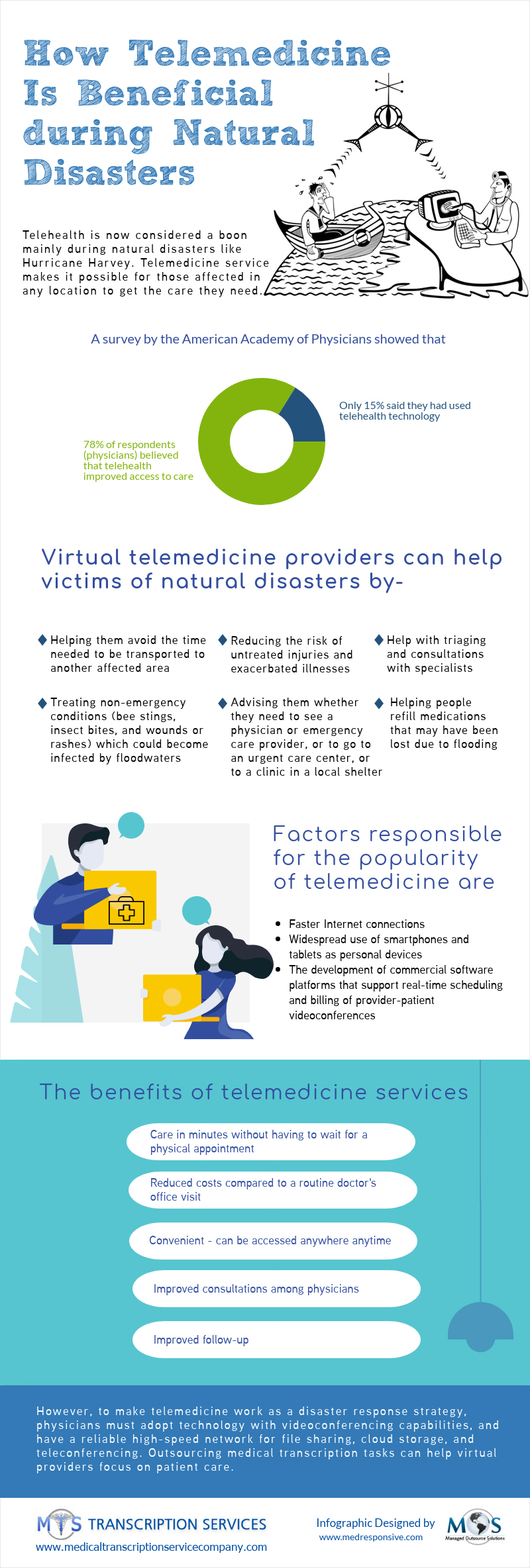
How Telemedicine Is Beneficial during Natural Disasters [Infographics]

Telemedicine, the practice of delivering medical care remotely using communications technology offers access to medical services regardless of an individual’s location. Recent reports indicate that telemedicine plays a significant role during natural disasters when people need access to quality healthcare in any area. Physicians providing these services can maintain timely medical documentation with support from professional medical transcription companies.

telemedicine-is-beneficial-during-natural-disasters

Does the EHR Have a Negative Impact on Patient Care?

Patient CareThe Electronic Health Record (EHR) has revolutionized the way physicians treat their patients. EHR-integrated medical transcription service helps in the successful adoption of Electronic Health Record systems. The EHR is expected to facilitate patient care and improve patient outcome, but physicians who perform EHR entry on their own are forced to spend their quality time on the computer capturing the patients’ medical information rather than focusing on the patients themselves. Physicians also tend to miss out opportunities to engage with patients while using the EHR. Studies in this regard have shown that physicians spend one third of their time in the exam room looking at computer screens.
Various Studies about the Growing Burden of EHR

A study by Annals of Family Medicine examined the work of 142 family medicine physicians over three years. The study found that doctors spent more than half of their time (six hours or more) on an average of 11 hours a day on EHR. Another study in Health Affairs, tracked the activities of 471 primary care doctors over a period of three years. They found that EHR time edged out face-to-face time with patients. Yet another analysis by Annals of Internal Medicine in which 57physicians were observed for around 430 hours, found that doctors spent almost twice as much time doing the paperwork instead of talking to the patients i.e. 49 percent of time was spent on administrative work and 27 percent with patients. The above mentioned studies show that physicians are not able to devote enough time for patient care.

Danielle Ofri, a doctor at Bellevue Hospital and an associate professor of medicine at the New York University School of Medicine points out that everyday, patients who have chronic illnesses are increasing, and patients with more health concerns are to be taken care of. But the major problem is that EHR work is increasing rapidly and the documentation demands are very challenging. During the consultation, doctors must listen to their patients carefully and figure out their clinical situation accurately. But in today’s world, what matters more are EHR requirements and the bitter truth is that each minute spent talking with patients means compromising the time for EHR entry. The EHR system offers various benefits such as legibility, centralized location of medical records, electronic prescription and so on, but this system has also brought a negative impact on patient care. Conventional medicine puts the patient first but with this system, documentation comes first. Many doctors feel that EHR system has jeopardized patient safety and now it’s time to act.Burden of EHR

The first step is that health systems should be required to periodically measure EHR burden and should be fined when it detracts too much from face-to-face time with patients. Then hospitals would use EHRs with the required fields only, and not include fields that cover their own needs and not the patient’s. The EHR itself should be held to a higher standard and treated like a medical device that is scrutinized before allowing into the market. Vendors should be held responsible for EHR designs that are detrimental to patient care.

Physicians and hospital systems can try to minimize EHR impact on patient care by shifting EHR related documentation to professional vendors. Today, many healthcare organizations hire the service of medical transcription companies to take care of electronic documentation. These are customized services available at affordable rates that will help physicians and other healthcare professionals to focus more on providing quality patient care and service.

Charting Intervention can improve Documentation of Geriatric Assessments during Patient “Hand-offs”

Geriatric AssessmentsGeriatric patients usually have complex health needs and complex therapeutic regimens, requiring medical services and support from a wide variety of providers and caregivers. Transitional care includes a wide variety of services to support safe and timely geriatric patient transfer between levels of health care and across care settings. As these patients move frequently within health care settings, coordinating their care can be challenging. While medical transcription services are available to document geriatric transitions in care, proper communication and complete transfer of information is necessary to ensure continuity of care. A study published by the Journal of the American Geriatrics Society in 2017 reported that a quality improvement intervention using geriatric-specific note templates, housestaff training, and reminders could improve documentation of geriatric assessments during transitions of care.

Studies have found that poor “handoff” of older adults and their family caregivers from hospital to home can lead to adverse events, low satisfaction with care, and high rehospitalization rates. The factors that cause gaps in care during critical transitions are:

  • Poor communication
  • Incomplete transfer of information
  • Insufficient education of older adults and their family caregivers
  • Restricted access to essential services
  • Lack of a single point person to ensure continuity of care
  • Cultural differences and language and health literacy issues

The geriatric assessment is a multidimensional, multidisciplinary diagnostic tool meant to collect data on the medical, psychosocial and functional capabilities and limitations of elderly patients. Comprehensive geriatric assessment, according to ocw.tufts.edu, would cover the following aspects:

  • Current symptoms and illnesses and their functional impact
  • Current medications, their indications and effects
  • Relevant past illnesses
  • Recent and impending life changes
  • Objective measure of overall personal and social functionality
  • Current and future living environment and its appropriateness to function and prognosis
  • Family situation and availability
  • Current caregiver network including its deficiencies and potential
  • Objective measure of cognitive status
  • Objective assessment of mobility and balance
  • Rehabilitative status and prognosis if ill or disabled
  • Current emotional health and substance abuse
  • Nutritional status and needs
  • Disease risk factors, screening status, and health promotion activities
  • Services required and received

Transitions of care for the geriatric patient in the emergency department, for example, require documentation of vital information such as the reason for transfer, vital signs, code status, medication lists, and baseline mental status. But these elements are often missing in the documentation, according to a study published in Clinical Geriatric Medicine. Failed transitions are regularly blamed for major morbidity and mortality, caused by issues such as medication errors, adverse drug events, lack of timely coordination, follow-up care, and unnecessary rehospitalizations.

Researchers from the University of North Carolina at Chapel Hill evaluated a continuous quality improvement intervention aimed at improving assessment and documentation of function, cognition, and advance care planning (ACP) in admission and discharge notes on an Acute Care of the Elderly unit at an academic tertiary hospital.

The study found that at baseline, admission and discharge notes did not meet minimum documentation criteria for the three domains of function, cognition, and ACP. Moreover, documentation of function and cognition was completely absent.

The researchers found that, after the intervention, there was substantial improvement in all measures, with 64 percent of admission notes and 94 percent of discharge notes meeting at least minimum documentation criteria in all three domains. The intervention involved: introduction of templated notes, housestaff education, leadership outreach, and posted reminders.

  • Templated notes: Part of the medical record, clinical notes record details of the patient’s clinical status or progress during the course of a hospitalization or over the course of outpatient care. The SOAP (subjective, objective, assessment and plan) format promotes a standard method for providing patient information, both for writing notes and presenting patients on rounds. Most electronic medical records (EMRs) have templates that present information in the SOAP note format.
  • Housestaff education: Housestaff education can improve patient-centered care during care transitions by improving the rate and quality of patients ACP documentation. For instance, student-led University of California San Francisco (UCSF) Department of Medicine projects found that housestaff education resulted in an increase in ACP EMR documentation at discharge, from less than 20% of discharges to over 85% of discharges, and that the improvement was sustained over the final 8 months of the academic year. One program targeted the completion of 3 essential elements of the After-Visit Summary (AVS)– the principal diagnosis, follow-up information, and patient instructions regarding medications, return precautions, and follow-up needs at the time of discharge. The project was successful and 82% of patients discharged from UCSF received a high-quality AVS.
  • Geriatric Charting InterventionLeadership outreach: Members of the geriatric health care team–nurses, physicians and other healthcare professionals–need to work together to maintain seniors at their highest level of function, improve independence, and minimize hospital visits. Outreach staff needs special training in geriatrics as well as extensive knowledge of community resource Nurses will need to develop leadership skills and competencies to work as full partners with physicians and also reach out to older adults who may not have access to health services.
  • Posted reminders: EMR reminders can improve care transitions for elderly patients. Many elderly patients do not receive the recommended preventive care, acute care and care for chronic conditions. The researchers found that EMR reminders promoted documentation of function, cognition, and care planning and improved patient assessment during transition of care.

“A quality improvement intervention using geriatric-specific note templates, house staff training, and reminders increased documentation of function, cognition, and ACP for post-acute care,” the authors concluded.

Accurate and complete documentation, such as that provided by an experienced geriatric transcription service company, would provide a comprehensive picture of the patient’s story, eliminating omissions, and reducing errors related to diagnostic uncertainty and care planning.

  • KEY FEATURES

    • 3 Levels of Quality Assurance
    • Accuracy Level of 99%
    • All Specialties Covered
    • Competitive Pricing
    • Digital Recorder Dictation
    • Electronic Signatures
    • Feeds for EHR or EPM
    • HIPAA Compliant Service
    • Quick Turnaround Time
    • Toll Free Phone Dictation
    • Transcription Management Software
    • Volume Rates Available
  • RECENT BLOGS

  • Categories

  • Quick Contact


    • Infographics