CDC Bats for MSM Status Documentation on Meningococcal Disease Reports

Meningococcal DiseaseThe Centers for Disease Control and Prevention (CDC) is concerned with the prevalence of meningococcal disease among men who have sex with men (MSM), and stresses the need to document MSM status on meningococcal case reports generated using EHR alone or through a combined approach of EHR and medical transcription. Meningococcal disease refers to infections caused by the bacterium Neisseria meningitidis (also termed meningococcus). Though the disease is preventable with vaccines, it carries a high mortality rate if untreated. MSM were not considered at increased risk for meningococcal disease earlier. CDC started considering it seriously after a series of reports found meningococcal disease among men who have sex with men at a significant rate.

As per CDC’s Morbidity and Mortality Weekly Report (MMWR), three clusters of serogroup C meningococcal disease among men who have sex with men (MSM) have been reported in the United States since 2012. The New York City Department of Health and Mental Hygiene found 13 cases of meningococcal disease among MSM during 2012 while the Los Angeles County Department of Public Health reported 4 such cases. The Chicago Department of Public Health reported 7 cases of meningococcal disease among MSM during May–June 2015 in the greater Chicago area. In order to understand the epidemiology and burden of meningococcal disease in MSM populations in the United States better as well as inform recommendations, CDC conducted a retrospective review of cases reported from January 2012 through June 2015.

In May 2013 and in August 2015, CDC requested all health departments to review all possible or confirmed meningococcal disease cases among males caused by any serogroup during the period January 2012–June 2015 and reported to the National Notifiable Disease Surveillance System, and determine the MSM status, if possible. All the fifty state health departments and the health departments of New York City, Los Angeles County, Chicago, and the District of Columbia responded to this request. Data analysis was limited to the cases occurring among MSM aged 18–64 years. The significant findings during the case review period are as follows:

  • Out of the 527 meningococcal cases reported among males aged 18–64 years, 74 cases were identified among MSM though MSM status was not routinely collected as part of national meningococcal case reporting and may be underreported.
  • Among the 74 reported cases among MSM, the median age was 31 years (range = 20–59 years).
  • Thirty-seven (52%) out of 71 patients were white, 29 (41%) were black, two (3%) were Asian, and three (4%) belonged to other races.
  • Neisseria meningitidis serogroup C accounted for 62 (84%) cases while serogroups B, W, and Y accounted
    for five, two, and three cases, respectively. The serogroup for two patients was not known.
  • Overall, 24 (32%) cases reported were fatal. Out of 63 patients for whom HIV status was reported, 37 (59%) were HIV-positive. Among these, 11 (30%) patients died.
  • Meningococcal vaccination status was known for 41 patients from which six (15%) were vaccinated with a quadrivalent meningococcal vaccine. Five out of the six vaccinated patients had serogroup C meningococcal disease, and two of the five died.

The case review revealed that information on MSM and HIV status of men with meningococcal disease is not documented in most case report forms. Complete and better representation of MSM and HIV status can help to understand the epidemiology of, and potential risk factors for meningococcal disease among MSM in the United States better and provide prevention and control recommendations accordingly. CDC made it clear that health departments need to be encouraged to determine MSM and HIV status during the investigations of meningococcal disease cases caused by any serogroup in males aged greater than or equal to 16 years.

Though it is difficult to include such specific kind of information within EHR currently, providers can utilize the latest technologies to document the same and obtain the service of a medical transcription company if necessary, for accurate and timely documentation.

5 Major Reasons for Hospital Visits during Holidays

Holidays Hospital VisitsHolidays are the time when people think of spending some quality time with family and friends, plan small getaways and have a great time. While enjoying holidays, it is important to be extra cautious when indulging in various activities. Hospitals all around the world see a hike in the number of people coming in for treatment. Medical transcription requirements also increase, with more providers opting for medical transcription services to manage any potential transcription overflow. Following are some of the major injuries or illnesses that may take people to hospitals during the holidays.

  • Flu and Fever: Cold and flu are common infections people catch hold of during the holidays. This may be due to sudden climatic changes, unhygienic surroundings and so on. This will lead to an increase in Emergency Room (ER) traffic. To reduce the chance of a flu attack, primary care physicians can advise their patients to follow good hygiene practices. This will help to check the spread of the infection.
  • Injuries and burns: Burns from electric shocks when decorating the house is one of the most common accidents that occur during holidays. Similarly, cooking together with family is fun but it often leads to cuts from mishandling of knives or any other sharp objects or burns from hotpots and pans.
  • Domestic violence: Domestic violence is a common element when families get together. Sometimes the situation gets so heated up that it may lead to quarrels or fights. This may be due to stress or over- consumption of alcohol. So, people need to be careful and drink responsibly to avoid any kind of hostile situations.
  • Food poisoning: During holiday trips or getaways, people often have food from restaurants or other eateries. Sometimes they serve uncooked food or leftover food. This can cause severe stomach illness or food poisoning. Physicians would advise their patients to avoid eating food that is left out for a long time, make sure to choose good restaurants or eateries when they are on their vacation and eat well-cooked food to avoid food poisoning.
  • Overindulgence: Overeating is another common problem that often take people to the emergency room. This is a very dangerous situation for people who have hypertension or hyperglycemias. It is always fun to treat oneself to a magnificent feast but it is also necessary to eat well and eat healthy.

Holidays are of course the time to spend with family and stay safe. Physicians can provide valuable advice to their patients in this regard. Infectious diseases such as flu and cold can be kept in control if people follow their physicians’ advice properly.

Managing Transcription Overflow Efficiently

Transcription Overflow

Transcription work in a healthcare organization fluctuates throughout the year. Despite a transcription manager’s best efforts, overflow occurs. Transcription overflow management is challenging but can be streamlined with proper planning and the right resources. One of the most effective ways to handle excessive documentation demands is through dependable medical transcription services offered by professional outsourcing companies.

Why Transcription Overflow Happens

The primary cause of documentation overflow is often inadequate coverage in the transcription department. During peak times such as flu season, post-holiday periods, or unexpected surges inpatient admissions, transcription departments may struggle to meet demands. This is particularly challenging in large healthcare facilities, where a single day’s delay in transcription can snowball into a backlog that affects every department, from radiology to billing.

Transcription managers must collect and analyze data to track fluctuations in transcription workload. For instance, in a large hospital, managing high patient volumes without compromising turnaround time can become overwhelming. Hospital officials often work overtime, facing intense pressure related to documentation. The organization must then decide whether to train more in-house staff or explore outsourcing solutions for transcription overflow. Either way, recognizing the actual volume of transcription work is critical to ensure smooth operations.

The Real Cost of Transcription Backlog

Without a clear plan, transcription overflow can negatively impact various departments—especially coding and billing—leading to delays and reduced efficiency. Most concerning is how transcription backlog can affect patient care. When dictated notes pile up, critical treatment decisions may be delayed, reducing the overall quality of service.

While assessing transcription needs, facilities should consider factors such as document turnaround time, potential data loss, and the role of physicians in meeting deadlines. A comprehensive review of past and current volumes, along with future projections, will aid in creating a sustainable plan.

How Medical Transcription Outsourcing Helps

Managing high-volume transcription projects is easier with the right support. Partnering with an experienced transcription company can ensure efficient documentation support. The key is finding a partner that acts as a virtual extension of the healthcare team. A reputable provider ensures consistent quality and timely delivery, which are both vital to maintaining patient care standards.

A capable transcription service partner will offer:

  • Complete coverage for single or multiple facilities and departments, including overflow.
  • Customizable turnaround times to suit specific departmental needs.
  • Support for web-based, mobile, and call-in dictation, plus document editing and automated distribution.
  • An HL7-compatible, user-friendly web interface for seamless ADT and EMR integration.
  • Cost-effective solutions with no need for software or hardware investments—clients only pay for what they use.

By uploading voice files at their convenience, physicians can enable quick transcription and timely entry into the EHR system, helping to prevent audio file overflow and keep operations running smoothly.

To stay ahead of transcription challenges, healthcare organizations must adopt a proactive approach. Regular monitoring, quality checks, and capacity planning are vital components of managing transcription overflow. With the right strategy and a dependable medical transcription service, even peak documentation periods can be navigated with confidence and efficiency. They ensure the safety of patient data by using secure HIPAA-compliant platforms with encrypted file transfers and strict access controls.

The best transcription companies use advanced platforms that are both secure and user-friendly. These solutions don’t require healthcare providers to invest in hardware or software. Instead, they operate on a pay-as-you-go model, allowing facilities to scale services up or down based on current needs. With centralized dashboards, transcription managers can track performance, monitor delays, and ensure that deadlines are met consistently.

Planning, execution, and adaptability are the cornerstones of successful transcription overflow management. With smart forecasting and reliable support from transcription services, healthcare providers can remain agile, efficient, and patient-centered—even during the busiest times.

Eliminate transcription delays and overflows – partner with expert medical transcription services today.

Contact us

How to Document Hip Fractures Properly

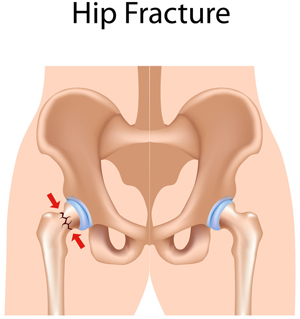
Hip FracturesMost often, hip injuries get little attention compared to injuries to the knee, ankle and shoulders due to their low prevalence. However, you should document hip fractures accurately through effective orthopedic transcription for the proper management of these types of fractures. Improperly managed injuries may result in severe consequences. There are several potential complications associated with intracapsular hip fracture (femoral neck) and extracapsular hip fracture (intertrochanteric, subtrochanteric).

Significance of History and Physical Examination Report

The correct diagnosis of hip fracture is done with a detailed history, a thorough physical examination and plain-film radiographs of the symptomatic hip. Physical examination would reveal an abducted and externally rotated hip with leg-length discrepancy with patients having severe hip pain and unable to walk. Hip fracture patients with vague pain in their buttocks, knees, thighs, groin, or back frequently report no antecedent trauma, especially when cognitive impairment is present and their physical examination (assessments of active, passive, and resisted movements of the affected hip joint and limb) may be normal. Based on this, diagnostic studies can be conducted to confirm any complications. If the radiographic findings only give the suspicion of a hip fracture, other imaging modalities can be used for confirming the diagnosis. The potential complications associated with each type of hip fracture are as follows.

Femoral neck

  • Avascular necrosis of the femoral head
  • Nonunion or malunion
  • Late degenerative changes

Intertrochanteric

  • Rarely, nonunion or malunion
  • Degenerative changes

Subtrochanteric

  • High rates of nonunion and implant (intramedullary nails or devices)
  • Fatigue due to high physical stress in the region

History and physical examination report includes history of present illness, review of past history, and detailed results of physical examination and diagnostic studies. Physicians can understand the symptoms of the hip fracture better with this report and determine whether there are any severe complications. This will enable them to provide appropriate treatment to manage the fractures more effectively.

Managing Hip Fractures in the Elderly

The new guidelines from the American Academy of Orthopedic Surgeons (AAOS) provide several recommendations to manage hip fractures in patients aged above 65. The recommendations supported by strong evidence are as follows.

  • Regional analgesia can be used to enhance preoperative pain control in patients having hip fracture.
  • If the patient is undergoing hip fracture surgery, similar outcomes can be achieved using general or spinal anesthesia.
  • Arthroplasty should be used in the case of patients having unstable (displaced) femoral neck fractures.
  • Use of a cephalomedullary device for the treatment of patients having subtrochanteric or reverse obliquity fractures.
  • A blood transfusion threshold of no higher than 8g/dl should be used in asymptomatic postoperative hip fracture patients.
  • Intensive post-discharge physical therapy enhances functional outcomes.
  • Use of an interdisciplinary care program in hip fracture patients having mild to moderate dementia enhances functional outcomes.
  • Multimodal pain management should be used after hip fracture surgery.

You should prepare appropriate documentation while utilizing any of these recommendations for the management of hip fractures. For example, you should properly document patient assessment, admission notes, history and physical notes, or consultation notes when it comes to providing anesthesia. The other complications of elderly patients with hip fractures should be documented as well. For example, acute confusional state (ACS) is a common and severe complication in elderly people treated for femoral neck fractures, which should be documented well. If you are a busy practitioner/healthcare facility, you can rely upon medical transcription services to handle enormous documentation related to hip fracture and save your valuable time.

Analysis of Global Medical Transcription Market 2015 – 2019

Medical Transcription MarketMedical transcription is the process of transcribing voice recording into a text format. A report by TechNavio covers the present scenario and the growth prospects of global medical transcription market for the period 2015- 2019.

Medical transcription makes data interpretation easier. Usually, physicians record their patients’ details in audio format and the audio recordings are accurately transcribed by a medical transcriptionist. However, with the advent of new technology and advancements in the health sector, medical transcription and transcriptionists have a changed role to play now.

According to TechNavio’s analysis, the global medical transcription market is expected to grow at a CAGR of 6% during the period 2014-2019. Speech recognition software has significantly changed the role of medical transcription from transcribing speech to editing text. The new software will convert speech directly into text format which will reduce the effort of physicians in recording the patient’s details and then sending the audio file to the transcriptionist. Transcription will now become more simplified and convenient while also lowering the risk of data breach.

The report states that the existing medical transcription is prone to human errors. Inaccurate entry of medical data can lead to poor quality of patient care and reimbursement and insurance coverage. The use of speech recognition will reduce the chances of errors and also minimize the duration of transcription. This will help physicians to spend more valuable time with their patients and provide them quality medical care. This new automation in medical transcription will minimize long- term expenditure and make the working pattern easy. As per the report, the market is well established. It is fragmented as well, with multiple products and services including voice recognition and transcription software being offered by many global and regional vendors. There are large numbers of competitors in the field of medical transcription who want to capture a major portion of market share. This makes it difficult for new entrants who wish to enter the market and gain more revenue and market share.

The important thing to remember though is that voice recognition cannot handle simple/complex formatting such as bold script, italics, automatically numbered/bulleted lists, tables, indents, font changes, boxes and so on. In these areas human intervention in the form of a transcriptionist may become necessary. Transcription companies with a long track record in the industry are still very much in demand and employed by healthcare entities looking for more efficient provision of patient care and more competent performance as well as speedy reimbursement. To provide high quality transcription services within minimum turnaround, these service providers offer EHR integrated medical transcription. Physicians can continue to dictate their notes if they prefer that. Professional transcriptionists will transcribe the dictations and enter the details into the relevant EHR fields promptly so that the entire documentation process is streamlined. If physicians use voice recognition along with their EHR to convert their spoken words into text, transcriptionists can still help, acting as text editors and ensuring the accuracy of the converted text.

Why Hospital Discharge Summaries are Very Important

Hospital Discharge Summaries

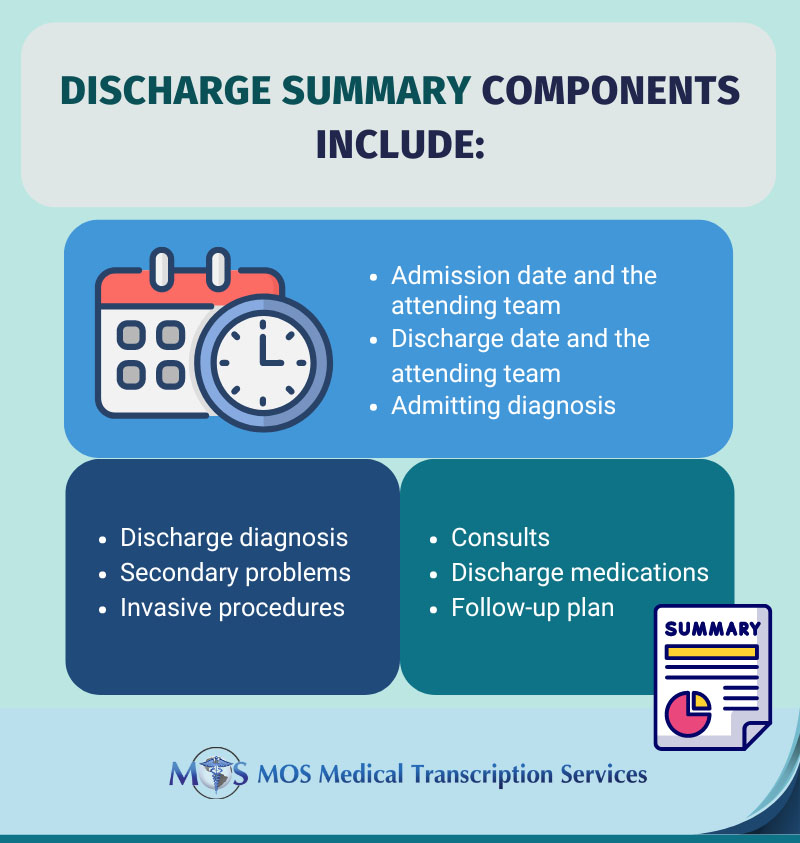
A discharge summary is a valuable document that gives an overview of a patient’s hospitalization from admission through discharge. It provides information about the continuity of care and supports safe patient transition from the hospital setting to another level of care or home. A discharge summary is generated when a patient is discharged from hospital. It contains vital details such as reason for the hospitalization, key diagnostic findings, treatments provided, patient’s health status at time of discharge, medications, care instructions, and follow-up plans. Hospitals are turning to EHR-integrated medical transcription services to ensure accurate and timely discharge summaries.

Optimize your discharge summary and improve patient care.

Contact us today

Components of a Discharge Summary

The discharge summary is an overview of the vital aspects of the patient’s care.

discharge summary

Significance of Discharge Summaries often Overlooked, say Studies

According to studies from the Yale School of Medicine studies, detailed discharge summary from the hospital to the patient’s primary care physician can help avoid readmission and aid in the patient’s recovery. Discharge summaries inform the subsequent healthcare provider about the patient’s health status. When the patient is discharged from the hospital, the physician handling the follow-up care should be given an accurate and complete discharge summary.

According Dr. Leora Horwitz, adjunct professor at Yale School of Medicine and director of the Centre for Healthcare Innovation and Delivery Science at New York University Langone Medical Centre, discharge summaries are more often used a tool for billing purposes and not fully utilized as a tool for transitions.

Horwitz’s team analyzed around 1500 discharge summaries from 46 hospitals. The study highlighted the importance of timely and accurate discharge summaries for efficient care post hospitalization. The team’s second study found that the quality of summaries was directly related to the risk of readmission.

The effectiveness and quality of care for patients largely depends on the communication between physicians both in secondary and primary care. Discharge summaries should ideally be completed prior to discharging patients from the hospital and copies should be kept in the patient’s file, given to the patient as well as forwarded to the concerned provider.

Discharge summaries provide clear guidance on how care must be rendered to the patient. Clinicians will have a clear idea of what treatment to administer, when to administer it, and what reaction to expect from the patient. A complete discharge summary is also proof of the care and concern the hospital shows towards the patient and the steps it takes to ensure the patient has a great follow-up.

Incomplete Discharge Summaries Cause Fragmented Care

Lack of a proper discharge summary can cause issues. When patients are transferred without any clear instructions, it can impact patient safety and care, increasing risk of readmission.

Fragmented care and treatment not efficiently coordinated has been one of the major causes of increased healthcare costs and patient harm according to the Health and Medicine Division (HMD). Apparently, even high performing health systems lag behind in the timeliness and transmission of discharge summaries as well as in the content quality. Sharing patient information is a vital aspect of care delivery. Inaccurate or delayed information transfer through the various care levels has a negative impact on re-admission, safety, efficiency as well as other quality dimensions.

Research conducted by the Yale University School of Medicine on heart failure exacerbation patients also found that quick distribution of detailed discharge summary to patients’ physicians improved outcomes following a hospital stay and reduced the chances of them being readmitted within a period of 30 days. In other words, the higher the quality of the discharge summary is, the lower the risk of complications which would necessitate readmission.

Key Elements of Discharge Summaries

The three essential aspects of the discharge summary are timeliness, smooth transmission, and content quality:

  • Timeliness is a very important factor. Hospitals must create a summary and provide a copy to the primary care provider in a timely manner. The Yale University School of Medicine research found that nearly 8% of the surveyed facilities did not have discharge summaries ready till 30 days had passed following the discharge.
  • Transmission must be smooth. Hospitals should ensure that the summary is prompty sent to the right practice or clinician for the next level of care after discharge. This is crucial to ensure follow-up care.
  • Content quality is crucial. Discharge summaries must have important details regarding the condition of the patient during discharge, any pending tests to carry out, further medication to be administered, and other follow-up recommendations.

Flawless Discharge Planning

In line with these factors, it would be wise to evaluate the discharge process of your hospital if there are issues in your discharge summaries. It is important to remember that the preparation for a smooth discharge starts right when the patient is admitted. The AHA (American Hospital Association) has brought out a few guidelines that hospitals must follow regarding discharge planning:

  • To begin with, discharge planning must be based on the sound judgment of physicians and other medical professionals involved in the patient’s care.
  • It is important to analyze the needs of each patient before deciding on their post-hospital placement following their discharge.
  • EHRs need to be utilized to their full capacity for reducing or streamlining any administrative burden that could arise because of thorough discharge planning.
  • Clinicians must collect all the required information while the patient is at the hospital to make the right decision regarding post-discharge care.

Ensure accuracy and efficiency in your discharge summaries and other critical reports.

Call us at 1-800-670-2809

Physician and hospital documentation can be streamlined and completed in a timely manner with the help of a reliable medical transcription company. Experienced medical transcriptionists can ensure high-quality reports EHR integrated documentation. Accurate and timely discharge summaries will have a positive impact on patient care and reduce readmission rates.

Electronic Medical Records for Better Patient Outcomes after Discharge

Electronic Medical RecordsElectronic Health Record (EHR) is a systematic way of storing patient records such as personal information, disease, modes of diagnoses and recommendations by the physicians and so on, with the objective of ensuring easy availability of necessary data when needed. EHRs are valuable tools for doctors treating patients.

The main purposes of a patient’s electronic health record are:

  • For documentation and planning of patient care
  • As a means of communication
  • As legal records or documentation
  • For further research & education
  • For providing comprehensive details regarding the patient’s illness, care, treatment and outcomes

The After Visit Summary

Technology has become more accessible to healthcare consumers. Doctors now take printed copies of health records that patients can take home and review at their own convenience. This printout called AVS or After Visit Summary is given to the patient at the time of discharge. As per The Centres for Medicare and Medicaid Services, AVS should include the name of the provider, a diagnosis, discharge instruction, current list of medications and instructions on how to take them, laboratory test reports and also time and location of the next appointment.

It is estimated that around 40% to 80% of patients do not remember the information that they received from healthcare providers, and most of what they remember may be incorrect. This leads to medication errors and poor follow-up care. A sure way to ensure proper follow-through care for patients is to combine verbal instructions along with written directions. This is what the AVS offers patients – a written care plan for them to follow. Patients can refer to the AVS whenever they have a doubt regarding what they were told during an office visit or at the hospital.

The information in the medical records is changed and updated from visit to visit of the patient. It helps patients to know more about the care that they received and empowers them to take a more active role in managing their health.

Patients Discharge Summaries and Ways to Improve Them

Speaking of the patient discharge process, it has an important role to play with regard to patient outcomes. The better the discharge summaries, the better would be the patient outcomes. A study from the Yale University School of Medicine shows that patient outcomes could be improved after a hospital stay, if a detailed discharge summary is made and distributed quickly to the patients’ doctors. It would reduce the chance of patients being readmitted within 30 days.

  • Accurate Content: Discharge summaries should contain accurate information about the patient’s health condition at discharge and recommendations for further follow up.
  • Transmission: Hospitals should not take much time in sending the summary to the right physician after the discharge of the patient. Doing this would streamline the patient’s recovery and ensure the good care that they need.
  • Timeliness: The hospital should provide the summary of the patient to the provider as soon as possible. The summaries should be prepared within three days.

To ensure that discharge summaries meet the above requirements, the features of EHR system can be taken advantage of. A reliable EHR can quickly transmit information regarding a patient’s hospital stay to a primary care provider and thereby avoid problems that may be caused by insufficient information after discharge. A discharge template can be created into which details of a patient’s condition before discharge can be entered. This may involve customizing individual EHRs.

Physicians and hospitals that prefer the traditional dictation-transcription method can continue to do so with the support of efficient EHR integrated medical transcription services. In this case, physician recordings are transcribed and entered into the appropriate EHR fields by professional transcriptionists.

EHR as a Vital Tool for Clinical Decision Making

EHREHR-integrated medical transcription solutions can help hospitals and physician clinics adapt better to the controversial electronic health records. As things stand, doctors all over the nation have reported trouble adapting to EHR/EMRs. Some help could go a long way in facilitating better adaptation to these state-of-the-art technologies. EHR support helps physicians in the transition from dictation platforms to the electronic health record.

Looking at EHR from a Different Perspective

Ever since EHR systems were introduced into healthcare, doctors have been complaining about their complexity. The software has been portrayed as something which detracts the attention of physicians from patients to the desktop particularly during consultations, thus affecting healthcare. While that may be true with physicians having trouble adjusting to EMR data entry, the electronic health record can actually contribute to improving healthcare. It can help ensure efficient decision making.

EHR for Detection of Warning Signs in Patients

Ophthalmology Times reports that such a development was initiated at the University of California, Davis (UCD). The UCD developed an expert system for alerting physicians to the manifestation of the early warning signs of sepsis developing in critical care patients. As you know, sepsis is a life-threatening condition and requires early detection to improve the prognosis. This development helps in that.

This works when the patient’s vital signs are constantly monitored and entered into the EMR. An algorithm, developed after validation in various critical care patients, processes the data and identifies a set of vital signs consistent with the arrival of early sepsis. The EHR then transmits an urgent email to the concerned head nurse for carrying out the necessary procedures and informing the treating physician. This system is believed to have contributed to the reduction of sepsis mortality rates in the institution from 47% to 21% in a period of 3 years. It is estimated that over 200 patients were saved by this system.

Helping in Clinical Decision Making

This system can be implemented for various conditions and diseases. In ophthalmology, a risk calculator could be integrated into the electronic health record to provide better care for glaucoma patients. Ophthalmology Times also reports the development of a system whereby, on examination of a patient having ocular hypertension, the individual’s age, central corneal thickness, IOP, optic disc parameters, parametric testing results, etc., can be extracted and entered into the risk calculator. This information would enable the physician to decide the treatment or observation course of action.

Researchers at the University of Michigan’s School of Engineering have been developing such an algorithm to incorporate into the EHR at the Wilmer Institute. The algorithm makes use of data from multi-center clinical trials that can integrate past results from tests and IOP measurements as well as socio-demographic characteristics of the patient to come upon a personalized forecast of the patient’s probability of glaucoma progression and the identification of the right time for carrying out further diagnostic testing.

Breaking the Barrier of EHR Negativity

These innovations are indications of the immense potential of the EHR not merely as a storehouse of clinical data but as a tool for processing data that can help in decision-making for physicians and patients. This can help improve healthcare significantly through a more scientific and empirical approach to decision making. However, this could happen only if physicians get more familiar with the EMR and consider them useful for more than just documenting patient visits. Electronic health records make locating information in a chart easier and also facilitate easier communication with the other healthcare providers.

The potential is massive, but a more ready adoption of the EHR is essential. Physicians and practices must develop procedures to use electronic health records in a more efficient manner. EHR-integrated medical transcription solutions could be one of the ways to do this.

ICD-10 Documentation Tips for Urinary Tract Infection (UTI)

Urinary Tract InfectionUrinary tract infection (UTI) is a severe health problem that affects millions of people every year. A common type of infection in the body, it can also be a hospital-acquired infection. Not all patients show symptoms though most of them have some symptoms. Also, each type of UTI shows more specific signs and symptoms depending on the part of the urinary tract that gets infected. ICD-10 documentation of this condition is highly specific and must be accurately done. Physicians can consider EHR integrated urology transcription services to ensure accurate medical coding, high productivity and increased revenue. All patient encounters will be documented comprehensively.

Key Concepts in ICD-10 Documentation

  • Stage or grade of disease – You should specify the stage of UTI after a thorough examination.
  • Severity – Specify the severity, whether mild, moderate or severe.
  • Specific anatomic location – The site of the UTI should be specified properly, if known (for example, bladder, urethra, kidney).
  • Actual form of UTI – Specify in which form UTI manifests in patients (for example, whether acute or chronic.
  • Episode of Care – Specify the episode of care or phase of treatment, whether initial, subsequent or sequel.
  • Condition – Specify whether unilateral or bilateral condition.

ICD-10 Documentation – Best Practices

  • Ensure whether UTI was present on admission (POA). If it is not clear whether the condition was POA, state that in your documentation
  • Linking:
    • Link UTI to associated causes or conditions, by using the phrases “due to”, “with” or “secondary to”
    • Link UTI to a device, by using the phrases “due to” or “with”
    • Lists, commas and the word “and” do not link conditions
  • Connect the suspected organism to the infection
  • Clarify whether the patient got infected from UTI or Sepsis
  • Identify cystitis as being acute, chronic obstructive, interstitial, trigonitis, irradiation, or other form
  • Identify pyelonephritis as being acute, chronic, obstructive and reflux uropathy, or drug and heavy metal induced
  • Specify when hydronephrosis is accompanied by urethral stricture, reflux nephropathy, calculus obstruction or hydroureter
  • Give evidence of any hematuria

Electronic health records or EHRs help you to document all the specific details quickly and give you better access to the required information. However, copy-paste errors and limitation to narrative description may overshadow EHR benefits and your documentation may not be as specific as required. In EHR transcription, experienced and skilled transcriptionists transcribe the physician recordings and review the transcribed data before populating those data within EHR fields via discrete reportable transcription (DRT) technology. By relying upon an efficient medical transcription company, you can enjoy the benefits of EHR integrated transcription and ensure specific and accurate documentation as per your need.

Can Medical Transcription Outsourcing Help Improve Solo Practices? A Review

Outsourcing VendorsThe need to implement electronic health records is pressurizing present day healthcare practitioners, especially those who are used to and comfortable with the traditional dictation and transcription practice. Medical transcription outsourcing can really help individual practices attain greater efficiency and sustainability, especially practices that are short of resources and sometimes, supporting staff. There is just a lot to do. If you are wondering how transcription can be relevant in this EHR age, the answer lies in EHR integrated transcription. Physicians can record their notes and send it to a chosen provider. These recordings are transcribed by skilled and experienced transcriptionists and populated into the corresponding fields within the EHR. This streamlines documentation, leaving the physician with more face-to-face time with patients. Now let us get back to solo practices and practitioners.

In this age of complex healthcare, it may sound crazy to think of going solo. Running a solo physician practice needs a lot of smart management, but it still can be done. At least that’s what one doctor realized, as mentioned in Physicians Practice.

The Lure of Solo Practice

Why would a doctor leave secure employment to start her own practice? Why take up the tension and associated issues involved in drawing patients to the practice, handling the myriad non-core responsibilities, recruiting staff and managing their paychecks and benefits, and managing the business and legal side of matters? And why take the risk of not being able to go on a vacation without thoughts about the practice in one’s mind all the time? Perhaps it’s the sense of having achieved something, which may not come with employment. But that satisfaction of achievement could be elusive if things aren’t planned well, right from the start.

Researching Before Taking the Plunge

This doctor began her research long before she took the plunge, which involved getting opinions and insights from physicians in private practice, gleaning information from articles and books, attending seminars, and getting to know the non-medical side of running a practice – something which, she points out, can never be received in medical school. This equipped her with something to expect. She did realize what she’d be sacrificing for this – a fixed paycheck, benefits, retirement plan, and freedom from the responsibility of managing a practice.

Settling Down

But she did reap the benefits – she got to see patients at her office around 30 hours each week instead of the expected 40, but it still is a great showing. She also spends anywhere between five and ten hours each week on seeing patients in hospital and around 10 hours on phone consultation and administrative tasks including filling out forms. She also gets to relax during occasional no shows. Great vendors made the experience better and helped contribute to greater sustainability of the practice.

For such solo practices, an efficient medical transcription company can significantly help in lessening the documentation strain. EHR integrated medical transcription is a great option that allows physicians to make the best use of EHR capability and traditional transcription assistance.

This physician has finally tasted success with her solo practice though there were sacrifices involved and a lot of hard work.

  • KEY FEATURES

    • 3 Levels of Quality Assurance
    • Accuracy Level of 99%
    • All Specialties Covered
    • Competitive Pricing
    • Digital Recorder Dictation
    • Electronic Signatures
    • Feeds for EHR or EPM
    • HIPAA Compliant Service
    • Quick Turnaround Time
    • Toll Free Phone Dictation
    • Transcription Management Software
    • Volume Rates Available
  • RECENT BLOGS

  • Categories

  • Quick Contact


    • Infographics