Inpatient Physicians find EHRs more Taxing than Outpatient Physicians, says Study

Inpatient Physicians find EHRs more TaxingEHR use has been identified as a major cause for physician burnout. A study conducted by the RAND Corporation and the American Medical Association (AMA) identified EHRs as the main reason for physician dissatisfaction, emotional fatigue, depersonalization, and loss of job satisfaction. Many studies also show how data entry in EHRs affects patient-physician interactions in outpatient settings, a situation which medical transcription outsourcing helps address to a great extent. Nevertheless, a recent article in AMA Wire discussed a study in the Journal of Innovation in Health Informatics which found that EHRs pose even more challenges for inpatient interactions. Hospital-based physicians find EHRs more taxing to manage than office-based physicians, says the study.

The researchers’ findings were based on a qualitative analysis of a statewide physician survey across specialties to evaluate hospital-based physicians’ perceptions about how using an EHR impacts their interactions with patients. This new EHR survey covered more than 700 hospital and office-based physicians who were asked the question, “How does using an EHR affect your interaction with patients?”

The study found that EHRs pose a “different kind of drain” for hospital physicians. A lead researcher pointed out that this is because the relationship and conversations that an inpatient physician has with patients is very different than the outpatient physician. The focus was on five main themes for hospital-based physicians and their perception of EHRs. Though the themes were similar for outpatient and inpatient providers, the ranking order was different for hospital physicians, stating that EHRs:

  • Mean less time to spend with patients because more time is required for documentation.
  • Reduce the quality of the patient-physician interaction and relationship.
  • Have no effect on patient interaction.
  • Improve access to information, which benefits patient interactions.
  • Were negative or positive, but non-specific comments about patient interactions.

The key issue for inpatient physicians was the burden of EHR documentation requirements. Spending more time on computer data entry affected patient contact, which increased their frustrations and often led to burnout. Here are the comments made by two hospital-based respondents:

“My nose is now burrowed deep into my computer interface, leaving markedly reduced time to make eye contact and actually interact one on one with my patient.”

“I don’t feel connected as I am always looking at the screen typing. The art of medicine and treating is lost in the process.”

While the office-based physicians highlighted how lack of quality time affected their relationship with patients, the hospital-based physicians were critical about the impact of reduced time for interactions.

Inpatient Physicians find EHRs more TaxingHow can the situation be improved? Inpatient and outpatient settings need strategies, according to the research. Hospital-based physicians stressed the use of problem lists and lab results to be better prepared for the clinical encounter. For the inpatient setting, the researchers recommend improving the user interface and usability of the EHR itself to make it a much more intuitive flow. This will allow hospital physicians to use the EHR more quickly and get more time with patients.

On the other hand, office-based physicians put forward solutions like facing the computer screen toward the patient and including them in the process using scribes.

Another recent study also reported similar results. The Society of Hospital Medicine (SHM) released a report titled “Hospitalist Perspectives on Electronic Medical Records at HM17 which stated that “a staggering” 85% of providers said they spend more time interacting with their inpatient EMR than their actual inpatients.

A key takeaway finding from these studies is that both practice-based physicians and inpatient physicians can benefit from support for EHR clinical documentation. Medical transcription companies provide this support with EHR-integrated documentation solutions. They provide a wide variety of reports in electronic format including history and physical, physician notes, lab results, SOAP notes, radiology reports, medication lists, and discharge summaries. By importing these into EHRs, expert medical transcriptionists provide complete documentation in hospital and outpatient settings. Opting for medical transcription services can reduce physician burnout due to tasks involving EHRs, improve the day-to-day workings of EHRs, and enhance patient and provider interactions for greater satisfaction and outcomes.
Reports Point to Bright Prospects for Home-based Primary Care Providers

Primary CareAs a medical transcription company with years of experience, we keep close track of the latest developments in the healthcare industry. Recent reports indicate that home-based primary care is gaining traction with increasing numbers of elderly Americans opting to stay in their home rather than go into a nursing facility. A recent article in HomeCare says that home-based primary care presents a “new kind of partnership” between the physician and other in-home providers, such as the home health agency, Home Medical Equipment (HME) providers and hospice, to better meet patient needs.

Many Benefits

Home-based health care offers many benefits:

  • Home-based primary care is a feasible option for seniors over the age of 65 and disabled adults and seniors over 85 make up the largest Medicare-aided home health care segment. Many of these beneficiaries have poor health, cognitive impairments, and difficulty with at least two activities of daily living (ADL) and find it hard to leave home without help.
  • Team-based, primary care in the home is an extremely feasible and cost-effective solution for frail, vulnerable older adults who urgently need better care.
  • Low mobility patients can transition more easily from hospital to home-based recovery with home health services.
  • Home health care enables high-risk, chronically ill people by allowing them to live safely in their own home and community, while continuing to receive treatments.
  • With the focus on reducing the length of hospital stays, home-based primary care can provide value through extended care, with attention to patient outcomes.
  • Home-based primary care helps avoid unnecessary hospitalizations and readmissions. It the potential to reduce health care spending under value-based payment arrangements.

Services Provided

Home-based primary care involves providing holistic, team-based care as needed in patients’ homes. Home-based primary care practices have interdisciplinary teams since homebound patients usually suffer from complex health conditions and functional limitations. In addition to physicians, nurse practitioners, and physician assistants, the teams may include behavioral health professionals, care managers, pharmacists, dieticians, and rehabilitation specialists.

The duration of home visits is longer than office visits and last about an hour or more. They may also vary in frequency, such as from once in four to six weeks for stable patients to daily for those with acute medical problems. Services and procedures include:

  • medication and symptom management
  • placing feeding tubes and catheters
  • changing tracheotomy tubes
  • wound care
  • providing infusions
  • lab work
  • performing diagnostic tests such as X-rays, etc.
  • health education
  • caregiver support, with focus on managing chronic conditions and averting crises
  • after-hours and urgent care

Home-based Primary Care Providers – Great Partners for Home Health Agencies

Primary care in the home includes physician house calls and visits by physician assistants and nurse practitioners. Home-based health care can be practiced in traditional Medicare fee-for-service model as well as advanced alternate payment models such as Accountable Care Organizations or CPC+ (Comprehensive Primary Care Plus), a five-year model that was launched in January 1, 2017.

Primary CareAccording to a recent Hofstra Law report, the Centers for Medicare and Medicaid Services (CMS) has finalized regulations designed to improve care and increase patient rights, establishing minimum safety standards for home health agencies to become eligible for Medicare disbursements. CMS regulations stipulate that home health agencies should provide written documentation listing:

  • Care directives
  • Management details
  • Patient appointments
  • Prescription directions
  • Self-care plans
  • Services rendered

Home-based primary care providers are great partners for home health agencies as they fully understand and utilize their skills to safely care for patients at home. They are also well aware of the importance of good documentation, which is crucial to help home health agencies to bill and to help HME companies get paid for the equipment supplied to patients.

Need for More, Better-trained Professionals

With this rise in demand for home-based medical care, a recent Fierce Healthcare report says that there is a new drive to train more physicians to provide in-home primary care. A study published last year reported that there is a shortage of physicians and healthcare practitioners to care for homebound patients. Accordingly, under a first-of-its-kind education program, training programs are being launched this fall at eight medical centers and schools, including The Cleveland Clinic, Northwestern University Feinberg School of Medicine, and Perelman School of Medicine at the University of Pennsylvania.

Medical transcription companies have proved their mettle in providing high quality documentation solutions for primary care as well as a wide range of specialties. As the home-based primary care industry expands, they will continue to support providers in their efforts to ensure quality care for home-limited older adults.

Survey Finds Patients See EHR Interoperability as Critical for High-quality Care

EHRIt is a fact that accurate and timely medical records are crucial for proper patient care and medical transcription outsourcing has played a key role in ensuring this. Electronic health records (EHRs) rule the roost in modern healthcare and have transformed the way patient information is accessed and managed. Center Watch News Online recently reported on a survey which found that patients see medical information sharing and EHR interoperability as critical for high-quality care.

Up to 97% of the respondents in the digital survey conducted by Transcends Insights said they believe it is important for all types of health institution everywhere to have access to their full medical history in order to receive high-quality care. Having access to their own medical records was also a top priority to receive personalized care. The key findings of the survey are as follows:

  • Patients rated the factors crucial to receiving personalized care as: access to their own medical records (92%) and ability of care providers to easily share and receive important information about their medical history-wherever they needed treatment (93%).
  • 72% of patients believed that their doctors could easily share and access important information about their medical history, whenever or wherever they needed care.
  • 64% of respondents said that they use a digital device (including mobile apps) to manage their health and 71% believed it would help if their physician had access to this information as part of their medical history.
  • Patients were found to be more likely to completely trust the healthcare they receive from any medical professional when he or she has access to their full medical history (38% versus 27%).
  • Most of the respondents believed that clinician access to their full medical history is important to receiving high-quality care, with 87% of respondents saying that primary care physician (PCP) access is extremely or very important to getting high-quality care.

In fact, the findings of the survey indicate that patient care can be improved by:

  • Giving providers and health systems the tools to stay connected
  • Facilitating patient access to their medical records

EHRDue to ongoing hitches involved connecting the expansive healthcare system, the type of open access to medical records that patients envisage is still non-existent. However, according to the Department of Health and Human Services Office of the National Coordinator for Health IT, there are many ways providers can ensure patient-centered medical records:
  • Allow patients to use patient portals to request and gain access to their records easily.
  • Set up an electronic records request system distinct from online portals.
  • Offer an online process that is clearly spelt out in user-friendly language.
  • Use electronic verification processes to more quickly confirm the record requester’s identity.
  • Offer an online tracking facility for requests in patient portals.
  • Inform patients that records can be requested in both physical and digital modes.
  • Encourage greater use of patient portals by also offering features such as appointment scheduling, prescription refills and secure physician messaging.

As providers and patients push for patient-centered records to improve care, EHR-integrated medical transcription services are a valuable tool to ensuring timely and accurate updating of health information. Experienced medical transcription companies are well-equipped to provide EHR feeds for multiple specialties. Their services go a long way in improving the quality of medical information which is critical to minimizing errors and enhancing care.

Study finds Healthcare Provider Burnout puts Patient Care and Safety at Risk

This is an update on the July 11, 2016 blog “Study links Physician Burnout to EHR Data Entry.”

HealthcareIn July 2016, our medical transcription company had reported on a study led by Mayo Clinic that linked physician burnout to electronic health record (EHR) data entry. The issue takes a new turn with a new study reporting that healthcare provider burnout negatively impacts patient care and safety. This update on our 2016 blog discusses the findings of the comprehensive meta-analytic review as reported by Medscape in January, 2017. The study was published online on October 26, 2016 in the Journal of General Internal Medicine.

In October 2016, a panelist in a Medscape roundtable discussing EHRs and burnout said, “If (EHR requirements are) implemented without a change in the workflow in the office, too much data entry falls on the physician. That is what is adding to the huge burden.” Accordingly, this blog also discusses the role that medical transcription services play in reducing physician burnout and improving care.

The meta-analytic review conducted by the Department of Psychology, Indiana University-Purdue University Indianapolis found a consistent association between higher levels of provider burnout and lower levels of both quality and safety. This relationship was evident across all disciplines. The researchers analyzed 102 studies with 82 unique samples comprising a total of 210,669 healthcare providers from 32 countries on 6 continents. The highlights of the global meta-analytic review are as follows:

  • Nearly 20% of the studies applied a global measurement of burnout, with emotional exhaustion being the most commonly assessed domain.
  • The research focused on quality as well as assessment of safety.
  • Nurses were evaluated more than any other health professional group.
  • Overall, the study found there was a significant and moderate effect of burnout on the quality of care.
  • Emotional exhaustion had the worst impact on the quality of care, although depersonalization and reduced personal accomplishment were also independently linked to considerably lower quality outcomes.
  • Burnout was associated with a significant negative overall effect on safety.
  • Burnout was more strongly associated with provider perceptions of safety lapses vs actual events.
  • Burnout among nurses was particularly linked to worse safety outcomes.
  • Burnout was more strongly associated with safety concerns in Europe compared with North America.

The team noted that given the high rate of burnout among physicians, their findings could have important ramifications.

Patient CareAccording to Medscape’s Annual Lifestyle Report, physician burnout is not only highly prevalent, but it is increasing. In 2015, the overall rate of physician burnout was 46%, higher by more than 15% compared to the previous survey in 2013. Critical care and emergency medicine physicians reported the highest rates of burnout, followed by family physicians, internists, and general surgeons and radiologists. Rates of burnout were comparatively lower among psychiatrists and dermatologists.

Medical transcription outsourcing can reduce physician burnout significantly by getting physicians out of data entry. Today, EHR-integrated clinical documentation support is available. Skilled transcriptionists convert physician dictation into accurate EHR notes in custom turnaround time. They provide customized transcription support for all medical specialties. They also adhere to HIPAA and regulatory rules so that physicians do not have to worry about maintaining the safety and confidentiality of patient records. In fact, the Association for Healthcare Documentation Integrity (AHDI) recommends including wording that expands the definition of “non-physician members of the care team” to include certified healthcare documentation specialists and certified medical transcriptionists. With certified documentation and transcription specialists on their team, healthcare providers can minimize burnout caused by EHR data entry, ensure accuracy, and prevent inconsistencies that may compromise patient health and safety.

Optimize Chiropractic Care by Improving EHR Documentation and Data Sharing

Improving EHR DocumentationA Gallup poll conducted in 2015 found that more that 33 million adults in the U.S. had seen a chiropractor in the last 12 months, with twice as many saying that a chiropractor would be their first option to consult for neck or back pain. Improved electronic health record (EHR) documentation through medical transcription outsourcing and data sharing among providers can optimize chiropractic care.

Like all other healthcare providers, chiropractors need to maintain proper patient records. Subjective, Objective, Assessment and Treatment/Plan components should be consistently included in patient records at each visit. Changes in the patient’s condition should be noted and valid chiropractic terminology should be used to document care and treatment. Abbreviations and indexes should be defined. Quality documentation will not only protect practitioners against all types of medical/legal issues but also help prevent coding and billing errors.

According to the American Health Information Management Association (AHIMA), the common causes of documentation mistakes are as follows:

  • Using Templates: EHR templates are intended to speed up and improve the documentation process. However, they can pose challenges when physicians use templates that auto-populate a lot of the information within the patient encounter as documented in the EHR. Some of that data may not be relevant currently, while some information may be missing. This may lead to over-billing or under-billing.
  • Using voice recognition software: Voice recognition software may result in inaccurate records of dictated notes. On the other hand, outsourcing EHR documentation to a reliable medical transcription company can prevent such errors. They have stringent quality control processes in place and review dictated notes for accuracy.
  • Copy pasting: Copy pasting information from a previous encounter or from another patient often results in serious documentation errors that can affect patient care. A 2014 Department of Health and Human Services report found that copy and paste functionality can lead to healthcare fraud.
  • Failure to track changes and corrections: EHR systems need to allow providers to make changes, have the ability to track corrections, and identify that an original entry has been changed. The ability to track changes can help prevent fraud.
  • Authorship integrity issues: When multiple persons make entries in the document, all their signatures should be retained so that each person’s contribution can be clearly identified.
  • Lack of adequate audit trail functionality: EHRs that lack proper audit trail functionality can create uncertainty regarding the integrity of healthcare documentation.

According to an article published by Chiropractic Economics in June 2016, providers should use a combination of administrative and software strategies to maximize EHR potential. These include establishing policies for finding and reporting mistakes as well as customizing the software to provide automated alerts on potential problems to help prevent documentation errors. EHR-integrated medical transcription services are a great option for busy chiropractors to ensure flawless, timely notes.

Once chiropractors take adequate steps to ensure error-free clinical documentation, they can improve care with data sharing. A November 2016 report in Chiropractic Economics says that practices can make agreements to share patient data electronically with a medical clinic or another chiropractic practice. Sharing patient records on a secure, interoperable system will promote clearer communication between different practices and specialties, which can make holistic care a reality.Improving EHR Documentation

Before entering into a data-sharing partnership, providers would need to:

  • Review their patient privacy policy, data breach plans and other office policies
  • Notify patients depending on how they use patient information
  • Update how you plan to file your breach notification in the event of a data breach
  • Perform a security risk assessment

They must also follow HIPAA regulations and use health information exchanges properly.

Chiropractors can avoid EHR data entry issues and ensure sharing of accurate patient information with healthcare partners by outsourcing medical transcription. Trained and experienced transcriptions can provide accurate documentation of dictation pertaining to biographical or personal data, patient history and physical, clinical findings and chiropractic evaluation, treatment plans, progress notes, and laboratory and other tests. This will promote adherence to best practices in documentation and optimize patient care.

Crowdsourcing Helping to Diagnose Rare Medical Conditions Quickly

This blog is an update for our January 30, 2014 blog post “Crowdsourcing for Medical Transcription“.

CrowdsourcingIn 2014, we published a report on how crowdsourcing was becoming a popular strategy in the U.S. medical transcription industry. Crowdsourcing allowed healthcare providers to obtain transcribed notes and documents in electronic format in a secure database. This helped them meet Electronic Medical Record (EMR) implementation deadlines and ‘meaningful use’ requirements, though it’s likely that this approach could not replace the quality and security offered by HIPAA-compliant medical transcription services. Today, crowdsourced medicine is a business that is revolutionizing the field of medicine in many ways. Recent reports discuss how crowdsourcing platforms are helping in the diagnosis rare medical conditions sooner.

Physicians can diagnose most conditions correctly and quickly. However, when a patient has a rare condition or non-specific symptoms, getting an accurate diagnosis can prove a costly process of referrals from specialist to specialist that may take months, and even years.

A study published in 2013 reported that about 8% of Americans are affected by rare diseases, and it takes an average of 7½ years to get a diagnosis. In Britain, diagnosing a rare condition takes an average of 5.5 years, and in most cases, the physician gets it wrong. Another survey conducted in Europe found that, for eight rare diseases, 40% of patients received an incorrect diagnosis initially. When diagnosis is delayed, patients miss out on early treatment and end up spending a lot of money.

Crowd-sourcing platforms have a team of “medical detectives” comprising doctors, nurses, medical students and others who may have no formal healthcare training. This is how crowdsourcing works:
Crowdsourcing

  • Patients log on to the site of the crowdsourcing platform
  • They answer questions about their symptoms and medical history
  • They can also opt to upload their anonymous medical records to the site

The medical detectives will then interact with the patient and each other, leading to a list of potential diagnoses ranked from the most to least probable diagnoses based on crowd opinion. Patients can then discuss the potential diagnosis with their physician.

There are many stories of crowdsourcing that led to accurate diagnosis of a rare condition. San Francisco-based company CrowdMed reports that its team helped diagnose endometriosis in a young woman. She had suffered severe abdominal pain and bleeding due to this uterine disorder for several years as a series of doctors had failed to diagnose the condition. The insights provided by the medical detectives eventually led to an accurate diagnosis of her problem and corrective surgery.

The U.S. National Institutes of Health identifies 7,000 different types of rare diseases. Though crowdsourcing medical diagnoses comes with the limitation of absence of physical examination of a patient, a recent CIMS report says that this approach has expedited the time it takes to find a correct diagnosis, and reduced office visits and medical costs. Patient engagement has taken on a new meaning with crowdsourcing.

As healthcare organizations move to new business models, the capability to capture and track information about patients has become critically important. Even with crowdsourcing, accurate medical documentation is a requirement when patients choose to share their medical records on the site. Medical transcription outsourcing to a reliable medical transcription company can ensure this.
Medical crowdsourcing is not without its critics. NBC News reports that one primary care physician says that the online medical detectives might not be equipped to distinguish whether a symptom is from a physical condition or whether it is a manifestation of a patient’s psychology. Nevertheless, this approach is driving the medical community to consider who it should adapt in an environment of more empowered patients.

Accurate Medical Records Could Reduce Incidence of Poor Ophthalmology Follow-up

Ophthalmology

Follow-up appointments are crucial in all medical specialties. Eye health can change quickly and small issues can become serious, making follow-up appointments with an eye specialist particularly important. Ophthalmology follow-ups help manage eye health and prevent sight loss. However, poor follow-up in patients with chronic eye conditions is a major concern. Just like other medical specialty, ophthalmologists also require accurate medical records to assess the progress of treatment, monitor eye health, and provide counseling. Ophthalmology transcription services can play a key role in this context. By improving ophthalmology medical records, outsourcing transcription can significantly reduce poor follow-up by enhancing the accuracy, accessibility, and clarity of patient information.

Ensure precision in every patient record with our ophthalmology transcription services!

Call (800) 670-2809 today!

Importance of Ophthalmology Follow-up Appointments

During a patient encounter, ophthalmologists document important details including patient history, medicines prescribed, lab reports etc. Detailed medical records make it easy for them to communicate with the patient and chart out a suitable treatment plan.

In ophthalmology follow-up is crucial to manage chronic eye diseases which can lead to irreversible loss of sight, such as glaucoma and age-related macular degeneration.

Follow-up appointments help ophthalmologists:

  • Monitor complications: Eye treatments can have risks, and follow-ups can help monitor for complications like nerve damage.
  • Track age-related eye diseases: More than half of diagnosed eye diseases are age-related.
  • Provide counseling on eye care: Follow-ups can help patients learn how to properly care for their eyes.
  • Check for recurrence: Follow-ups can help check for the recurrence of eye cancers.
  • Identify the effects of other diseases: Follow-ups can help determine how other diseases, like diabetes or brain tumors, impact the eyes.
  • Manage chronic eye diseases: Follow-ups are especially important for managing chronic eye diseases like glaucoma and age-related macular degeneration.

Patients at Risk Due to Poor Ophthalmology Follow-up

Despite the importance of follow-up, studies show that “lost to follow-up” (LTFU) is a widespread phenomenon in ophthalmology. Up to one-quarter of patients were lost to follow-up after an eye-related emergency department (ED) visit, according to a study published in the American Journal of Opthamology in 2021.

The study was based on an analysis of the medical records of 2,206 patients seen in the ED for an eye-related issue who were subsequently scheduled for ophthalmology follow-up between 2013 and 2019 at a single tertiary health system.

Despite the importance of timely follow-up after an ED visit, previous studies in other medical specialties have reported that nearly half of patients referred for follow-up care after ED discharge do not complete follow-up. The researchers found that ED revisit rates were significantly higher among patients lost to follow-up.

During a patient encounter, ophthalmologists document important details including patient history, medicines prescribed, lab reports etc. Let’s see how comprehensive medical records can make it easy for them to communicate with the patient, reduce loss to follow-up and improve quality of care.

How Improving Ophthalmology Medical Records can Reduce Poor Follow-up

Ophthalmology medical records include Progress notes, Prescriptions, Charts, Reports, Laboratory results, Technical information, Letters, Photographs, X-rays, and Diagnostic imaging.

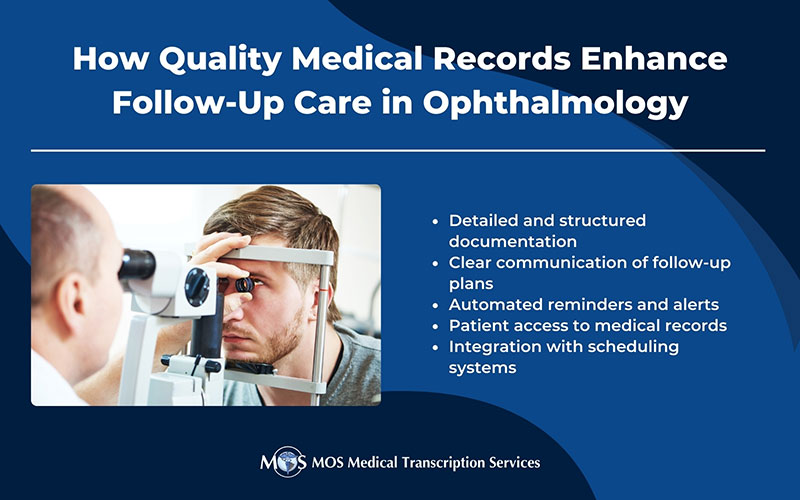
Here are some key ways that quality medical records can improve follow-up care in ophthalmology:

Quality Medical Records

  • Detailed and structured documentation: Ophthalmology records that include structured templates ensure critical information like visual acuity, intraocular pressure, and treatment notes are consistently documented. This thoroughness allows future providers or the same provider in follow-up visits to quickly understand the patient’s history and current status.
  • Clear communication of follow-up plans: Incorporating precise follow-up instructions and time frames into the medical records can improve patient adherence to the recommended care plan. When follow-up details are clearly documented, both patients and providers are reminded of the necessity and timing of follow-up appointments.
  • Automated reminders and alerts: Many electronic health record (EHR) systems offer automated reminders for follow-up visits. By integrating ophthalmology-specific criteria into these reminders, practices can ensure that patients return for critical assessments after procedures or treatments.
  • Patient access to medical records: Granting patients access to their ophthalmology records through patient portals encourages self-management and awareness. This access empowers patients to review their diagnoses, treatment plans, and follow-up recommendations, which can enhance compliance.
  • Integration with scheduling systems: When medical records are integrated with scheduling software, ophthalmologists can streamline the process of setting up follow-up appointments at the time of care. This integration reduces the likelihood of missed or forgotten appointments and improves continuity of care.

Partnering with an experienced medical transcription company can improve these areas within ophthalmology medical records. By ensuring timely and accurate EMR-integrated documentation solutions, specialized medical transcriptionists can help practices can address common barriers to follow-up and ensure better long-term outcomes for their patients.

Improve follow-up rates and patient care with our expert medical transcription services!

Contact us today for a Free Trial!

7 Tips to Build a Good Patient – Doctor Relationship

Good Patient - Doctor RelationshipA warm and solid patient – doctor relationship is essential to ensure better patient care and win the trust of patients. Nowadays with the implementation of EHR, most doctors are tied down with documentation work which would be better handled by a medical transcription company providing electronic health record integrated transcription service. Providers need to ensure that their patients are comfortable and confident that the care provided to them is optimal – both vital to build a positive relationship with the patients. In the healthcare industry the need for transparent communication between doctors and their patients is essential for quality care and good health outcomes. Treating a patient with respect helps them to communicate well, and enable the provider to engage with them even outside of the hospital settings. A doctor should be a good listener too. When the doctor’s ability to listen to patients is limited, they can miss crucial health cues and misdiagnose illnesses. Hence it is important to engage with patients, exchange information and build a good rapport.

Here are some tips for physicians to follow during a patient encounter.

  1. Sometimes patients are afraid to discuss their problems openly. So doctors can initiate the conversation by asking friendly questions and then discuss the illness. This will help patients to ask more questions to the doctors about the illness and clarify their doubts easily.
  2. Request your patients to bring all the prescribed drugs, over-the-counter medicines, vitamins and supplements that they take, if it is a follow-up visit. Also make sure that they have their insurance cards and other necessary documents with them.
  3. In case of patients suffering from Alzheimer’s or psychiatric issues, make sure that they are accompanied by a family member so that they can understand the treatment plan correctly.
  4. In case of follow-up visits, make sure to keep yourself updated about the changes in the patient such as body weight, appetite, sleep, energy level etc.
  5. If the patient does not speak English or any other language familiar to you, then consider having an interpreter alongside who can understand and translate the instructions to the patient correctly.Good Patient - Doctor Relationship
  6. Make sure to collect feedback from the patients as feedbacks can help a physician take necessary steps to provide better service.
  7. Once the consultation is over, ask the patient to make a call ahead for booking or cancelling an appointment for future follow-ups.

There is no doubt that the more time a doctor gets to spend with his/her patients, the better will be the outcome. As mentioned at the outset, the medical documentation process which is a major time-consuming process can be outsourced to an established provider of medical transcription service. This will ensure that the physician gets more time for eye-to-eye contact with the patient, which is a great confidence booster for the patient. Another important thing is to minimize the response time when patients call your office. Your office staff has to be informed and trained in this regard so that you can prevent unhappy and frustrated patients.

Drug Errors on the Rise in Nursing Care as well as in Homes

This is an update on the December 12, 2016 blog “Study shows Reliable Medical Transcription Services prevent Drug Errors

Drug ErrorsIn December, 2016, our medical transcription company had reported on a study published online in the Journal of the American Geriatrics Society which found that up to 27 percent of nursing home residents are victims of drug errors. The researchers found that errors in medical transcription were among the key factors that had led to medication errors. In this update on our 2016 blog, we report on a new study which also found that incomplete documentation or lack of documentation is among the reasons for medication errors in nursing homes. We reiterate the importance of reliable medical transcription services to avoid mistakes in medical documentation which can lead to serious adverse events.

The new study, published online June 15 in the Journal of Clinical Nursing, reports that up to 89 percent of serious adverse events in nursing homes occurred due to medication errors, falls, delayed or inappropriate interventions, and missed nursing care. Researchers from the Karolinska Institutet in Stockholm identified 693 contributing factors of which the most common were:

  • lack of competence
  • incomplete or lack of documentation
  • teamwork failure, and
  • insufficient communication

The retrospective study involved an analysis of the reports of 173 adverse events in nursing homes. It described the frequencies of the adverse events and their contributing factors. The authors highlighted the fact that residents’ safety depends on the presence of competent staff as well as proper documentation about their condition.

These findings support those of the study published last year in the Journal of the American Geriatrics Society. Based on a systematic review of 11 studies published between 2000 and 2015 into the incidence of medication errors in nursing homes leading to hospitalization or death, the study found that drug omissions due to errors in medication histories, transcription mistakes, unavailability in pharmacy, and repeat errors were the main reasons for errors in transfer of care.

Drug ErrorsIt’s not only in healthcare facilities and nursing homes that people are exposed to drug errors. Medication errors at home are putting Americans at risk of serious illnesses, say recent reports. According to a new study published online in the July 10, 2017 issue of Clinical Toxicology, medication mistakes at home include either taking the wrong dose of medication, or the wrong drug. Live Science reports that evaluation of information from a database of calls made to poison control centers across the United States showed that:

  • From 2000 to 2012, poison control centers received more than 67,000 calls regarding medication errors.
  • The medications involved were cardiovascular drugs, such as beta blockers, calcium antagonists and clonidine, pain medications, and hormonal medications.
  • The most common types of medication errors were taking (or giving someone else) the wrong medication or an incorrect dose, or accidentally taking or giving medications twice in the same day instead of the prescribed “once daily”.
  • Among children, the most common error was consuming someone else’s medication by accident.
  • The number of yearly cases of serious medication errors rose from 3,065 in 2000 to 6,855 in 2012.
  • The rate of these medication errors doubled from about 1 case per 100,000 Americans in 2000 to about 2 cases per 100,000 Americans in 2012.
  • In about a third of the cases, people took the wrong medication had to be hospitalized.
  • About 17 percent were admitted to a critical or intensive care unit (ICU) and 15 percent to a noncritical care unit.
  • About 400 people died from such errors during the 13-year study.

Serious medication errors caused symptoms like drowsiness or lethargy, low blood pressure, an abnormally fast or slow heart rate, and dizziness.

The researchers recommended various measures to reduce medication errors: preventing dosage error by writing down medication information for other caregivers, using child-proof containers and pill planners, and keeping medications out of reach of children. Drug manufacturers and pharmacists have an important role to play in improving product packaging, labeling, and dosing instructions, and educating parents, patients, and caregivers on how to take or give medications.

Medication errors in hospitals and nursing homes can have serious legal ramifications. Incomplete or missing documentation are among the top EHR errors affecting clinicians. Timely and accurate medical transcription services can help avoid data quality and record integrity issues. One of the best practices recommended to preserve the integrity of the health record is to have a process in place whereby providers review, edit, and approve dictated information in a timely manner. Outsourcing medical transcription to a reliable service provider will ensure accurate and quality documentation in EHR systems and reduce the risk of documentation-related medication errors.

Patient Recordings of Clinical Encounters on the Rise, finds Recent Study

Patient Recordings of Clinical EncountersIt is common practice for physicians to record office visit notes and have them documented in the electronic medical record with the help of a medical transcription service provider. Accurately transcribed EMR notes promote continuity of care and also help physicians share information easily with patients. Going by recent reports, the office visit may be poised to enter a new level with patients recording the event on their smartphones. According to a CBS News report, a study from the Dartmouth Institute for Health Policy and Clinical Practice in New Hampshire found that at least 1 to 10 patients now records discussions at medical appointments. The research was published recently in the Journal of the American Medical Association.

On reviewing 33 studies involving audio-recorded clinical visits, the researchers found that 72% (about 7 out of 10 patients) listened to their own recordings and 68% shared them with a caregiver.

Why are patients recording their clinical encounters and how are they using these recordings? Investigators point to many factors:

  • Recording the office visit can reduce patients’ anxiety of trying to recall and understand what was said.
  • Tapes allow patients to remember important information they received during the visit.
  • Sharing the recording with loved ones or caregivers promoted better engagement with support networks.
  • According to one recent study, recording clinical encounters can help poor people living in rural areas feel less deprived when seeking health care.
  • Patients report that the recordings left them feeling more satisfied with their care.
  • Recording the visit promotes transparency in care.

Physicians’ reactions are varied. Some providers raised concerns about the risk of the taped appointments and procedures being used against them in malpractice suits. On the other hand, the Dartmouth Institute study found that others such as The Barrow Neurological Institute in Phoenix reward physicians who comply with patient requests to audio record the clinical visit.

Patient Recordings of Clinical EncountersAccording to a Stat News report, physicians worry that recordings could weaken trust between them and their patients. When the discussion is recorded, patients may not be frank about their health behaviors. The report says that physicians also fear that the information will be made public, as some clinical encounters were recently shared on social media.

This brings us to the legality of taped appointments. Does U.S. law permit patients to record the office visit? Wiretapping law and rules on sharing the recordings varies between states.

In single-party jurisdictions:

  • The consent of any 1 party to the conversation will suffice, including the person making the recording; in this case, patients who wish to record a clinical encounter can do so without obtaining the clinician’s consent. The single-party consent rule exists in 39 of the 50 states and the District of Columbia.
  • Patients are free to share the content of recordings in these states.

In “all-party jurisdictions”:

  • Recording without the expressed permission of all parties is illegal unless all who are being recorded consent. Statutes in California, Florida, Illinois, Maryland, Massachusetts, Michigan, Montana, New Hampshire, Oregon, Pennsylvania, and Washington conform to the all-party jurisdiction rule.
  • To share the recordings, patients require agreement of those who were recorded.

Most patients use this right to share the recording with a family member or caregiver but not on social media. On the other hand, recordings that are modified or used to harm or damage the reputation of the concerned clinician could lead to legal action by the person affected.

The Dartmouth Institute study also discussed the question of whether audio or video recording of a clinic visit is governed by the Health Insurance Portability and Accountability Act (HIPAA) standards. The recording is subject to HIPAA standards if it is “created or received” by a “covered entity,” including health plans, health care practitioners, and health care clearinghouses. For instance, medical transcription companies need to be HIPAA-compliant and safeguard the confidentiality of all patient information they handle, whether transferred over public networks or stored internally. However, HIPAA rules do not apply to a recording that is created and retained by the patient.

Dictation and medical transcription services are the favored documentation method for physicians across all specialties because it ensures accurate capture of patient history as well as the care encounter. As the future is geared towards to expanding transparency in health care, experts see a positive role for patient recordings of medical appointments. Clinicians, patient advocacy groups, and policy makers need to collaborate to build an environment of trust and open communication among patients and physicians. They should develop clear guidelines and rules on patient recording and how it can be put to positive use.

  • KEY FEATURES

    • 3 Levels of Quality Assurance
    • Accuracy Level of 99%
    • All Specialties Covered
    • Competitive Pricing
    • Digital Recorder Dictation
    • Electronic Signatures
    • Feeds for EHR or EPM
    • HIPAA Compliant Service
    • Quick Turnaround Time
    • Toll Free Phone Dictation
    • Transcription Management Software
    • Volume Rates Available
  • RECENT BLOGS

  • Categories

  • Quick Contact


    • Infographics