Document Sharing and Face-to-Face Communication between Inpatient and Outpatient Physicians boosts Care

Document Sharing and Face-to-Face CommunicationMany hospitalists and primary care physicians rely on medical transcription outsourcing to meet their documentation needs. The primary goal of patient care documentation is to communicate vital information about the patient to all the healthcare providers involved in caring for the patient. However, recent reports indicate that the gap between inpatient and outpatient physicians has widened over the years. Hospitalists have now become important players in the nation’s healthcare system, while primary care providers practice outside the hospital. The lack of proper communication between these two groups affects care transition and quality of care.

The key issues associated with the lack of coordination between specialists and primary care providers are:

  • The greater the number of physicians involved in a patient’s care, the higher the risks of miscommunication and discoordination, especially during admission and discharge
  • Gaps between primary care providers and hospitalists may result in failures to follow up on test results and treatment recommendations
  • Poor transitions reduce the quality of care and cause patient dissatisfaction

Many studies have highlighted the chasm between inpatient and outpatient care.

In 2010, Internal Medicine reported on a study by the Association of Community Cancer Centers (ACCC) which found that only a few hospitals were tracking readmissions or following up with discharged patients. While 85% of responding hospitals had a process to manage transitions from inpatient to outpatient settings, only 55% had a formal transition policy. Only 3% of the hospitals had a specific transition policy for oncology patients.

A recent article published by Hospitals and Health Networks suggests the following strategies to improve care transitions and keep patients healthy:

  • Remodeling governance: Hospital governance should be restructured to include both inpatient and outpatient physicians and improve communication between them. The article mentions the case of a Wisconsin medical center that set up a physician advisory group with chairs of medical subspecialties. At each meeting, hospital-based physicians give a short presentation on a recent episode at their specialty practice, which promotes better engagement between new and younger physicians and these physicians. This makes primary care providers feel more comfortable making a referral.
  • Co-training: Co-training programs develop empathy between specialists and primary care providers. By providing valuable information, such programs can improve engagement among them.
  • Electronic health record (EHR) interoperability: Technology can enhance inpatient and outpatient communication. For example, a shared electronic health record or using health information exchanges to notify physician of a patient’s admission can improve communication between inpatient and outpatient physicians. Messaging tools and blogs are also useful tools to enhance provider engagement.
  • Continual evaluation and evolution: An unbiased, continuous evaluation system can help determine if building an unbiased evaluation forum can ensure that your efforts to improve primary care and specialist physician relations are meeting patient needs as well as those of physicians and staff. Strategies can be developed to close gaps if any.

A medical transcription service company plays an important role in providing accurate documentation to manage transitions of care. Error-free medical transcripts of patient history, treatment, and discharge summaries ensure continuity of care in the future, especially for inpatients who require care after discharge. Quality documentation provides a database from which important information can be extracted and used in potential medical contingences.
American Heart Association advocates Medicare Coverage for Telemedicine

TelemedicineThe American Heart Association (AHA) is pushing for Medicare coverage of evidence-based telemedicine services for cardiovascular disease (CVD). Telehealth, including text messaging and platforms that can be accessed on any device with an Internet connection, has become a widely accepted option among patients and providers. Electronic health record (EMR) integrated medical transcription services help physicians with their clinical documentation tasks. With the AHA’s demand for Medicare coverage of telehealth services, the demand for customized medical transcription solutions is also likely to increase.

Currently, Medicare reimbursement for telehealth services for CVD patients is only available if the patient lives in rural areas of the United States and where real time communications are available. The AHA points out that heart disease and stroke are leading causes of death in the U.S. and proper utilization of proven forms of treatment like telehealth can effectively fight these deadly diseases and enhance health care quality. All Americans suffering from CVD and stroke should be able to reap the benefits of this valuable type of care, regardless of where they live.

A study by researchers at Overlook Medical Center and Atlantic Health System published in 2016 in the journal Stroke showed that patients evaluated in ambulances while on the way to the hospital could be treated with a brain saving drug 13 minutes faster once in the Emergency Department than patients not evaluated with in-transit telestroke.

Medicare coverage for telehealth services for cardiovascular care will ensure appropriate reimbursement for providers. To remove the barriers associated with care, the AHA recommends, among other things, that Medicare should:

  • Provide benefits coverage for all evidence-based telehealth services for cardiovascular and stroke care
  • Ensure that coverage and payment parity exist across all states, so that insurers and others offer and cover specific, proven evidence-based telehealth interventions.

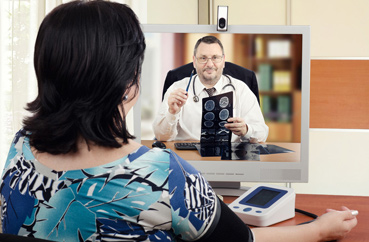
Recent studies indicate that telemedicine can also help manage patients with diabetes and that integrating EMR with telemedicine can result in better community healthcare. Telemedicine enables live video conferencing among all parties involved – a specialist, the patient and possibly a local physician. In general, fee-for-service Medicare reimbursement is guided by four key aspects – the patient setting, the type of technology, geography, and provider type. Medicare reimburses for telehealth services delivered via videoconferencing, but not for services delivered through methods such as email or fax, except in the case of Medicare Chronic Care Management (CCM).

The press release advocating Medicare payment for telemedicine services for cardiovascular disease states that with “increasing physician shortages, rising costs and a burgeoning demand for treatment, telehealth can greatly improve value in health care and, most importantly, produce better health outcomes for all.”

Telehealth, as the AHA stresses, is a proven tool for “safe, timely, effective, equitable, efficient and patient-centered care”. As the demand for these services rise, U.S. based medical transcription companies will continue to provide accurate and timely EMR-integrated documentation solutions to improve patient care and also ensure appropriate reimbursement for physicians.

Intuitive Medical Imaging Services – Going Beyond Radiology Transcription

Medical Imaging ServicesRadiology transcription companies help physicians ensure integrity in electronic health records (EHRs) by providing accurate text-based radiology reports. However, there is a new demand – physicians now want image-enabled EHR. Streamlined, perceptive medical imaging services can provide physicians with access to critical patient information. This will allow them to gain new insights, engage in collaborative care, and save lives.

According to a 2016 Healthcare IT News report, an increasing number of physicians want more than just transcripts of radiology reports. They want to access medical images via the electronic health record. The specific benefits of having actual diagnostic images in the EHR are as follows:

  • As patients tend to move through various settings such as imaging centers, primary care, and surgical units, physicians need technologies that will facilitate the sharing of image files
  • By allowing physicians access to patient imaging, image enabled EHRs would reduce duplicate test orders and radiation exposure
  • Medical imaging services would help providers place and receive an order, and browse archived imaging for all previous imaging related to a particular patient in their network

In a peer60.com survey, 68% providers stated that cloud networks are the ideal technology to facilitate the sharing of image files. Today’s EHRs can create custom URLs or links within the patient record. An encrypted image link within the EHR would automatically launch a feature-rich, footprint-free medical image viewer.

Radiology and imaging reports that a medical transcription company provides contains details such as

  • The body area under study
  • The reason for the study
  • The type of imaging study conducted
  • The number and type of views recorded
  • Contrast materials or medications used
  • A description of the test process
  • The results of the study
  • Conclusions and recommendations

Radiology transcripts along with access to imaging within the EHR would ensure physicians of comprehensive and accurate healthcare records to improve patient care and safety.

How Physicians Can Build Patient Engagement in the EHR Age

Patient Engagement

Empathy is essential for fostering enduring, meaningful relationships in every kind of interaction, especially between doctors and patients. Taking a step back to genuinely understand what patients are going through not only enhances their satisfaction but also leads to better outcomes. This approach can solidify your reputation as a compassionate doctor, which is invaluable for the growth of your practice. However, balancing this empathetic care with administrative tasks can be challenging. Even with the benefits of electronic health records (EHRs) – such as improved patient care, safety, and efficiency – many physicians feel that managing data entry and tracking quality metrics detracts from patient interactions. This is where medical transcription company can help bridge the gap, ensuring doctors can focus on their patients while the administrative burden is handled by experts. By alleviating these pressures, transcription services support both the physician’s need for efficiency and the patient’s need for attention, helping practices maintain a personal, empathetic connection with their patients.

Strategies for Overcoming Distractions and Enhancing Patient Care

In their 2016 Physician Writing Contest, Medical Economics asked readers how they are tackling the challenges of present-day distractions to provide quality care for their patients. Here are some pearls from the prize winners of the contest.

  • Prepare for the appointment: Physicians can make each visit more productive by preparing ahead of the consultation. Office staff should call up patients and make sure that they have the necessary tests one week before the visit. This will also help avoid no-shows. Demographic information checks and insurance verification should also be done before the consult, which will save time and enhance patient satisfaction, while improving collections.
  • Pre-chart: Based on the complexity of the patient, physicians should spend some time before the visit to assess how his or her condition has changed since the last visit. Reviewing lab-related data a day or two before the consultation will allow the physician spend more quality time with the patient instead of looking at the computer screen.
  • Build a patient-focused environment: Practice staff should be trained to use the EHR, so that they can communicate with each other before or after the patient visit. This will make each consultation more patient-focused. The computer should be placed in such a way that physicians can directly see their patients. When serious matters are being discussed, the provider should stop typing and look at the patient. This will make the patient feel comfortable and acknowledged.
  • Educate the patient: A physician’s time is valuable. The physician’s team should educate patients on how to make the most of the time spent at the consultation. Matters related to insurance and payments should be discussed outside of the exam room, which will leave more time for medical issues at the consult.

Patient Engagement

How Doctors Can Increase Patient Engagement with Medical Transcription Services

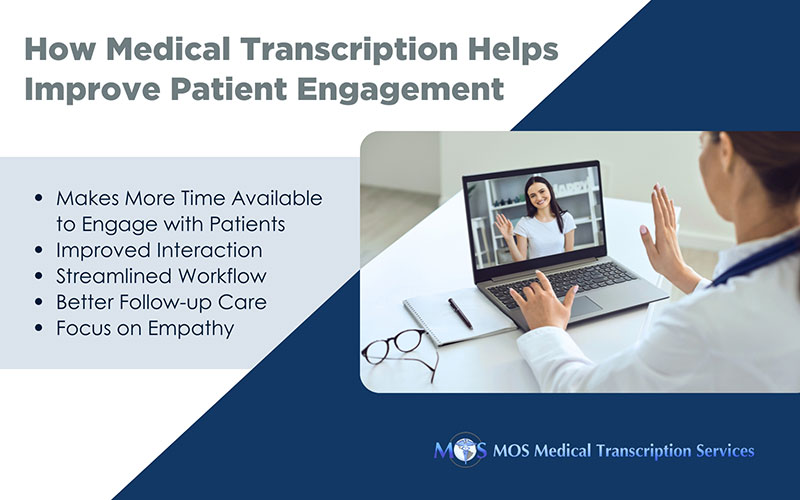
For healthcare to be successful, meaningful patient engagement is essential because it increases treatment adherence, builds trust, and improves health outcomes. However, attaining this degree of involvement necessitates patience, concentration, and empathy—qualities that are frequently taxed by administrative duties like maintaining patient records. In this situation, medical transcription services are essential in enabling doctors to improve their interactions with patients.

  • More Time to Engage with Patients: Doctors no longer have to concentrate on documentation during consultations thanks to medical transcription services. Doctors can focus entirely on listening, comprehending, and empathizing with their patients instead of inputting notes into an electronic health record (EHR) system.
  • Improved Interaction: Clear documentation of all patient information, concerns, and doctor’s orders is ensured via accurate transcription of medical notes. This clear communication reduces miscommunication, enables doctors to follow up efficiently, and provides patients with assurance that their problems are being taken care of.
  • Streamlined Workflow: Practices can increase productivity and lessen the strain on healthcare personnel by contracting with qualified transcriptionists to handle documentation. A more efficient workflow makes it possible for doctors to remain composed and focused throughout consultations, which significantly improves patient involvement.
  • Better Follow up Care: Medical transcription services ensure that doctors have easily readable records to use when scheduling follow-up visits. In addition to helping physicians deliver individualized care, thorough and well-maintained patient records show patients that their medical history and progress are treated seriously.
  • Focus on Empathy: Physicians can remain completely attentive during patient contacts while medical transcription services handle documentation, which is essential to ensure empathy. This compassionate approach fosters trust and gives patients confidence that the doctor’s first concern is their well-being.

Even as they build patient engagement and provide quality care, physicians must actively use their EHRs to create legible and organized records with clinical information about individual patients. Partnering with an established medical transcription company would help healthcare providers use their EHR better. EHR-integrated medical transcription services ensure accurate and timely history and physical reports, consultation records, operative reports, lab and imaging reports, clinical notes and discharge summaries. The support of a reliable company can prove invaluable for physicians as they work towards their goal of improving the quality and safety of healthcare in the EHR age.

Improve patient engagement and streamline your practice today.

Partner with us for accurate, efficient documentation.

Analysis of the Electronic Health Record Market from 2014 to 2020

Electronic Health Record MarketThe increase in the use of the Electronic Medical Records system has led to a decrease in the traditional pattern of physician’s dictation and medical record making. However, many physicians and healthcare facilities still rely on medical transcription outsourcing to maintain accurate and error-free medical records. The general trend is to adopt a blended approach of medical transcription and EHR – because the latter has become mandatory and physicians still find they need medical transcription service to save the time and effort spent on documentation. A look at the EHR market growth is significant in the present scenario.

According to a market report published by Transparency Market Research, “Electronic Health Record Market – Global Industry Analysis, Size, Share Growth, Trends and Forecast 2014 – 2020,” the global EHR market is expected to grow at a CAGR of 6.4% to reach an estimated value of USD 23.98 billion in 2020.

Based on implementation, the global EHR market is segmented into:

  • Web-based EHR System
  • Client Server-based EHR System

Based on end user, the market is divided into:

  • Hospitals
  • Ambulatory Centers

Geographically, the global EHR market is divided into:

  • North America
  • Europe
  • Asia Pacific
  • Other countries

North America holds the largest regional market for EHR and is expected to expand at a CAGR of 5.8 percent, and retain its top position in 2020. The two factors that drive the growth of EHR are:

  • Government funding that encourages the use of certified EHR technology across all healthcare units
  • Increasing pressure for healthcare cost containment
  • Increasing demand for improved quality of healthcare service.

India, China, Brazil, Mexico and South Africa are some of the developing nations that have been experiencing impressive growth in the economy over the past few years. From 2014 to 2020 these countries are expected to offer immense potential for EHR market as the economies encourage healthcare providers to adopt EHR systems.

Electronic Health Records are digital versions of medical records that contain all important information like patient details, medication, laboratory test results, and diagnostic images among other details. The new EHR system provides access to patient related data only to authorized users and thus ensures confidentiality. Earlier, EHR systems were used only in medium to large-size hospitals due to budget crunches but now they are widely used in most hospitals and healthcare units. EHR ensures accurate and up-to-date data, quick access to patient data, and increased patient participation.

The US government allocated USD 27 billion to encourage EHR adoption across the nation in 2009. As a result of this incentive, many healthcare units have implemented EHR systems. During the forecast period 2014 – 2020, market for EHR in small-sized practices is also expected to grow significantly.

The report highlights the major players in the global EHR market – Allscripts Healthcare Solutions, Inc., Cerner Corporation, Epic Systems, Medical Information Technology, Inc. (MEDITECH), McKesson Corporation, NextGen Healthcare (Quality Systems, Inc.), Computer Programs and Systems, Inc. (CPSI), GE Healthcare and eClinicalWorks.

Technological Advancements in Surgery and the Need for Expert Documentation

Technological Advancements in SurgeryTechnology is taking over all areas of the healthcare industry with hospitals, ambulatory surgery centers, clinics, laboratories and other health settings along with their support service providers such as medical transcription outsourcing companies adopting the latest technology offerings to improve efficiency and stay competitive. Advancements in the medical industry has allowed physicians to diagnose and treat patients efficiently and save countless lives.

Just like the advances in medical treatment provided to patients, technology has also changed the traditional method of medical transcription. Today, EHR systems are being implemented in all health settings to document patient encounters. They use HL7 interface which provides the framework for integrating, sharing and retrieval of EHR. It also provides an encrypted and secure means of transferring files.

All medical specialties have merited from technological development in medical transcription, and plastic and reconstructive surgery is among the most challenging specialties. This is mainly because of the various procedures and diverse approaches involved. Surgeons are involved in highly complex processes, therefore the documentation of these is also complex. Most surgeons therefore prefer to dictate their notes and outsource the documentation part to medical transcription service providers. This is with a view to obtaining the most relevant and meaningful transcripts, which will help them in fulfilling their responsibilities better. They try to make the best use of both models, combining medical transcription service and EHR systems.

Advancements in Surgical Technology and Increasingly Complex Documentation

Archaeologists believe that people have been carrying out surgeries for more than 11,000 years. Surgeries such as cranial surgery or trephination which involved drilling a hole in the skull, was performed to treat fractures, headaches and infections. Medical journals such as the New England Journal of Medicine carry information regarding many gruesome procedures that were performed in earlier days. The technological advancement in the medical field has introduced minimally invasive surgeries that makes even heart transplant an easy task.

Minimally invasive procedures involve small incisions and less scarring. This assures low risk of infections, less hospital stays and quick recovery. The first minimally invasive procedure, laparoscopic surgery was performed to remove gallbladder in 1987. Similarly, many minimally invasive procedures are now available for plastic surgery treatments also.

Another example of minimally invasive surgery is robotic surgery that allows doctors to perform many types of complex procedures with more precision, flexibility and control. The first robotic surgery was performed in the year 2000.

The electrosurgical knife is yet another invention that can detect precisely which tissue needs to be removed and which should stay. This method was introduced in the 1920s that helps surgeons to cut through the tissue with minimal blood loss. The first iKnife was introduced in 2013 to examine biological tissue pairing up electro surgery with mass spectrometry.

Documentation Requires Assistance of Specialists

Think of the increasingly challenging documentation with such leaps in technology, with new procedures, new terminology and new techniques and approaches. There is no doubt that the surgery specialty now requires specialists to take care of critical surgery report documentation. Surgeons including plastic and reconstructive surgeons can ideally outsource medical transcription requirements and improve the quality of patient care and can also stay assured of the quality and security of the transcripts with a reliable HIPAA-compliant medical transcription service provider.

Medical Device Connectivity Market Expected to Register Growth up to US $33.5 Billion by 2019

Medical Device ConnectivityThe medical industry has witnessed various technological changes over the years with the introduction of innovative medical equipment, technology, lab assays, treatment protocols and advanced EHR systems. There have been significant changes even in the way a medical transcription company, an important part of the healthcare industry, functions. With the introduction of EHRs, we see most medical transcription outsourcing providers focusing on offering EHR-integrated transcription services. Similarly, the medical device connectivity market is also changing and is expected to grow phenomenally in the near future.

The global medical connectivity market is expected to grow and reach a value of US $33.5 billion by 2019, according to a Transparency Market Research (TMR) report. The competition in this market is very high with top players channelizing their efforts towards developing innovative solutions in the medical field. In 2012 the main players in this market were Philips Healthcare, GE Healthcare, Cerner Corp and Capsule Tech which held around 80 percent of the market. Capsule Tech which held 40 percent of the market in 2012 has expanded it business globally with over 60 medical device manufacturers to meet the needs of hospitals and healthcare facilities. Other players like Philips Healthcare and GE Healthcare have consistently focused on research and development to develop new products and processes and thereby maintain their market share. Cerner Corp focused around acquisitions and strategic alliances with customers for its solutions like EMR and computerized physicians order entry (CPOE).

The TMR report segments the market into three based on end users:

  • Home healthcare
  • Hospitals
  • Others (long-term care facilities, care homes, skilled nursing homes)

Among these segments, hospitals hold a major share of the market as the integration of data from crucial healthcare equipment into EMR helps in saving time and also prevents errors in transcription. The mandatory EMR requirement is expected to boost the medical device connectivity market drastically in hospitals.

North America is the dominant market for medical device connectivity market globally with a value of US $5.74 billion in 2015. It is expected to grow in the coming years due to the growing geriatric population. Europe holds the second place followed by Asia Pacific and the rest of the world.

Based on component, the global market for medical device connectivity is segmented into:

  • Software
  • Wired hardware
  • Wireless hardware

Among these three, the major market share is held by the wired hardware section and it is predicted to retain this dominance in the coming years as well. It is projected to achieve a market value of US $14.227 billion by the year 2019. The software segment is expected to show a growth rate faster than other segments in the near future, driven by the fact that most connectivity solution providers offer software solutions that support the existing infrastructure of the healthcare facility.

Just as speech recognition technology is still not totally reliable, which makes the services of a medical transcription outsourcing company highly relevant even in the current EHR era, medical device connectivity devices are also plagued by technical and operational glitches that cause major concerns. Though they have many advantages, a major technical challenge is associated with the translation of data from different proprietary device formats into a format that EMRs can understand. Operational challenges include support of multiple interfaces apart from serial connections, security protocols, support of standard wireless-networking security protocols and the support of dual-band wireless communications, as the TMR report analyst points out.

How Can Physicians Focus More on Patients and Not on EHR or EMR Data Entry?

EMR Data EntryElectronic Health Records (EHR) have completely changed the way physicians treat their patients and many believed that with the introduction of EHR, medical transcription outsourcing companies would become obsolete. But with the EHR system, physicians are forced to spend their quality time on computers capturing patients’ medical information rather than focusing on patients. Physicians also tend to miss out on opportunities to engage with patients while using the EHR. According to a study by Northwestern University, physicians spend one-third of their time in their exam rooms looking at computer screens. Physicians are a vital element in a healthcare setup and documenting medical records is a time-consuming and distracting task. The ideal way to resolve this is to outsource medical transcription to reliable medical transcription providers.

The EHR system provides a structured data methodology that allows physicians to check boxes and click buttons to denote what was done. But the structured data cannot be changed and the physicians have to choose from the list of given data. This may work for some patients, but not for all. Almost all EHRs allow physicians to copy and paste data but this can cause note bloat that results in junk data. Junk data is not reliable and becomes unmanageable.

According to the Association for Healthcare Documentation Integrity, accurate and high integrity documentation requires collaboration between physicians and the organization’s documentation scheme or transcription services. Only then can accurate, error-free and consistent medical records be ensured.

For efficient working in the healthcare organization, it is important to ascertain that the medical records accurate and clean. Following are some tips that will ensure accurate medical records.

  • Minimize physician’s administrative burdens: Physicians and surgeons treat patients and document records according to the strict policies of EHR. But the duty of the physician is to focus on patients and not on documenting records. This will improve the efficiency and performance of the doctor and therefore only the task of approving the entries should be given to the doctors.
  • Strike a balance between structured and unstructured EHR data: In the EHR system there should be a balance between structured and unstructured data.
  • Eliminate interface barriers: EHRs need a good interface to communicate effectively. However, the fee charges for interface often discourage providers from using transcription services.
  • Assign the task of document editing to transcription experts: Assign expert transcriptionists to manage the task of documenting medical records. This will help doctors to focus more on treating patients.

Today, many healthcare organizations hire medical transcription outsourcing companies to document medical records. There is no denying the fact that EHRs are going to stay. At the same time, medical transcription experts and documentation specialists are also in high demand, and this will continue to grow. With the right combination of technology and human intelligence and insight, physicians can be relieved of their EHR data entry burden and focus more on their patients.

To learn more about EHR we have written a new blog “New Study Recognizes Importance of Medical Transcription Support for EHR Clinical Documentation” on September 25, 2017

How Voice Recognition Systems along with Medical Transcription Can Help with Accurate Documentation

Voice Recognition SystemsTypically, clinicians outsource medical transcription requirements to speed up the documentation and save time. In the present digital age, many tasks done by humans are being entrusted with machines and one such technological development is voice recognition software. Since this technology is still in its developmental stage, healthcare organizations and providers continue to use medical transcription services as a solution to edit the transcripts created by the voice recognition software integrated with their EMR system. Some health systems have started using this natural language processing technology (that was mostly reserved for doctors earlier) for nurses and ancillary providers. This is with a view to saving time and optimizing the use of minimal staff available. Take for instance the nursing staff at the Hudson Valley Heart Center in Poughkeepsie, NY that has started using speech recognition for real-time documentation in the hospital’s EHR system. This hospital system had earlier rolled out speech recognition for its physicians.

Improving efficiency is vital with the growing healthcare demands from the baby boomer generation and a predicted nursing shortage. According to the U.S. Bureau of Labor Statistics, 1.1 million new nurses would be required over the next 7 years. Half that number is needed to replace nurses who will retire by 2020, and the other half will be required to fill an anticipated 575,000 new positions. To add to the problems, there is a scarcity of qualified nursing-school faculty. The question is whether EHRs and speech recognition technology can really improve physician and nurse efficiency and give them more time for patient care.

  • Studies show that nurses at present spend around 19% of their time on documentation. Therefore, it is vital that a constructive change is introduced in nursing documentation method if nurses are to get more time to spend on patient care.
  • Speech recognition could help save time for physicians and nurses, but the concern is regarding its efficiency. These systems are not completely reliable when it comes to understanding and transcribing different dialects, abbreviations, slang etc. that providers may use. Moreover, are these systems viable for documentation in busy, noisy hospital environments? What about the confidentiality of PHI when clinicians may have to record something in a hospital hallway?

This is why many healthcare providers consider a blend of medical transcription and EHR a more viable option. Medical transcription service providers can help clinicians to dictate their patient narratives quickly and maintaining full confidentiality, and get the final transcripts edited and proofread to ensure maximum accuracy. Most medical transcription firms provide HL7-interface to facilitate communication with providers. Or for physicians using speech recognition integrated EMR systems, they can offer editing services to ensure accuracy and reliability of the final documents.

Healthcare Organizations facing EHR-based Patient Matching Challenges

Healthcare OrganizationsConventional consultation reports produced by transcriptionists in medical transcription companies begin by correctly listing the patient’s demographic information, date of consultation, and the names of the referring and consulting physicians. The data is entered into a master index and can be used efficiently to identify patients. The advent of electronic health records (EHRs) has complicated matters, more so because in EHRs, such information is structured data that is captured within a field that can be automatically identified by the software.

Digital Technology causing Duplication of Patient Records

Recent studies say that healthcare organizations are facing patient matching challenges spurred by the use of digital technologies. Electronic health records (EHRs) have a positive impact on patient safety and care coordination, but patient identification matching problems are causing data integrity issues within digital patient records. Patient identification errors can increase exponentially within the EHR and personal health record as the information proliferates.

Mistakes in identifying patients lead to serious medical errors. A study published by AHIMA’s Perspectives in Health Information Management journal cites evidence that 10 of 17 deaths that occur each year in the US due to medical errors are the result of patient identity mistakes.

The increasing use of EHRs and health systems has led to a lack of standardized organizational and industrial measures for patient data collection, says a recent report in Becker’s Hospital Review based on the AHIMA report. Duplication of patient records is seriously affecting health care. The study was based on an analysis of a multisite data set of 398,939 patient records with confirmed duplicates. According to the researchers, the main reasons for overlapping health records and data discrepancies are as follows:

  • 58.30 percent of the mismatches – the highest proportion – were middle name mismatches
  • 53.54 percent of the duplicate pairs were accounted for by Social Security number mismatches
  • Most of the mismatches in the name fields were due to misspellings (53.14 percent in first name and 33.62 percent in last name) or swapped last name/first name, first name/middle name, or last name/middle name pairs

With such errors, a patient who has a chronic medical condition and receives frequent and continual care could end up with varying digital identities in different hospitals!

The researchers concluded that though advanced technologies can improve patient matching, policies and procedures such as standard naming conventions or search routines are essential to ensure data integrity in healthcare records.

Medical Transcription Services Preserve EHR Data Integrity

Experience with EHRs has also revealed errors such as data being lost or incorrectly entered, displayed, or transmitted, leading to loss of information integrity. Data entry errors lead to incomplete or incorrect information in the EHR, resulting erroneous decision support recommendations, or failure to issue an alert. Whether these problems are the result of poor EHR system design or improper use, they endanger patient safety and decrease the quality of care.

Documentation integrity means ensuring the accuracy of the complete health record. This covers information management, patient identification, authorship validation, revisions and record corrections as well as documentation validity checks to submit accurate reimbursement claims. Healthcare providers should have a proper system in place to review, edit, and approve dictated information in a timely manner. Experienced medical transcription service providers fulfill this need by correctly capturing information in a narrative format within EHRs.

Dictation and transcription in a searchable text format is the ideal solution to document the patient encounter. In addition to EHR-integrated transcription, professional transcriptionists also verify validity of information on entry, check for duplication and conflicts, and track corrections and additions to the medical record. With the proliferation of EHRs, outsourcing medical transcription can help ensure accurate and quality documentation in patient records.

  • KEY FEATURES

    • 3 Levels of Quality Assurance
    • Accuracy Level of 99%
    • All Specialties Covered
    • Competitive Pricing
    • Digital Recorder Dictation
    • Electronic Signatures
    • Feeds for EHR or EPM
    • HIPAA Compliant Service
    • Quick Turnaround Time
    • Toll Free Phone Dictation
    • Transcription Management Software
    • Volume Rates Available
  • RECENT BLOGS

  • Categories

  • Quick Contact


    • Infographics