 Primary care is in trouble, according to recent reports. The workload of primary care physicians (PCPs) is increasing and there is a provider shortage. Many of the new healthcare models are focused on connecting patients more closely to their PCP. However, studies show that providers are overwhelmed trying to cope with their workload and managing long hours and on-call schedules. The growing amount of paperwork that physicians have to handle has led to their spending more time at work and less time with patients, according to a study by locumstory.com. Medical transcription services can provide the solution to this. A recent Harvard Business Review (HBR) report suggests that another way to reduce PCP workload would be to remove the barriers that stand in the way of separating care from location and empowering patients to take on more of their own care.
According to the HBR report, telemedicine can transform health care delivery. However, telemedicine has not achieved its potential in this respect due to three factors: the excess workload created for the care provider, the likely change in patients’ health-care-use behavior, and the economics of reimbursement.
- Excessive PCP workload: The efforts of policy makers to increase access to primary care are not working because PCPs cannot handle more work than they are already doing. Low reimbursement is discouraging medical students from opting for a career in primary care, further exacerbating the PCP shortage.
- Patients’ health-care-use behavior: Studies showed that the introduction of an e-mail system that allowed patients to email their health concerns to their care team instead of visiting the physician’s office did not have the intended effect. Email made it easier for them to report even their concerns along with photographs. Physicians found it difficult to ignore reported concerns. The result: instead of reducing face-to-face visits, the email system in the portal actually encouraged patients to visit the office more often.
- Reimbursement conditions: Third party payer reimbursement policies are also responsible for limiting innovation in care delivery methods. In many cases, a health care problem can be addressed through a phone call. To get paid, providers need to provide clear evidence that care was medically necessary. As explained earlier, in the new nonvisit care models even minor ailments get reported and create a reimbursable insurance claim. However, the policy of insurers is to tie reimbursement to face-to-face visits in the belief that it will prevent overuse of health care. This requirement can actually have adverse effects and restrict the use of the most efficient methods of care delivery. Remote eye exams for patients with diabetes are an example of convenient, high-quality, low-cost care, says the report. It increases screening rates and preserves vision. However, the paradox is that reimbursement for this service is much lower than an in-office eye exam.
The researchers conclude that care models that increase the connections between patient and provider added to the load of the already-taxed primary care system. The solution, according to them, would be to engage patients in their own monitoring and care. This can be achieved in the following ways:
 Design apps that provide information to the patient rather than the care team
- Encourage patients to monitor their conditions and make treatment adjustments on their own
- Allow technicians and physician extenders such as PAs and nurses to handle baseline care
- Restrict care by the PCP to emergencies and chronic and serious conditions
- In addition to making it easy for patients to understand and act on medical information, guide them on using the information to make decisions to improve their health
- Use financial incentives to encourage medication adherence
- Involve patients’ friends and family members in their care
Reducing patients’ demands on primary care providers is the key to reducing PCP workload, say the researchers.
A study published in the Archives of Internal Medicine in 2012 that was led by Mayo Clinic physicians reported that “invisible tasks” linked to non-face-to-face patient care as the reason for the unsustainable workload of primary care physicians (PCPs). The study identified these invisible tasks as those which physicians don’t get reimbursed for such as
- writing prescriptions
- ordering laboratory tests
- dictating notes
- reviewing notes in electronic health records (EHR) systems, and
- communicating with patients on the phone or email
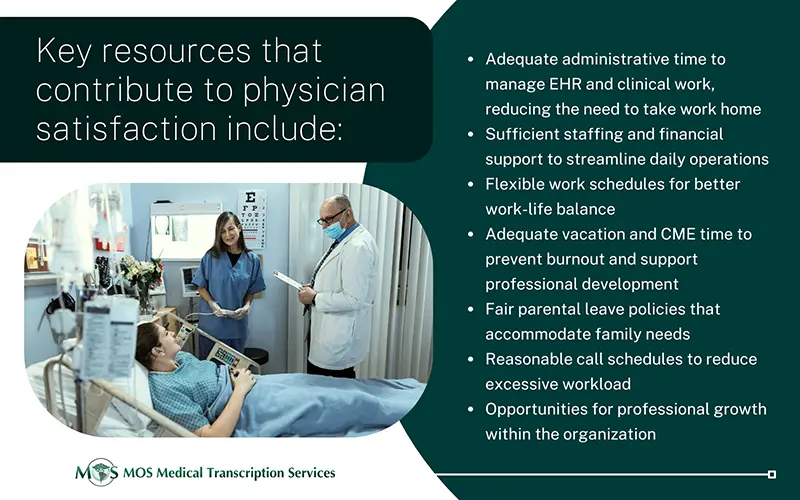
The researchers noted that increased and uncompensated workload could cause several problems including physician burnout and career dissatisfaction and exacerbation of PCP shortage, besides compromising quality of care and access to care. They concluded that compensating PCPs for these nonvisit tasks and implementing new value based reimbursement models could be the key to ensuring access to primary care in the future.
When it comes to managing electronic health record (EHR) related documentation tasks, outsourcing medical transcription is a proven strategy to reduce stress and improve the work/life balance of PCPs.
 The duration of consultation time has a notable impact on physicians’ healthcare delivery as well as patient satisfaction. There is a wide belief that longer consultations are better and that primary care physicians should give more time to patients. While
 The internet has transformed the way we live, and how we work and interact with others. The internet of things has revolutionized the practice of medicine. Interregional and global communications, methods of practice and practice management have all been impacted. The Internet facilitated outsourcing. Today, the internet benefits healthcare providers by allowing them to
 Machine learning in health care has reached new heights with the Human Diagnosis (Human DX) project. As a
  Providers can access the system from any connected device. Members of the public can visit the homepage to access information on specific diseases and anonymized case data. Keeping timely, accurate and clear medical records, such as enabled by
  With the availability of smartphones and other advanced recording solutions, recording conversations and sharing them is quite easy. What about recording a patient-doctor conversation? How can it help patients and their treating physicians? Patients, especially elderly patients, may not recall everything the physician says during the consultation. With the health conditions they face, patients are at risk of forgetting even important medical information. While patients started recording their medical visits long back to counter these issues, doctors have also started recording appointments with their patients, after obtaining consent from them. By
  According to a recent study published in JAMA Network that reviewed 33 studies of patient use of audio-recorded clinic-visit information, audio recordings are highly valued. While 72% of patients listened to their recordings, 68% shared them with a caregiver, and individuals receiving recordings reported greater understanding and recalling of medical information.
 Telemedicine is one of the advances that can have a significant impact on American healthcare. Our
  The University of Arizona is one of the first schools in the U.S. to incorporate telemedicine instruction into its medical school curricula. Forbes reports experimental psychologist Elizabeth Krupinski, associate director of evaluation for the telemedicine program at the U of A as saying that physicians need to think about managing the technology bit, what they are wearing, and most important, monitor their behavior. Some physicians may be great in person, but are camera shy. Telemedicine students are often instructed to disable their video chat’s picture-in-picture feature and look like they are making direct eye contract with the patient by looking directly into their system’s webcam. Physicians also need to control mannerisms like slouching, fidgeting, or gesticulating, which can be distracting or off-putting on a webcam, says Krupinski.
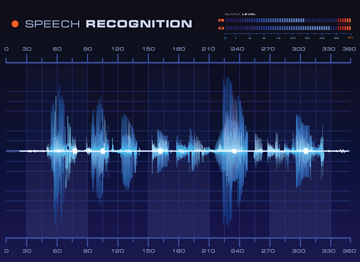 Speech recognition (SR) or voice recognition has had a deep impact in the field of healthcare, with the HIMSS identifying SR as an aggressively expanding market with a 20% growth rate per year. Using this technology for medical transcription has been extensively explored since the 1980s. BCC Research shows that the world market for SR is set to increase from $104.4 billion in 2016 to $184.9 billion in 2021. It helps to identify words in spoken language and convert them into a machine-readable format. Though this technology comes with advantages, there are disadvantages too which make some providers to continue relying on
  There are some challenges involved with SR that can be efficiently addressed with back end assistance.
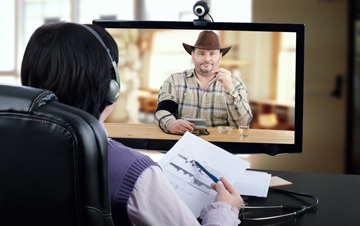 Telemedicine, the practice of delivering medical care remotely, has become more sophisticated with advancements like videoconferencing.
  Telehealth is also useful in urban settings in a non-emergency situation such as when a patient is injured after hours. Connecting to a provider that offers virtual services can help keep the patient stable until their physician’s office opens.
 The Electronic Health Record (EHR) has completely changed the way physicians treat their patients and it was believed that with the introduction of EHR,
  Identify the blockages in your patient care process.