Optimize Staff Scheduling to Enhance Care Quality and Efficiency

Optimizing electronic health records (EHRs) can improve clinical efficiency and many organizations rely on outsourced medical transcription services to achieve this goal. However, clinical workflow optimization also depends on efficient staff scheduling and workforce management. This is even more important as the nation is facing a provider shortage. Diligent workforce management is crucial to cutting hospital/practice operating expenses and improving care delivery.

Staff Scheduling

Efficient workforce management is a priority for all industries and healthcare is no different. A joint survey from the Healthcare Financial Management Association and Navigant reported that healthcare executives predict labor budget increases and continued shortages of physicians, nurses and mental health providers. Among other things, diligent labor management was named a top priority area. The Healthcare Finance report on the survey cites Danielle Dyer, managing director of Navigant, as saying, “The need to more effectively manage labor by staffing to demand will only intensify as operating margins continue to diminish, and as the pressure to enhance care quality and efficiency increases. These results magnify the need for provider leadership to objectively analyze their current practices to better staff departments and meet dynamic patient volumes”.

According to Patient Engagement HIT, organizations can better manage provider shortages by focusing on a better staff scheduling strategy, creating incentives for new hires, and utilizing non-physician clinicians. One widely recommended solution is collaborative staffing. Under this model, hospital staff can view open shifts that they are qualified to work across multiple units and facilities. It empowers employees by allowing them to work with managers to fill open shifts based on their skills and preferences, and the patient’s best interests. The collaborative care model allows healthcare organizations to leverage underutilized resources, prevent use of more costly resources, improve staff engagement and satisfaction, and optimize staff scheduling.

Healthcare Internet of Medical Things (IoMT) or digital health solutions can optimize staffing and workflow. A www.healthcare-informatics.com article points out that even a basic IoMT solution can collect and collate data on staff location and expertise, patient acuity and location, and availability and location of critical diagnostic and therapeutic equipment. Using analytics, managers can leverage the data to improve workflow and make better staffing and scheduling decisions so that the right people are assigned to the right places, improving care, patient satisfaction and staff morale.

In a www.outpatientsurgery.net article published December 2018, Leslie Mattson, RN, BSHM, a nurse consultant with ALM Surgical Solutions in Atlanta, GA offers 8 tips to ease staff scheduling in these surgical centers:

  • Assign routine late days in advance for unexpected late days when cases exceed scheduled times, or for a late add-on case
  • Provide differential pay to acknowledge extra time
  • Flex time in and out based on volume, role, and patient arrival and discharge times
  • Pay PRN staff incentives for extra work and better availability during holidays, when staff shortages can occur
  • Have a plan for a month or 3 months to overcome challenges that can occur due to scheduled outs or increased staffing needs
  • Schedule staff meetings to review staffing challenges and discuss solutions.
  • Arrange lunch on busy days.
  • Mentor and train the right person to support the future staffing leadership needs

Other tips to improve staff scheduling:

  • Use shift templates to create a schedule once and only fill in missing shifts as they occur
  • Allow staff to make their availability known so that the best person available can be selected for each shift based on their skills
  • Let staff to swap shifts
  • Inform staff of schedules in advance using multiple means, including scheduling software

The Institute of Healthcare Improvement (IHI) recommends organizations identify trends in patient traffic and reorganize their provider schedules by reviewing their provider supply and patient demand for both in-office appointments and phone call or secure message consultation. According to the IHI, patient traffic should be tracked on a daily or weekly basis, as well as on a seasonal basis as flu season, allergy season, snow-bird season, and school physicals when there is an increase in demand for appointments.

In a report published in 2017, Cerner Corporation provided several instances of how providers implemented commendable staffing solutions, “putting the right care giver, in the right place, at the right time”. At Banner Thunderbird Medical Center (BTMC) in Glendale, Arizona, better EHR documentation has led to data-driven business decisions. BTMC used Cerner’s Clairvia, an integrated patient-centric and outcomes-driven software suite, to adjust BTMC’s staffing based on the needs of individual patients.

Nurse management at Children’s Hospital Los Angeles (CHLA), the first and largest pediatric hospital in Southern California, implemented a workforce management tool that could calculate a patient’s acuity based on information captured in the EHR. The solution provided nursing staff of changes in patients’ statuses, allowing nurse managers to remodel staffing to meet the needs of individual units.

The more data available, the more proactive hospitals and health systems can become. In the above instances, clinical documentation within EHR systems allowed nurses to classify patients. Medical transcription outsourcing plays a key role in getting the care patients need documented accurately and in a timely manner in the EHR.


Major Trends and Challenges in the Healthcare Industry

The United States has a complex healthcare system and medical documentation has become more strategic and imperative with the introduction of the electronic health record. Medical documentation contains details about an individual’s health history and other clinical data that are important from the point of view of optimal care. At present, EHR-integrated medical transcription services are providing valuable support to physicians in meeting their heavy documentation needs efficiently.

Trends

To meet the rising needs of the patients, cut down costs, stay competitive and create a patient-centered experience, the healthcare industry is adopting new technologies. Digital technologies like artificial intelligence, machine learning, 3D printing, and nanotechnology are the future of healthcare industry. According to IMEG Corp and Transwestern, shifting the emphasis to prevention, health preservation, early intervention and person centric approaches are the main factors that drive the need for building effective value-based healthcare model.

Let us look at some of the major trends and challenges in the healthcare sector, as outlined by Transwestern Senior Vice President DainaPitzenberger, in a cpexecutive.com article.

Major Trends in Healthcare

  • Virtual health is a major development in the healthcare industry. Wearable devices to advanced cloud to radiofrequency identification are some of the advancements that help to improve healthcare quality and build a good patient-doctor relationship. With artificial intelligence, handheld medical equipment and digital pills, doctors can provide better treatment for patients. Hospitals are now forced to meet the new regulations and codes to ensure a better patient experience. Hospitals are being measured for satisfaction and the results are posted for the public to stay compliant with payer regulations. Poor satisfaction directly impacts reimbursement.
  • Another trend is that the healthcare industry is realizing that patients, just as other business consumers, are expecting a greater user experience like that provided by Amazon, Google, Uber etc. The healthcare industry is watching other organizations in the hospitality, retail, wellness, and entertainment sectors, and many major insurance providers have started acquiring physician practices. Hospitals should be watching this new trend.
  • Another emerging trend is a change in the medical office building – it has more collaborative space, built-in technology, less waiting room area, smaller overall facilities, shared physicians’ office and education training space.
  • Home healthcare is a trending set-up. It aims at moving more services to outpatient and telemedicine delivery. This helps to cut down costs; moreover, healthcare is now moving closer tothe patient’s home. Home healthcare emerged due to better reimbursement and efforts to prevent readmission. Hospitals are preventing reimbursement losses by paying for home healthcare and telemedicine care.
  • The biggest opportunity for the healthcare industry is to completely disrupt the current model and put the patients at the center of their focus. Another opportunity for the healthcare industry is to lower the turnaround time and also enhance the efficiency of patient visit and their interaction with physicians.
  • Advanced technology can be used to diagnose patients prior to symptoms and integrate retail, leveraging data. New technology tools will facilitate partnership with non-healthcare sector firms, and also enable providing medical services closer to patients’ facilities rather than making the patient come to them.

Challenges

The main challenges the healthcare industry is facing are meeting various regulations, obsolete facilities, services that are not reimbursed and keeping up with the technology. Even today, there are a group of providers who still believe that patients need to come, wait to see the doctor face-to-face and move from location to location to see various specialists. But this is not the future. The healthcare industry has to focus on improving the patient experience with home healthcare, e-health, telemedicine and other innovative solutions.

The key requirement for providing better patient care is error-free medical documentation. For hospitals to implement the latest technology, they require flawless medical records. For efficient and timely medical documentation, the ideal option is to hire a medical transcription service company that can offer error-free and accurate medical records. They use advanced technology and equipment that ensure speedy transcription of dictated medical notes. The services are cost-effective and will bring increased profitability to your healthcare organization. Physicians and other healthcare professionals will no longer have to spend valuable time on documentation tasks and instead focus on giving better patient care.

Healthcare Assistance at Your Workplace – a More Affordable Option

Technology has transformed healthcare industry just as other industry niches. It has made numerous positive changes in treatment and patient care. Advancements in medical technology allow physicians to diagnose and treat patients much more efficiently than before. Technological innovations range from diverse methods of treatment offered to the patients to various types of software and techniques used in medical transcription service. With the convenience offered by technology in the form of telemedicine, online consultation and so on, patients are also expecting more innovative and affordable treatment options.

Healthcare Assistance

Now, medical services care can be taken to the patient’s side rather than the patient coming to a doctor or healthcare facility. In San Francisco, Camilla Ring got her blood pressure and heart rate checked by Dr. Anju Goel in her office itself. Ring’s appointment was booked through a Santa Monica start-up known as Heal. It provides doctors to offices so that nobody has to leave work to get examined. In the last two years Heal doctors have served employees at Hulu, GoPro, Twilio, AEG, etc. Heal doctors usually handle non-emergency cases and in case of emergencies they send patients to urgent care units. Around 40 percent of Heal’s house calls are done at large companies and according to co-founder and CEO Nick Desai, Heal doctors have consulted 70,000 patients and 65,000 used insurance to pay for the visit. The new start-up earns money from patients and insurance companies. Blue Shield of San Francisco has included Heal house calls in its preferred provider organization plans. The company provided their service to 11,000 Californians. Typically, house call options are expensive but Heal service is affordable and saves a lot of time.

Heal doctors works for around 40 hours a week. Medical assistants drive the doctors to the appointment and drop them off at their respective house at the end of the day. Dr. Goel says that this profession allows doctors a lot of time with patients without being distracted by other patients. According to Glenn Melnick, a health economist at the University of Southern California who led a recent study on a health system’s house call program in his region found that doctors could see only three or four patients and the doctors-on-demand model takes the burden of travelling from the patients and shifts it to the doctor.

Ring, a product specialist at Strava had used Heal twice before for home visits when she was ill, and she was impressed by the convenience of not having to leave the office for physician’s appointment. Ring’s appointment was covered by her insurance. Strava funds up to $2500 per employee for medical expenses or health care reimbursement account as per their health plan.
Heal offers minor services like flu shots at companies. Tech companies as well as other organizations are waking up to the advantages of having medical assistance provided at their doorstep.

Just as developments in medical treatment provided to patients, the traditional method of medical transcription has also evolved. Today, with EHR-integrated medical transcription service, physicians and other healthcare professionals can ensure more accurate patient care documentation. HL7 interface provides the framework for integrating, sharing and retrieval of EHR. It provides an encrypted and secure means of transferring files. By outsourcing medical transcription to meet their documentation requirements, physicians get to spend more time with their patients, listen to their concerns, and provide the most effective treatment.

7 Tactics to Improve Medical Practice Efficiency and Revenue

Medical Practice Efficiency

In order to maintain error-free patient records, most healthcare organizations in the US outsource their transcription tasks to medical transcription companies. Outsourcing is a more cost-effective option than handling the documentation task in-house. In addition to this, there are many strategies that healthcare providers can implement to enhance efficiency and productivity.

Consider outsourcing medical transcription to enhance office efficiency and productivity.

Contact us today

Tips to Increase Efficiency in Medical Practices

There are many facets to running a successful medical practice than record management. With changing laws and regulations, increased reporting requirements, and heavy patient influx, physicians need to focus on certain key areas and activities to deliver the best possible patient care and stay financially viable. Here are 7 tactics that can improve medical practice efficiency and revenue.

  • Embrace technology: Today, digital strategies play a critical role in healthcare. Besides EHRs, telemedicine, portable diagnostics, apps, social media, conferencing and telemedicine have transformed the way patients interact with clinicians. Virtual visits allow physicians to see more patients, and are a cost-effective tool for physicians in rural areas, or those who see more elderly patients who have difficulty with in-person visits. Physicians and their teams need to successfully integrate effective digital solutions into the practice and take advantage of them. They also need to know how to work with empowered patients who ask more questions.
  • Implement online appointment scheduling: According a Medscape report, one of the critical challenges that practices face is that of scheduling patients. Online scheduling allows patients to see when a physician is available and schedule their appointment using the practice website. Online appointment scheduling eliminates phone time wasted scheduling and rescheduling appointments, freeing up staff for more important work.
  • Tackle uneven appointment schedules: Uneven appointment schedules result from having too many bookings on the same day, no-shows and complex patients who exceed the allotted visit time. Tactics recommended to deal with this problem:
    • Reminding patients of their appointment by calling, texting or emailing them.
    • Rescheduling appointments for late arrivals.
    • Limiting same-day appointments to patients who are critically ill; patients who request same-day appointments should be carefully screened by the physician or registered nurses (RNs) or nurse practitioners.
    • Determine the patient’s full list of complaints in advance of the office visit, and work with patients to decide which complaints can be addressed during this visit and which can be postponed to a later visit.
  • Streamline EHR data entry: Physicians find documenting patient information in the EHR a time-consuming and difficult task. Moreover, data entry tasks reduce the time that physicians spend with patients at the visit and lead physicians to fall behind with their work and schedules. A www.chattmd.org article suggests the following strategies to deal with this:
    • Customizing the EHR inbox so that physicians receive only the information they need: According to the AMA’s STEPS Forward™ module, messages that can be routed to other relevant office staff include: daily progress notes for hospitalized patients; nurse visit notes for preventive care; routine physical therapy progress notes; test results ordered by consultants; previsit labs; and refill requests.
    • Getting EHR data entry support: Non-physician clinicians or scribes can be used to enter information into the EHR.

Outsourcing the clinical documentation task to an experienced medical transcription company will also ensure that physician dictation is transcribed accurately and in custom turnaround time. Expert medical transcriptionists will enter information accurately and efficiently by using customized EHR templates created by the physician.

  • Optimize front desk operations: Make sure that front office staff is not overwhelmed. Job sharing is important to optimize front desk operations. If they forced to multitask, they usually end up not being able to do any task well.” Assign a different person for each job, and then cross-train them so that they can help each other out in high-volume periods,” advises Laurie Morgan, a senior consultant at Capko and Co. in San Francisco, California. (www.chattmd.org).Strategies to improve front desk operations include: allowing receptionists to focus on serving patients instead of answering phone calls; simplifying patient questionnaires and ensuing that all key information is captured; allowing patients to fill out forms on a patient portal; having patients provide information in advance, which is important for insurance verification, and helping patients fill out paperwork if needed.
  • Revamp the practice website: Today, practice websites play an important role in marketing and reimbursement and to connect with patients. One survey found that even when referred by other physicians, patients check for online reviews and information. Up to 63 percent of the respondents said they would choose one provider over another because of a strong online presence (i.e., availability of relevant, accurate and compelling information). Practice websites need to make a good impression, make it easy for patients to find the information they need – including contact information – and to book appointments and fill in forms. With majority of web searches happening on mobile devices such as smartphones, having a responsive or mobile-friendly site is critical. Responsive website design is important for search engine optimization (SEO) as over 60 percent of Google searches are now from mobile devices and Google boosts mobile-friendly websites.
  • Take steps to boost practice revenue: Physicians should be knowledgeable about current reimbursement opportunities and take advantage of them. They need to understand value-based reimbursement and payer incentives, as well as penalties that may result from not participating in value-based programs. Conducting a periodic review of their billing and coding practices is critical to detect gaps and address them to maximize reimbursement opportunities. With deductibles rising higher than ever, practices also need to take steps to improve patient collections.

How Medical Transcription Services Can Help

Besides enhancing your office efficiency and productivity, outsourcing medical transcription can also help the medical institutions save their valuable time as well as money. Medical professionals can fully utilize their time for patient care and maximize their productivity, resulting in better revenue. By outsourcing the transcription task, they can easily manage various medical reports such as physical reports, patient history, laboratory summaries, consultation notes, referrals, follow-up letters, death summaries and X-ray reports cost-effectively in short turnaround time.

To be more precise, medical transcription services enhance efficiency and productivity by:

  • Allowing medical professionals to focus on their core business activities
  • Reducing operating cost: By outsourcing, you can significantly reduce the operating cost as there is no need to own a dictation system or upgrade to the latest equipment.
  • Saving cost: Medical transcription firms help medical professionals save 40% to 60% on the cost of medical transcription. With the help of a medical transcription service provider, you can save cost on employee benefits, such as payroll taxes, medical office space, health insurance and office equipment.
  • Speeding up reimbursements: In medical transcription outsourcing, patient medical records are created on time. This can speed up reimbursements as patient medical records provide the base for coding and billing.

Other benefits of medical transcription services include:

  • High level of accuracy
  • Encrypted and secure file transfer
  • Improves work flow
  • HIPAA compliant medical transcription services
  • Eliminates transcription headaches
  • Shortens turnaround time
  • Provides security measures to prevent vandalism of any information stored on the system.

Are you worried about improving your medical documentation?

Read our blog post How to Improve Medical Documentation Efficiency

As physicians look for tools to better practice efficiency and revenue, medical transcription companies will continue to deliver quality documentation solutions to maintain patient data integrity.

Get accurate and timely HIPAA compliant medical transcription services!

Contact us today

Using Text Message Communication to Improve Patient Outreach

The EHR integrated documentation solutions that medical transcription companies provide help physicians focus on and communicate better with their patients. Another strategy that is currently allowing physicians to enhance patient engagement is text message communication. Automated patient outreach simplifies scheduling appointments, reminds patients of screenings and preventive care, and promotes adherence to arrival times and NPO status before surgery. Text messaging tools make access to care easier for patients as well as providers.

Text Message Communication

Text Messages to Manage Appointments

Missed appointments hurt health office revenue. Text messages have become the preferred option over phone calls to reach patients. Calling patients to manage appointments would lead to phone lines getting tied up with staff calling patients or patients calling to cancel or reschedule appointments. Patients could end up waiting even more than 20 minutes to connect with a scheduler.
PatientEngagementHIT.com noted that a survey by the Medical Group Management Association (MGMA) found that two-thirds of healthcare organizations use text message reminders in their practice. Most use messaging programs to send appointment reminders and to allow the patient to confirm or cancel the appointment. Compared to phone calls, text messaging offers many advantages:

  • Text message reminders reach the patient directly in their text inbox
  • Avoids the challenges patients face in logging into and accessing their patient portal
  • Text messages are read right away
  • Texting is unobtrusive
  • All text messages are usually read
  • Younger patients are likely more responsive to texts than calls
  • Texting is cost-effective
  • It reduces manual processes and staffing concerns, reduces risk of human error, and improves office efficiency
  • Improves patient satisfaction
  • It is secure

Beyond the Appointment Reminders

Text reminders are being used for more than just preventing no-shows. Practices are using text messages to

  • Remind patients to schedule for their checkups
  • To support preventative care by reminding patients of a mammogram, colorectal cancer screening or other preventive services
  • Track patients with serious conditions (chronic disease management)
  • Instantly notify patients of test results
  • To alert patients about check-in procedures, copayment requirements or other information to ensure appointments run smoothly
  • To send payment reminders

The PatientEngagementHIT.com article discussed the positive experience that North Florida Women’s Care had with text messaging. According to the report, text-messaging reduced the clinic’s no-show rates by half, increased the clinic’s referral conversion rate by 25 percent, provided the opportunity to prompt patient reviews, and improved patient relationships with the practice. The strategy succeeded because most of the patients visiting the clinic are younger and more tech savvy, and poised to adopt text message outreach into their healthcare experience.

Text Messaging Not Always the Best Option

However, experts note that digital messaging would not be the right option in some situations. For instance, telephone call or in-person visit are the preferred option for delivering bad news. Also the patient portal or phone calls are better alternatives for follow-up about how a patient is feeling or if the patient has a question about her health. These in-person communication methods preserve the human element to healthcare.

Also, while text messages are convenient, they also come with security and confidentiality risks. For instance, many text messages tend to remain on the device indefinitely. If the phone is hacked, misplaced or stolen, sensitive information may be leaked to third parties. This includes Protected Health Information(PHI) or personally identifiable data about a patient’s past, present, or future physical or mental health, including prescription information and insurance payments. Moreover, text messages sent by normal means are not encrypted and the data can be seen by anyone who intercepts the message.

HIPAA requires health providers to take steps to secure patients’ PHI, regardless of the communication medium used. Providers must first inform patients about the security risks involved in texting, get the patients’ consent to use texts, and document the patients’ consent. They must also have mechanisms put in place to ensure the integrity of PHI.

As healthcare providers look to improve efficiency with patient outreach, technology can be a big support. Text message communication improves patient satisfaction because it makes certain aspects of healthcare easier for patients. Like outsourced medical transcription services, secure texting solutions save time and valuable resources, and improve the provider-patient relationship.

Study Finds EHR Needs to be Improved for Usability and Patient Safety

Electronic health records (EHRs) are real-time, patient-centered records that include a patient’s medical history, diagnoses, medications, treatment plans, immunization dates, allergies, radiology images, and laboratory and test results. These records are shared with other healthcare providers and organizations to help physicians make better decisions and provide better care. Partnering with an EHR-integrated medical transcription company can help improve the efficiency of the EHR-system. A recent study conducted by researchers with MedStar Health’s National Center for Human Factors in Healthcare, the American Medical Association (AMA) as well as other organizations and published in the Journal of the American Medical Informatics Association (JAMIA), provides compelling evidence that the design, development and implementation of EHRs need to be improved to make them easier to be used by clinicians and enhance patient safety. For the study, researchers focused on the two largest EHR vendors, Epic and Cerner, and reviewed EHR use at two sites per vendor or four hospital sites. Twelve to 15 emergency physicians at each location were asked to perform common EHR tasks such as placing orders for medical imaging, lab tests and medications for hypothetical patient cases. Researchers collected data relating to the length of time, number of clicks to complete each task and the degree of accuracy. The findings showed wide variation across the four sites. For instance, it only took physicians at one site 25 seconds to place an imaging order, at the same time it took more than a minute at another site. Physicians required an average of eight clicks to place an imaging order at one site, while the same task at a different site averaged 31 clicks. For a medication order, one site recorded no errors, while another had a 30 percent error rate.

EHR

How to improve the efficiency of EHR? According to an article published in the American Medical Association’s AMA Wire, a peer-based education program can improve the efficiency of electronic health record (EHR) use. Kaiser Permanente HealthConnect Essentials (KP HCE), an educational program has been designed to maximize the effectiveness of physician’s use of EHRs. Its built-in treatment guidelines are helping the organization improve the management of common/chronic conditions such as diabetes and hypertension. It also enhances patient care by increasing the accessibility of the patient medical record. Kaiser Permanente electronic health record is available when and where it is required. By integrating electronic health information into Kaiser Permanente’s services, doctors can provide care for their patients in ways never experienced before. As KP HealthConnect includes more comprehensive patient information, it can help caregivers address multiple problems or the provision of multiple services in a single visit, which reduces the need for additional follow-up appointments. It helps the organization create a seamless experience for its members as their health information moves quickly and securely between doctors’ offices, hospitals, outpatient centers and pharmacies, thereby allowing scenarios in which emergency room staff could immediately access information about a patient’s blood type, allergies and medications. As Kaiser Permanente utilizes KP HealthConnect, the organization is taking extra precautions to ensure that patient safety is ensured, and patient care is not interrupted. Kaiser Permanente helps reduce some work schedules during deployments to help its doctors and nurses adjust to exam room and bedside computing.

In fact, more than 4,000 physicians have completed KP HCE in three years and more than 96 percent recommend the voluntary training to their peers. The result was that, almost all physicians reported that the training had equipped them with critical skills which can be used in their daily operations and felt that it was a productive use of their time. Attendees also reported that they enjoyed learning from their peers, and trainers understood the workflows and demands of their colleagues, improving learning opportunities. Similarly, partnering with a transcription company providing EHR integrated medical transcription services can help physicians save valuable time and focus on providing quality patient care.

Six Best Practices to Optimize Use of Electronic Health Records

Electronic health records (EHRs) improve communication and access to patient information. Outsourcing medical transcription plays a key role in improving the quality of EHR data. More than 95 percent of hospitals and nearly 90 percent of office-based physicians have adopted an electronic health record (EHR) system, according to the Healthcare Information and Management Systems Society (HIMSS). Now that EHR adoption is widespread, providers are looking to optimize EHR use at the point of care as well as from a financial perspective.

Electronic Health Records

According to a paper on EHR best practices developed by the National Learning Consortium (NLC), deriving value from medical records starts at the implementation stage. Strategies for optimization would differ depending on the setting, that is, whether hospital or practice which have different workflows. All stakeholders need to be involved in the process and the optimization strategy should be determined based on EHR utilization issues. Here are six best practices to optimize EHR use:

  • Identify current workflow concerns: To optimize EHR use, facilities need to first discuss current workflow concerns with users. This should be compared with the plan to improve workflow and processes and revise these for the best results.
  • Scrutinize how individuals are using the EHR: Proper training is essential to manage and implement complicated systems like EHRs. Lack of training can cause errors, setbacks and prevent meaningful use of EHR technology. So to get the most value from their EHR, facilities should observe how the system is being used and identify concerns. For instance, can users navigate the system? Are clinicians documenting at the point of care or are they using scribes or a medical transcription service company? Are there any gaps or discrepancies? Experts point out that user issues can be addressed with further training, improvement of computer skills, template redesign, or addition of data capture aids.
  • Take the physical environment into account: Limitations due to equipment or space are critical factors can significantly impact system usability. The NLC document points out a complaint that sometimes arises when implementing barcode medication administration record systems: nurses complain that they are walking more and physicians complain about having to wait for someone to stop using a computer so they can enter orders in the system. Installing additional workstations or having portable devices could resolve these concerns.
  • Test actual use of EHR: Test actual system use by role-playing with clinicians to put them at ease while using a computer at the patient encounter. Actual use of systems should be practiced with regard to different types of patients, such as those with hearing impairments or those who have data security concerns. This will help devise appropriate strategies to deal with various patient scenarios.
  • Determine how to introduce the EHR to patients: Providers should plan how to communicate with their patients about EHR. Patient engagement and support for EHR are critical to advancing HIT and to achieve the best outcomes. Physicians should explain that they will need to perform EHR data entry during the visit. Of course, outsourcing medical transcription can free up more time to focus on the patient.
  • Assess data requirements: A study published in Family Medicine in 2018 (for which data was collected in 2015) reported that “primary care physicians spent more time working in the EHR than they spent in face-to-face time with patients in clinic visits.” Clinicians complain the EHRs have more data entry requirements than paper charts. They need to document the encounter using dropdown menus, checkboxes, free-text entry, and many other modalities. A study medical reporting at a Michigan hospital published earlier this year found that doctors’ progress notes in the initial implementation of electronic health records contained more inaccuracies compared to paper charts.

The NLC cautions that not all the data that the EHR asks for is needed, and these data elements need to be changed from ‘required’ to ‘optional’. Further, common information such as gender, birth date, family history, past medical history, allergies and other data rarely changes and need not be collected again. Clinicians should evaluate all uses of the data, such as how a data element affects the performance of a clinical decision support rule or is required for medical billing. The best solution would be to involve clinicians in deciding what data to collect and fine tune the EHR to show more value.

These six strategies can help facilities optimize EHR use and get the most out of their investment. Medical transcription companies play a key role in ensuing accurate and timely EHR documentation as well as clinical record management, a field which is constantly evolving with technological advancements. And as technology evolves, healthcare organizations need to ensure that EHR optimization is an ongoing process.

Halting the Spread of Drug-resistant Superbugs in Hospitals

One of the main problems physicians face today is providing effective care for increasing complex health problems. Medical transcription outsourcing helps them manage their burdensome EHR documentation tasks and capture the complexities of various medical conditions. Infections caused by antibiotic-resistant germs or superbugs are one of the world’s most urgent public health problems. Complex and often impossible to treat, antibiotic-resistant infections require extensive hospital stays, additional follow-up visits, and powerful, toxic drugs.

Drug-resistant Superbugs

In 2016, the Centers for Disease Prevention and Control (CDC) reported that 1 in 7 hospital-acquired infections (HAIs) are caused by antibiotic-resistant superbugs. Common drug-resistant bacteria include:

  • Carbapenem-Resistant Enterobacteriaceae (CRE): Resistant to all antibiotics, CRE is typically found in the stomach and can cause life-threatening blood infections.
  • Multidrug-Resistant Acinetobacter: Most common in hospitals, the superbug strain of this bacterium is present in soil and water and on the skin.
  • Neisseria gonorrhoeae: These bacteria are responsible for causing STD gonorrhea.
  • MRSA: Methicillin-resistant Staphylococcus aureus (MRSA) is a difficult-to-treat antibiotic-resistant staph infection.
  • Clostridium difficile (C.diff): Found in the intestines, C. diff can grow quickly and cause severe diarrhea. It is spread through spores in bathrooms and on clothing, and if not treated, can turn fatal.

According to a November 2018 CDC report, patients’ risk of acquiring HAIs caused by superbug strains of Clostridium difficile (C.diff) or MRSA or methicillin-resistant staphylococcus aureus and surgical site infections (SSIs) dropped between 2011 and 2015. However, an Outpatient Surgery Magazine (December 2018) article highlighted that the American College of Surgeons notes that “SSIs are still the most common cause of HAIs and cost the healthcare system an estimated $10 billion to treat each year.”

Experts point out that drug-resistant superbug infections in hospitals are caused by unwashed hands, rooms that are not properly cleaned, excessive use and misuse of antibiotics, a lack of careful hygiene in inserting catheters and other tubes, and delay in detection of outbreaks. People who have low immunity, the elderly, infants, and surgery patients are vulnerable to hospital superbugs.

NBC News reported: “Doctors are the key to stamping out superbugs. Antibiotic resistance threatens to return us to a time when a simple infection could kill,” CDC Director Dr. Tom Frieden told reporters…

The CDC’s recommendations for controlling CRE focus on traditional methods such as:

Rigorous hand cleaning by staff and visitors: hand-washing is the most important way to prevent infections, but studies report that only about 50 percent of U.S. health care workers clean their hands properly always (Scientific American)

  • Isolating infected patients and insisting on gowns and gloves for anyone coming into contact with them
  • Reducing antibiotic use to slow the development of resistant bacteria; and
  • Limiting use of invasive medical devices, such as catheters, that provide bacteria with an entry point into the body

Hospitals can take special procedures to prevent infections from spreading once a patient is identified with multidrug-resistant bacteria.

In an article titled “6 Ways to Stamp out Superbugs” in Outpatient Surgery Magazine (December 2018), Boston-based CIC Infection Prevention Consultant Maureen Spencer, RN, M.Ed., recommends what surgeons can do to stop the spread of antibiotic bacteria.

  • Basic measures: These include: using active warming methods to prevent hypothermai in patients before, during and after surgery; cleaning soiled instruments properly immediately after use and soaking tools in enzymatic detergent; hair removal (using surgical clippers and in pre-op) around the surgical site only as needed based on surgeon preference; limiting staff in ORs to essential team members; having needed equipment on hand and minimizing door openings; ensuring that nursing and other OR staff members
    wear long-sleeved scrub jackets; surface disinfection in accordance with manufacturer-recommended dry time; and proper antimicrobial prophylaxis.
  • Screening for colonization: The author recommends that patients should be screened before surgery to determine if they are carriers of MRSA. Those who are MRSA-positive have an increased risk of developing a surgical site infection and should be treated with antibiotics before undergoing surgery.
  • Skin-prepping: Proper removal of skin contaminants, oil and residual microorganisms at the surgical site reduces resident microorganisms and lowers risk of surgical site contamination. The expert recommends alcohol-based antiseptics combined with chlorhexidine or iodine.
  • Irrigating wounds: According to the report, using the antiseptic chlorhexidine, formulated in a 0.05% irrigation solution, will loosen and remove wound debris and air contaminants before closure, which is especially important in joint replacement cases.
  • Using antimicrobial sutures: Using sutures with an antibacterial coating can significantly reduce the risk of infection and prevent surgical site infections.
  • Protecting skin incisions: Delicate surgical incisions are vulnerable to infection until 48 to 72 hours after surgery. In this time, serum and blood can pool in the incision, making it a breeding ground for microorganisms. Applied in minutes, adhesive wound closing products can ensure a strong microbial barrier for 7-10 days and check entry of bacteria into wound.

Defeating antibiotic resistant bacteria requires a coordinated effort by infection prevention experts, surgeons, and their team. Relying on medical transcription services for their EHR documentation tasks will help clinicians focus on implementing measures to stop the spread of drug-resistant bacteria and HAIs.

AI in EHR Documentation: Streamlining Clinical Charting for Faster, Stress-Free Workflows

AI in EHR Documentation

Healthcare provider burnout due to electronic health record (EHR) documentation is an increasing concern. Time-consuming data entry takes physician focus away from direct patient care, raises the risk of medical errors, and can lower patient satisfaction. Traditional solutions-such as medical dictation services, workflow improvements, and staff training-offer some relief, but the adoption of AI in clinical documentation supported by technology-driven medical transcription services is transforming the process. This post explores how AI is transforming electronic health record documentation and reducing clinician burnout.

How AI in EHR Documentation is Revolutionizing Healthcare Workflows

Traditional clinical documentation presents major challenges for healthcare providers. Manual data entry and paperwork are tedious and time-consuming. A 2023 study titled ‘Burnout Related to Electronic Health Record Use in Primary Care’ found that physicians spend approximately 49.2% of their clinic day on EHR and desk work, leaving only 27% of their time for direct patient care. The repetitive nature of EHR data entry tasks increases the risk of errors, from missing details to inaccurate entries, which can impact patient safety and compliance. Traditional clinical charting also contributes to provider frustration and burnout, as clinicians spend hours completing administrative tasks instead of focusing on patient outcomes. Streamlining documentation is critical for improving both efficiency and the overall healthcare experience.

Clinical documentation automation is transforming EHR data entry by making it faster and more accurate. AI-powered EHR documentation tools can:

  • Efficiently convert physician dictation to text
  • Reduce transcription turnaround times
  • Streamline clinical workflows
  • Enhance medical record accuracy, and
  • Free up healthcare providers’ valuable time for patient care.

Let’s take a closer look at the benefits of AI in EHR charting and documentation:

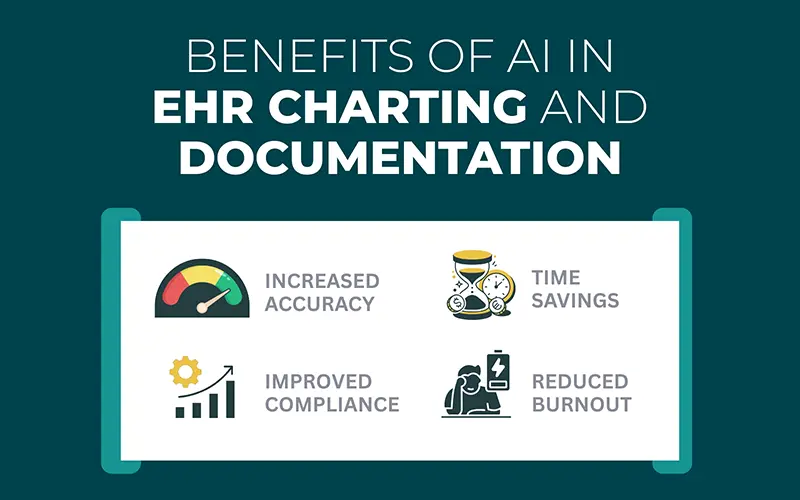
Benefits of AI in EHR Charting and Documentation

  1. Real-Time Clinical Documentation

    AI tools for efficient patient charting in hospitals typically use ambient sensing and advanced natural language processing (NLP) to create real-time notes during patient-provider conversations, promoting physician focus on direct patient care. Often called an AI medical scribe, the technology listens to the physician-patient dialogue, processes information for orders and prescriptions, and automatically generates detailed, structured notes for the patient’s EHR. What takes hours when done manually takes just minutes with AI. AI assistants can reduce a physician’s time spent on documentation by up to 70%, according to a 2023 Google Scholar article.

  2. Seamless EHR Integration for Physician Workflow Optimization

    AI transcription and AI scribing tools seamlessly integrate with EHR systems to automate clinical documentation, improve efficiency, and reduce administrative burdens for healthcare providers. By eliminating the need for manual data entry, this integration streamlines workflow and leads to faster access to updated patient records for the entire care team.

    The system structures the information into a clinical note, often using templates like the SOAP (Subjective, Objective, Assessment, Plan) format. The structured note is sent to the EHR via secure channels, ensuring data security and compliance with HIPAA and other regulations. The transcribed data automatically populates the appropriate sections of the patient’s record. This can include pulling in relevant information like medical history or lab results.

  3. Reduced Administrative Burden

    Excessive documentation is a major driver of physician burnout. AI-powered tools help ease this burden by automating clinical note generation, allowing physicians to focus more on patient care. Rather than spending hours on manual EHR data entry, providers can now simply review, make quick edits, and sign off on AI-generated notes directly within the EHR, enhancing efficiency, job satisfaction, and retention. One study found that clinicians using speech recognition (SR) completed their documentation in just 5.11 minutes on average, compared to 8.9 minutes when using traditional typing methods.

  4. Error Detection

    AI in EHR documentation enhances accuracy and compliance by automatically identifying inconsistencies, missing details, or potential coding errors. For instance, when a physician documents a patient visit and notes a diagnosis of Type 2 diabetes, the AI system may flag a possible issue-detecting an ICD-10 coding mismatch based on the note’s content and suggesting a more precise code. This proactive error detection ensures clinical accuracy, supports proper reimbursement, and maintains adherence to documentation standards.

  5. Alerts and Predictions

    Traditional EHRs generate alerts based on preset rules when patient data meets specific criteria, often requiring manual review. AI-powered predictive models go a step further by analyzing vast amounts of data to detect subtle patterns that indicate potential risks. These systems can identify high-risk conditions, such as sepsis or heart failure before symptoms become severe. This enables earlier intervention, improved outcomes, and more efficient patient management.

  6. Enhanced Patient Care

    AI-powered healthcare documentation enhances patient care by freeing physicians from time-consuming documentation tasks and enabling them to focus more on direct patient interaction. By accurately converting voice recordings into structured clinical notes in real time, AI ensures that patient information is captured comprehensively and promptly. This leads to better-informed clinical decisions, fewer errors, and more coordinated care. AI transcription tools also support continuity of care by allowing every member of the healthcare team to access up-to-date patient records, driving better outcomes and patient satisfaction.

  7. Flawless Transcription Anywhere

    From emergency rooms to operating rooms, these advanced AI transcription systems are designed to perform accurately even in the most challenging clinical environments. Whether it’s a busy emergency room filled with background noise or an operating theater with multiple speakers, these tools can distinguish voices, filter out ambient sounds, and transcribe conversations with exceptional clarity. This ensures that no critical detail is lost, supporting precise, real-time documentation and helping clinicians maintain complete and reliable medical records in high-pressure settings.

  8. Accurate and Reliable Medical Records

    AI in EHR documentation enhances both the quality and reliability of clinical documentation. AI transcription helps ensure that patient records are both accurate and complete. By using advanced SR and NLP, these tools capture every clinical detail from physician dictations with exceptional precision. They minimize errors caused by manual entry or missed information, producing thorough and structured documentation. Accurate, complete records not only support better diagnosis and treatment decisions but also improve communication among care teams and strengthen compliance with regulatory standards.

Why Medical Transcription Outsourcing Remains Significant

While AI offers promising advancements to improve and speed up clinical documentation, it is not without challenges. Even AI systems with high accuracy rates, can make mistakes in medical transcription, ranging from simple errors to serious ones.

AI voice-to-text dictation can struggle with accents or complex medical terminology. Here are some examples:

  • AI may transcribe a word with a different meaning that sounds similar to the one that was spoken. One AI reportedly mistook “MRI imaging” for “hemorrhaging,” creating serious errors.
  • AI can struggle with medical jargon and abbreviations, potentially recording them incorrectly. A physician dictates: “The patient presents with choledocholithiasis and underwent ERCP with sphincterotomy and stone extraction. AI may misinterpret sphincterotomy” and “stone extraction” depending on accent, background noise, or speech rate. AI might also mix up drug names.
  • Unlike human scribes who can interpret the subtle nuances of a conversation, an AI may fail to capture key contextual information, such as the intent behind a statement or significant non-verbal cues.

Because of the potential for such mistakes, editing is essential for accuracy. That’s why even with the growing adoption of AI transcription, provider partner with expert human transcriptionists.

Human transcriptionists play a critical role in reviewing, editing, and ensuring the accuracy, context, and clinical integrity of notes drafted by AI tools. Partnering with a technology-driven medical transcription company allows healthcare providers to benefit from the speed of AI with the precision of human expertise, reducing errors that automated systems alone might miss. This allows them to manage fluctuating documentation volumes efficiently, ensure compliance with HIPAA and other regulations, and maintain consistent quality without overburdening in-house staff.

In short, the human-AI medical transcription partnership delivers the best of both worlds: speed, scalability, and superior accuracy.

Simplify your EHR documentation.

Streamline your workflow and reduce physician burnout.

Talk to our experts today!

EHRs Leading to Health IT Related Stress and Burnouts among Physicians, Finds JAMIA Study

Healthcare organizations are now committing to health IT suite such as electronic health records (EHRs) to ensure patient satisfaction and succeed with value-based care initiatives, quality improvement, and other business objectives, that can help their progress. EHR allows physicians to exchange secure messages with patients and patients can also view, download and transmit their online medical record. Common EHR systems are web/cloud-based, and on-premise. EHR-integrated medical transcription services are also assisting practices in maintaining up-to-date, accurate medical documentation. However, stress related to Health IT products is a major concern for physicians. A recent study published by the Journal of the American Medical Informatics Association (JAMIA) has proven that stress related to use of health information technology (HIT) like EHRs predict burnout among physicians.

EHR

The team surveyed 4197 practicing physicians in Rhode Island in 2017 on their HIT use, of which 1792 physicians responded. HIT-related stress was reported mainly due to reasons such as poor/marginal time for documentation, moderately high/excessive time spent on the electronic health record (EHR) at home and agreement that using an EHR adds to daily frustration.

Highlights of the report include:

  • From the 43% response rate, 26% reported burnout
  • Among 91% EHR users, 70% reported HIT-related stress, with the highest prevalence in primary care-oriented specialties
  • Physicians reporting moderately high/excessive time on EHRs at home had 1.9 times the odds of burnout, compared to those with minimal/no EHR use at home
  • Those who agreed that EHRs add to their daily frustration had 2.4 times the odds of burnout, compared to those who disagreed

The study concluded that HIT-related stress is measurable and common (about 70% among respondents), specialty related and independently predictive of burnout symptoms. Identifying these HIT-specific factors related to burnout can help healthcare organizations seeking to measure and remediate burnout among their physicians and staff.

EHR Market Still Growing

Even though studies report most physicians are not happy with their EHRs, the increasing need for advanced healthcare information systems, growing investments by healthcare IT players, rising demand for better healthcare facilities, and increasing government initiatives are still driving the global electronic health record (EHR) market, according to a market report from P&S Market Research. This report predicts the market will attain a size of $30.4 billion by 2023. Owing to increasing adoption of these solutions by healthcare providers and insurance companies for easy accessibility of patients’ health records, web/cloud-based electronic health records are expected to witness faster growth, with a CAGR of 6.6% during the forecast period 2013-2023.

Reports from Health IT Dashboard highlight that in 2015, 64% of physicians had an electronic health record (EHR) with the capability to exchange secure messages with patients, 63% of physicians had the capability for their patients to electronically view their medical record, 41% had the capability for patients to download their medical record, and 19% had the capability for patients to electronically send (transmit) their medical record to a third party.

Consider EHR Optimization

EHR optimization or EHR replacement is a great option for healthcare entities looking to dramatically improve their clinical and administrative processes through health IT use. Launching such an optimization project after implementation could help restore clinical efficiency, improve physician satisfaction, and reduce administrative burden on providers.

Read our blog on how EHR optimization can help reduce physician burnout.

Certain EHR optimization activities include reducing information overload in physician notes and incorporating new EHR note designs into commercial EHR systems, specializing clinical workflows to help users more easily navigate EHRs, as well as integrating new health IT tools and modules that can improve clinical processes and care delivery. To a great extent, medical transcription outsourcing can help physicians manage their burdensome EHR documentation tasks and thus reduce stress.

In our next blog, read about how Artificial Intelligence can make EHR documentation painless.

  • KEY FEATURES

    • 3 Levels of Quality Assurance
    • Accuracy Level of 99%
    • All Specialties Covered
    • Competitive Pricing
    • Digital Recorder Dictation
    • Electronic Signatures
    • Feeds for EHR or EPM
    • HIPAA Compliant Service
    • Quick Turnaround Time
    • Toll Free Phone Dictation
    • Transcription Management Software
    • Volume Rates Available
  • RECENT BLOGS

  • Categories

  • Quick Contact


    • Infographics