 One of the biggest criterions for successful adoption of Electronic Health Record (EHR) is integration of medical transcription. Electronic health records are implemented in healthcare units to help physicians improve care provision and co-ordination but it poses real challenges and makes the entire consultation process tedious for both patient and physician. This is because many physicians feel that they spend more time typing rather than listening to their patients. When physicians are forced to change their habit of dictating patient details and instead struggle with EHR templates to input complex patient information, they find a lot of valuable time lost. The need to enter data into the EHR will also extend the patient’s visit and reduce eye contact. This can cause distress in patients and also distract the physicians from processing the information and obstruct their workflow.
While physicians can continue dictating notes and use a speech recognition system to transcribe the notes, it would require a human editor to make complete sense of the notes transcribed by the software. Now there is another interesting solution put forward.
- The physician can perform the consultation and a trained medical coordinator or a medical transcriptionist will perform data entry from a remote location, while securely listening to the entire physician-patient encounter.
- The data entered will be displayed in real time on a large monitor or iPad in the consultation room.
- The only thing the physician has to do is to review the data and authenticate. The medical coordinator will be in constant communication with the physician to correct any wrong details or uncertainties.
The medical coordinator can also perform other duties like calling nurse, accessing lab reports and make them available when necessary, inform the physician if a patient’s record is missing etc. This process will allow the physician to concentrate more on the interaction with patients and provide quality care to the patients.
It is best to appoint a medical transcriptionist as medical coordinator. This is because they are trained and have extensive knowledge about medical terminology and common clinical processes. This will reduce the chance of errors; moreover they require only minimum monitoring by physicians unlike staff that is untrained in listening to and transcribing physician notes.
Whatever may be the transcription requirements of a healthcare organization or entity, large volume or small volume, a reliable medical transcription company can provide customized solutions. They offer the service of staff that can function as medical transcriptionist, medical editor or medical coordinator, offering the best services to their clients. These services are the best alternative for healthcare providers wanting to focus on patient care, streamline medical documentation and enhance revenue.
 Dictating is an inseparable part of a physician’s functions. In fact, accuracy and timeliness in medical transcription depends on clear, error-free dictation by the healthcare provider. Even with electronic health records,
  With the advent of technology, the healthcare industry has undergone significant changes. However,
 Medical transcription is a labor- and time-intensive activity that requires trained and experienced medical transcriptionists. It is very much relevant in this contemporary EHR era also because many physicians prefer to dictate their notes as before and have it transcribed. Medical transcription companies have risen to the occasion by making available EHR integrated transcription.
 According to the Institute of Medicine of The National Academies, up to 100 million Americans suffer from chronic pain. Good documentation is crucial when treating chronic pain patients. The physician has to ensure accurate
 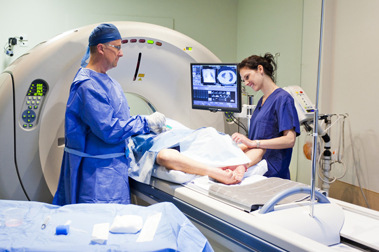 Along with reports on biopsy, blood tests and Positron Emission Tomography (PET),
  Medical transcription is the process of converting the dictations of healthcare professionals into a suitably formatted text record. It plays an important role in the medical documentation industry. However, with the advent of EHR or electronic health records, healthcare providers have the responsibility of filling up details in the patient’s EHR. This can cause a negative impact on the treatment provided and the way providers interact with their patients. Moreover, physicians may adopt short cut methods in order to save time. Improper or incomplete medical records demonstrate that the treatment was incomplete, reflect poor clinical care, leads to loss of reimbursement, and compromises on the safety of the patient. HIMSS EMR Adoption Model shows that 41.3% of healthcare providers have reached Stage 3 for the 3rd quarter of 2012. Only 7.3% have reached Stage 6 that includes structured templates and physician documentation. Inappropriate documentation can also result in legal issues. To prevent such problems, it is better to employ medical transcriptionists who will add value to the clinical documentation workflow. Now, physicians can conveniently utilize EMR integrated medical transcription services.
 With medical transcription outsourcing, doctors and hospitals are now able to streamline their functioning better. Such EHR-compliant solutions can help physicians and specialists to focus more on rendering care, which does improve overall patient satisfaction.