
Accurate and timely documentation is the backbone of quality orthopedic care. From evaluating sports injuries to planning joint replacements, orthopedic specialists handle large volumes of complex clinical data daily. Managing these records efficiently is essential not just for billing and compliance, but for ensuring seamless patient care and communication across multidisciplinary teams. That’s where orthopedic transcription services play a vital role.
Transcriptionists ensure accurate orthopedic medical records by converting physicians’ dictated notes into well-structured, accurate digital reports. In orthopedic practices, their role goes beyond improving documentation accuracy and workflow — it plays a key role in enhancing overall patient management.
The Documentation Challenge in Orthopedic Care
Orthopedic specialists manage diverse cases — fractures, arthritis, ligament tears, spinal conditions, and post-surgical follow-ups. Each encounter generates detailed notes that include physical assessments, imaging results, surgical details, and rehabilitation plans.
However, documenting all this manually can be time-consuming and error-prone. Physicians often have to juggle between patient interactions and recordkeeping, leading to delays, incomplete documentation, or missed details.
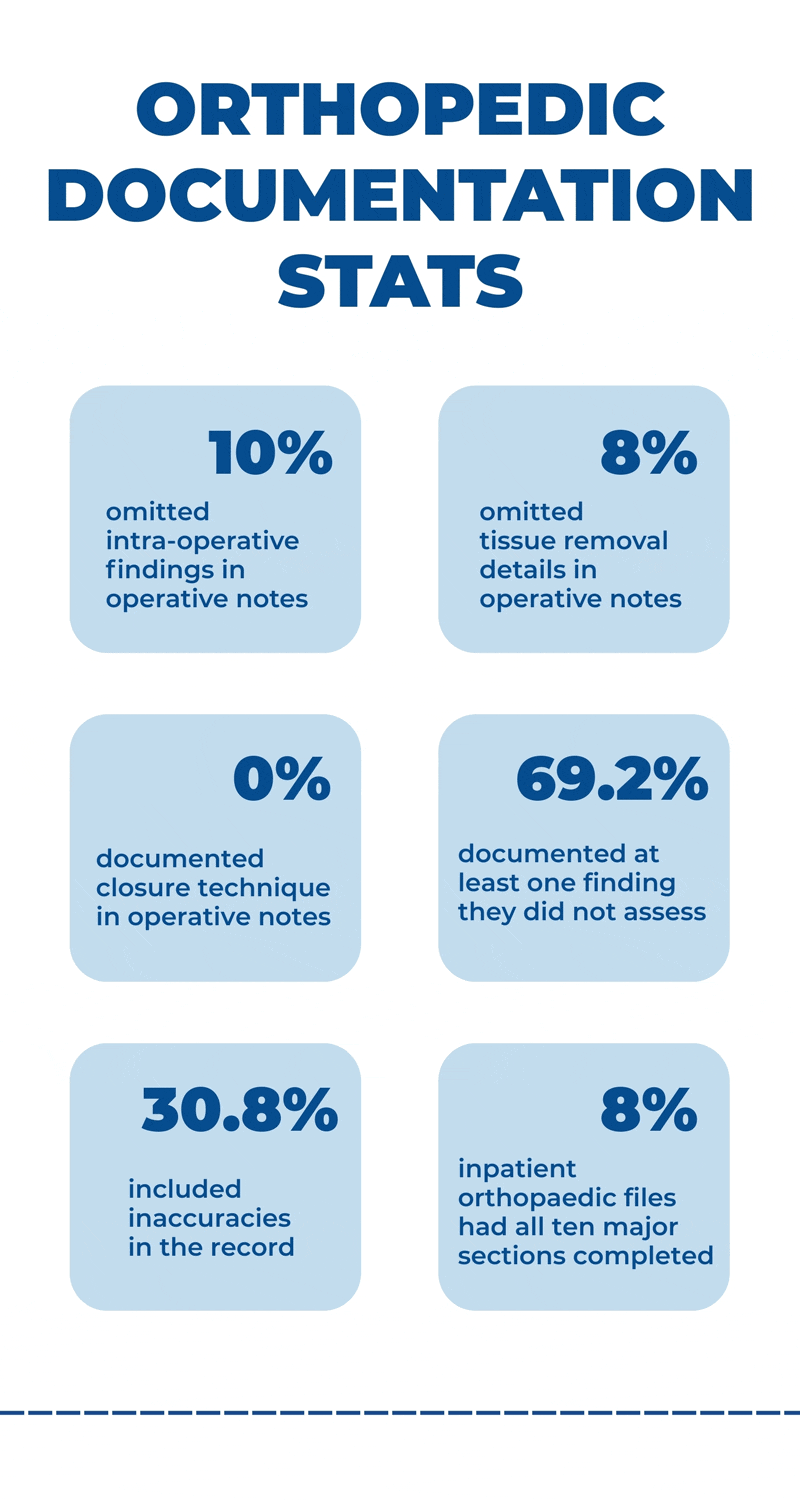
Several recent studies and reports highlight documentation challenges and opportunities in orthopedic practice. One PubMed study found that only 8% of inpatient orthopedic files had all ten major sections completed; and 51% had seven or fewer sections filled in. In another study, only 41.83% of notes included tourniquet time, and just 16.99% documented closure details (PMC).
Here are some orthopedic documentation issues highlighted in recent reports:
Without accurate records, continuity of care suffers, impacting treatment outcomes, follow-up scheduling, and insurance reimbursements.
How Orthopedic Transcription Improves Patient Care
Medical transcriptionists simplify and enhance the efficiency of the documentation process at every stage of patient management.
Here’s how it works:
- Enhances Accuracy and Consistency of Clinical Records
Professionals specially trained in orthopedic terminology ensure that each patient encounter is documented precisely. From dictations on musculoskeletal anatomy to implant details or physical therapy plans, accuracy is maintained throughout.
Precise orthopedic reports transcription reduces ambiguity in care instructions and ensures that other providers — surgeons, physical therapists, or primary care physicians — have consistent, reliable information for coordinated treatment.
- Improves Workflow Efficiency
Instead of spending hours typing notes or editing speech-to-text reports, physicians can dictate findings immediately after consultations or surgeries. Transcribed reports are quickly available in EMR/EHR systems, allowing seamless access across departments.
This saves valuable time, reduces administrative burden, and helps clinicians focus more on patient care rather than paperwork.
- Supports Better Decision-Making
Accurate clinical documentation make it easier to track patient progress over time. Orthopedic conditions often require multiple visits and long-term rehabilitation. Having clear, well-organized records allows physicians to compare past reports, assess healing trends, and make informed decisions about ongoing or future treatments.
- Facilitates Smooth Care Coordination
In orthopedics, patients may see multiple specialists — orthopedic surgeons, radiologists, physiotherapists, and occupational therapists. Transcribed reports ensure everyone involved in the care plan has access to the same, up-to-date information. This improves collaboration and minimizes miscommunication between teams.
- Enhances Regulatory & Legal Compliance
Orthopedic procedures often involve significant documentation, including consent forms, operative reports, and implant details — all of which must be precise and properly formatted. Proper orthopedic EMR documentation supports compliance with healthcare regulations such as HIPAA and ensures accurate records for insurance claims, audits, and legal cases.
- Improves Patient Experience
Patients benefit directly from efficient medical documentation, with benefits such as quicker scheduling of tests, follow-ups, and therapy sessions. Moreover, clear, accurate records help physicians explain diagnoses and progress in understandable terms, improving patient trust and satisfaction.
How Technology Transforms Orthopedic Documentation
Today, the focus is on streamlining orthopedic workflows through transcription technology. Modern medical transcription services leverage AI-driven speech recognition and natural language processing (NLP) tools to speed up turnaround times. However, human review is essential to maintain clinical accuracy, especially when dealing with specialized terminology or complex operative reports.
Orthopedic transcription and EMR integration further streamlines workflows, allowing automatic uploading of finalized reports and easy retrieval during follow-ups.
Customized Medical Records for Orthopedic Practices
Whether it’s sports medicine, trauma surgery, or spine care, each orthopedic specialty has its own documentation style and terminology. Leading medical transcription companies offer customized solutions such as:
- Professionals experienced in orthopedic EMR documentation
- Templates for operative, follow-up, and consultation reports
- Flexible dictation options (phone-in, mobile app, digital recorder uploads)
- Fast turnaround time
- Round-the-clock documentation support
- Stringent quality assurance
- Significant savings in overhead costs
- Secure, HIPAA-compliant data transfer and storage
Such tailored services meet each practice’s workflow requirements and enhance efficiency.
A technology-driven medical transcription company ensures that every diagnosis, surgical detail, and therapy note is properly documented — improving efficiency, compliance, and continuity of care. Clear, accurate, and accessible medical records support efficient patient management.