The healthcare industry is undergoing rapid digital transformation, and one of the fields most impacted is emerging technologies in medical transcription. As hospitals, clinics, and private practices handle enormous amounts of patient data, medical transcription services are evolving to meet modern demands. Today, new technologies transforming medical transcription services are reshaping the way transcription is performed. These advancements are not only improving speed and accuracy but also reducing costs, enhancing security, and integrating seamlessly into electronic health record (EHR) systems.
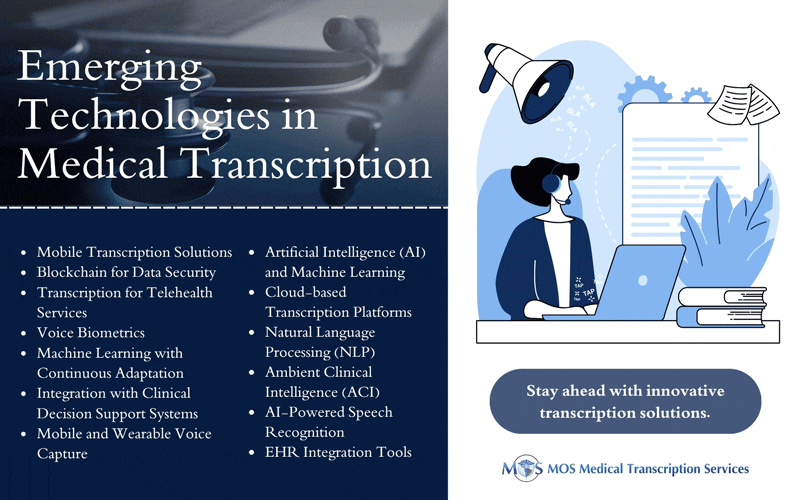
10 Emerging Technologies in Medical Transcription
- Artificial Intelligence and Machine Learning
Artificial Intelligence (AI) and Machine Learning (ML) are at the forefront of transcription innovations. AI-powered tools can recognize complex medical jargon, adapt to various accents, and even learn from repeated corrections. This leads to faster turnaround times, higher accuracy rates, and lower costs. However, challenges remain in ensuring AI understands context in nuanced medical narratives and maintains compliance with strict data privacy rules. These are some of the most impactful advancements in medical transcription in recent years.
- Cloud-Based Platforms for Flexibility
Cloud technology has transformed how providers access and manage transcription. Cloud-based platforms offer HIPAA-compliant storage, real-time collaboration, and scalability to handle fluctuating transcription needs. They also reduce IT expenses by eliminating the need for expensive on-site infrastructure. These healthcare documentation technology solutions play a crucial role in modernizing how patient records are created, stored, and accessed. Still, ensuring secure encryption and compliance with data protection laws like GDPR remains a priority.
- Natural Language Processing for Smarter Transcripts
The future of transcription in healthcare is being reshaped by advanced technologies like natural language processing (NLP), enabling faster, and more accurate, and context-aware documentation. NLP allows transcription systems to “understand” meaning rather than just transcribe words. By extracting vital details like diagnoses, prescriptions, or procedures directly from transcripts, NLP streamlines medical coding and billing. It also enables more precise data integration into EHRs, helping physicians make better decisions.
- Ambient Clinical Intelligence
Ambient Clinical Intelligence (ACI) is redefining the documentation process. These systems can automatically capture patient-provider conversations, extract important details, and integrate them into EHRs. This minimizes manual note-taking, giving doctors more time to focus on patients. While the technology boosts efficiency and accuracy, it also raises ethical questions around patient consent and privacy during background recording.
- Mobile Transcription Solutions
Mobile technology now makes it possible for clinicians to dictate notes from anywhere. Apps and wearables allow providers to record and transcribe on the go, reducing reliance on traditional dictation devices. This flexibility enhances work-life balance while improving efficiency. However, maintaining audio quality and ensuring secure transmission of sensitive data are critical considerations.
- Blockchain for Secure Data Management
Blockchain technology is emerging as a powerful tool for securing transcription records. Its immutable ledger ensures that every edit or access attempt is tracked transparently, strengthening data integrity. Blockchain also supports secure sharing of patient records across healthcare systems and automates compliance through smart contracts. Yet, challenges like scalability and regulatory approval need to be addressed before widespread adoption.
- Specialized Transcription for Telehealth
The rapid growth of telehealth has created demand for tailored transcription solutions. Services now include live captioning for virtual visits, integration with telemedicine platforms, and AI trained specifically on remote consultations. This ensures accurate documentation even when audio quality varies due to different patient settings. Reliable transcription also improves accessibility for patients with hearing impairments.
- Voice Biometrics for Added Security
Security concerns are being tackled with voice biometrics, which authenticate providers through unique vocal patterns. This prevents unauthorized access to sensitive transcripts and simplifies login processes for busy healthcare staff. Despite its benefits, the technology must adapt to voice changes caused by aging or illness, and balance usability with strict security requirements.
- Continuous Learning and Adaptation
Medical transcription systems now evolve continuously. Databases of medical terminology are regularly updated to reflect new treatments, procedures, and drugs. Machine learning models refine their accuracy based on user feedback, reducing manual corrections. While this adaptability enhances precision, it requires significant computing resources and careful monitoring to ensure consistent accuracy across healthcare environments.
- Integration with Clinical Decision Support Systems
When transcription data is connected with Clinical Decision Support Systems (CDSS), it transforms into actionable insights. Transcribed notes can trigger alerts for abnormal test values, suggest possible diagnoses, or flag potential drug interactions. This integration improves patient outcomes, reduces diagnostic errors, and enhances the value of transcription beyond documentation.
Why Human Expertise Still Matters
Despite the transformative impact of technology, human oversight remains essential in medical transcription. Automated tools can streamline processes, but they often lack the ability to fully understand context, tone, and complex medical narratives. Human intervention is crucial for maintaining quality, safeguarding patient safety, and complying with ethical standards. They bring critical thinking, adaptability, and subject-matter expertise that technology alone cannot deliver. Their intervention guarantees accuracy, safeguards patient safety, and ensures that transcribed records truly reflect the provider’s intent. This is why human expertise is essential in modern transcription, even as technology evolves.
The future of medical transcription services lies in a balanced integration of technology and human expertise. Innovations like AI, cloud platforms, and blockchain are transforming the industry, making transcription faster, more secure, and more accessible.
By embracing new technologies while valuing human skills, healthcare organizations can optimize efficiency, enhance patient care, and maintain the integrity of medical records.