
Radiology is central to modern diagnostics. Radiologists interpret images like X-rays, CT scans, and MRIs, assisting physicians in diagnosing illnesses, monitoring treatment response, and screening for diseases. Radiology transcription acts as the bridge between imaging findings and accurate clinical decision-making. A medical transcriptionist converts the radiologist’s dictated audio findings from medical imaging into a written report. These transcribed reports are crucial for documenting diagnoses, guiding treatment plans, and ensuring clear communication among healthcare providers.
The need to improve patient outcomes, enhance clinical decision-making, and manage increasing imaging volumes efficiently is driving the demand for fast, precise, and compliant radiology reporting. With AI-powered radiology transcription service workflows, radiologists can produce clearer, faster reports that directly enhance patient care and reduce diagnostic delays.
Why Radiology Transcription Matters More Than Ever
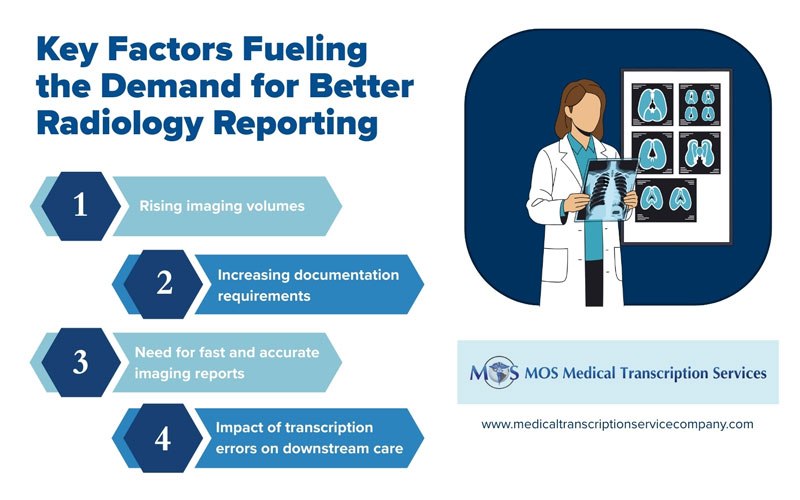
Several factors are fueling the need for efficient radiology reporting.
- Rising imaging volumes: An aging population and the rise in chronic diseases has resulted in high patient volumes and increased imaging volumes. Complex multidisciplinary workflows fuel the need for precise and timely diagnostic reporting, increasing the pressure on radiologists.
- Increasing documentation requirements: Diagnostic imaging documentation requires a complete report that includes patient data, clinical indications, study details, findings, and a radiologist’s impression to ensure accuracy, compliance, and correct coding.
- The need for fast and accurate imaging reports: The radiology report is a crucial communication tool that serves several purposes, from diagnostic interpretation to legal documentation. Fast and precise radiology reporting is essential for enabling timely treatment decisions, reducing medical errors, and enhancing the overall efficiency and quality of healthcare delivery.
- Impact of transcription errors on downstream care: Imaging reports drive critical clinical decisions—from selecting treatment plans and scheduling surgeries to ordering follow-up tests. Even minor transcription errors can produce inaccurate or unclear reports, increasing the risk of misdiagnosis, inappropriate interventions, or avoidable repeat imaging. When findings are not clearly expressed or logically structured, referring physicians may struggle to interpret the results, delaying care and undermining confidence in recommending the next steps of patient care.
Key Role of Radiology Reports in Patient Care
Efficient radiology dictation services streamline workflows, reduce wait times, and enhance communication.
Here’s how radiology transcription improves patient care:
Converts Radiologists’ Dictation into Structured Reports
An imaging transcripts is the formal written report created by a radiologist after reviewing images such as X-rays, CT scans, MRIs, or ultrasounds. It documents the patient’s clinical details, the type of imaging performed, and the radiologist’s interpretation of the findings. A structured, well-prepared report outlines any abnormalities, explains their significance, and often includes recommendations for further evaluation, follow-up imaging, or specialist referral. By ensuring clarity, consistency and completeness, these transcribed reports minimize ambiguities and enhances clinical communication, helping physicians and patients understand the underlying condition and determine the most appropriate next steps in care.
Supports Faster Diagnosis and Treatment
With AI-powered radiology transcription workflows, imaging centers can deliver fast, structured radiology reports. Quick turnaround enables timely clinical decisions, avoiding care delays in emergency, oncology, and trauma cases.
Enhances Continuity of Care across Teams
Detailed, standardized reports help physicians collaborate effectively. Timely radiology reports promote information flow across departments, improving treatment planning and patient care. Radiology transcription integration with EHR and PACS supports effective communication, which is pivotal for accurate diagnoses and seamless care coordination.
Boosts Coding Accuracy and Billing Compliance
Clear, complete imaging documentation gives coders the precise clinical details they need to assign the correct CPT and ICD codes. When the radiologist’s report clearly describes the reason for the study, the imaging technique used, anatomical location, number of views or sequences, and the final interpreted findings, coders can accurately capture both the service performed (CPT) and the underlying diagnosis or condition (ICD).
Well-structured reports eliminate ambiguity, reduce the risk of undercoding or overcoding, and ensure that each imaging service is billed and justified correctly. This level of documentation also helps reduce claim denials and rework, supports medical necessity, and strengthens overall revenue integrity for radiology practices.
Improves Patient Care and Safety
By enable early diagnosis, radiology documentation drives a more accurate, efficient, and coordinated care process and better clinical outcomes. Reduced follow-up errors and miscommunication prevent unnecessary tests or repeat imaging. Efficient radiology documentation solutions minimizes risks due to misinterpretation, improving patient safety.
How Modern Radiology Dictation Services Work
Modern radiology transcription blends advanced speech recognition with expert human review to produce fast, accurate reports. Radiologists dictate their findings directly into integrated PACS, RIS, or EHR systems, where AI-driven tools convert speech into text. Using structured templates for each imaging modality—such as CT, MRI, ultrasound, or X-ray—helps maintain consistency and completeness.
AI can:
- Pre-analyze studies and flag potential critical findings
- Identify and highlight suspicious regions in the images
- Accelerate reporting workflows for radiologists
The result is a streamlined workflow that reduces reporting time, minimizes errors, and delivers high-quality, clinically reliable radiology reports.
Though AI-driven documentation solutions enhance efficiency and accuracy, medical transcription services in the US combine speech recognition and human editing in radiology transcription to ensure that every final interpretation meets the highest standards of clinical safety and accountability.