Whether you’re a physician, nurse, or clinic administrator, you already know how much time goes into capturing patient notes. That’s why free medical transcription software has become such a game-changer for busy practices. While nothing replaces the expertise of professional medical transcription services, these tools can dramatically simplify day-to-day documentation, especially for small clinics and solo practitioners.
According to Fortune Business Insights, the global medical transcription software market is expected to increase from USD 2.92 billion in 2025 to an impressive USD 8.41 billion by 2032. In 2024, North America led the market, accounting for 45.49% of the total share.
When choosing from free medical transcription software, you should focus on tools that offer strong accuracy, basic HIPAA safeguards, and easy integration with your existing documentation workflow—without compromising data security or clinical efficiency. Let’s break down the top tools that help you work smarter, not harder.
5 Popular Free Medical Transcription Software
Finding the best free medical transcription software for clinics can make everyday documentation faster, easier, and more efficient. These tools offer practical features that support smooth workflows without adding extra costs.
Express Scribe
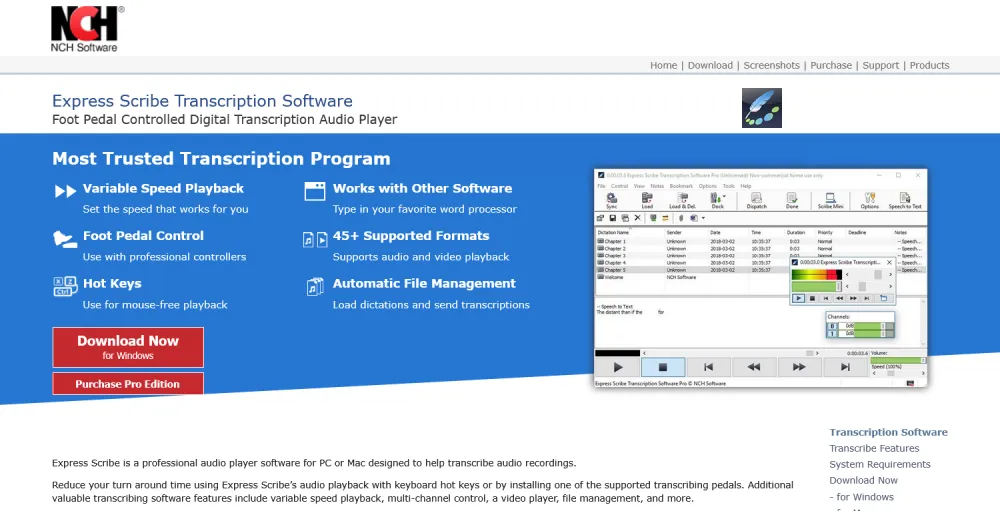
Express Scribe is one of the most popular free medical transcription software tools, especially for beginners. It offers efficient playback controls, including foot pedal support, variable-speed listening without pitch distortion, and customizable hotkeys to streamline your workflow.
The software supports common audio formats such as WAV, MP3, and WMA, making it easy to handle most clinical recordings. You can also integrate paid speech recognition engines if you want more automation.
While it doesn’t offer a long list of advanced features, Express Scribe provides a solid, reliable foundation for accurate medical transcription—perfect for anyone getting started.
InqScribe
InqScribe is another reliable tool that handles both audio and video files, making it useful for transcribing patient interviews, consultations, or educational recordings. It isn’t specifically designed for medical workflows, but it performs well in accuracy and ease of use.
Its timecode insertion feature is especially helpful when referencing specific moments during follow-ups or record reviews. For general transcription with room for detail, InqScribe is a simple but capable option.
FTW Transcriber
FTW Transcriber isn’t built exclusively for healthcare, but it delivers strong features that work well for medical documentation. It includes essentials such as foot pedal compatibility, adjustable playback speed, and personalized hotkeys. One standout feature is the ability to configure your own foot pedal setup for smoother, hands-free transcription.
A paid tier unlocks speech recognition tools for faster turnaround, but even the free version is user-friendly and suitable for basic transcription needs.
Lindy
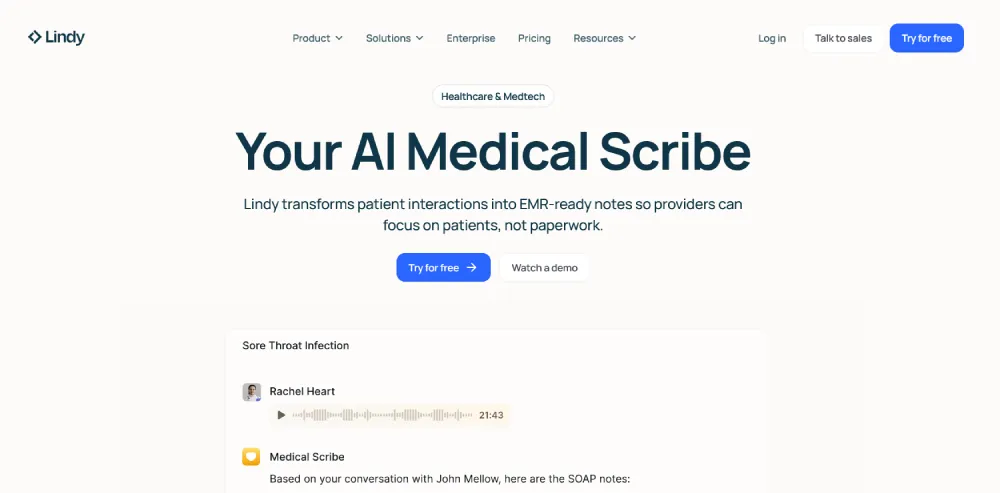
Although not traditionally free, Lindy earns its place for its cutting-edge AI transcription capabilities tailored to healthcare professionals. Lindy functions more like a smart assistant than a basic transcription tool. It listens, understands context, takes notes, and can automatically insert information into your EHR system.
It integrates smoothly with major EHRs like Epic, as well as tools such as Google, Zoom, and email. Lindy also learns your style, specialty language, and shortcuts over time, offering real-time charting suggestions and prepping routine tasks for your approval.
You can try it for free, making it a powerful option for clinicians seeking automation and accuracy.
ODIN
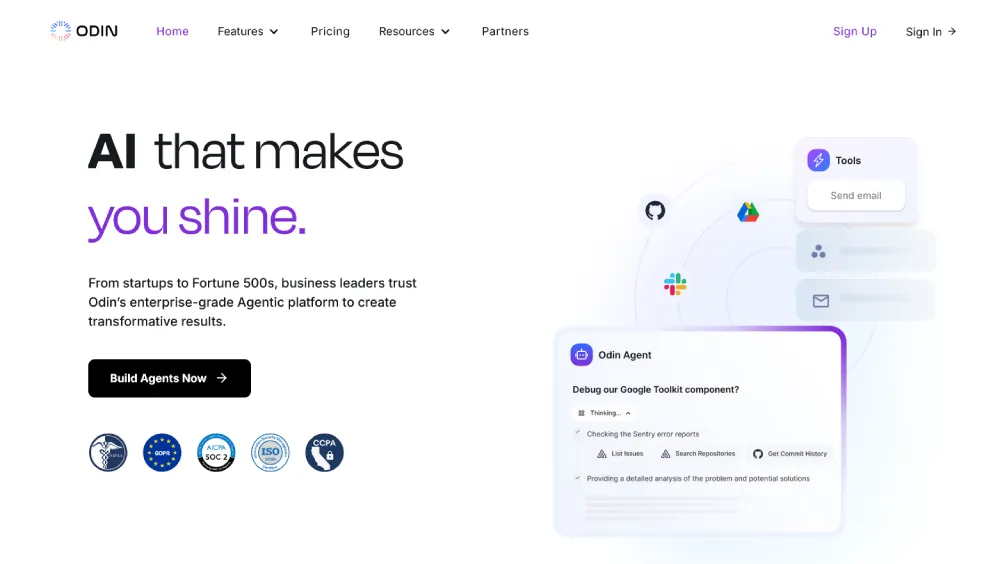
ODIN stands out for its AI-powered approach and strong focus on medical terminology. It includes extensive built-in medical vocabulary libraries to improve accuracy when dealing with clinical jargon. Users can also create custom macros to automate repetitive steps, boosting speed and consistency.
ODIN has an active support community, but it comes with a learning curve—and it isn’t fully free. You get 100 credits to start, after which it switches to a subscription model.
Is Free Medical Transcription Software Suitable for Clinical Use?
Today’s free medical transcription tools are surprisingly powerful, user-friendly, and ideal for managing everyday documentation tasks. Many of these tools now even integrate AI-powered transcription, helping speed up documentation, improve initial accuracy, and automate routine tasks. Choosing the right transcription solution is crucial for smooth clinical workflows, which is why many healthcare professionals wonder whether free software is truly suitable for clinical use.
At first glance, free tools seem appealing—they offer basic speech-to-text for healthcare and help reduce initial costs. For small practices with minimal documentation needs, they can even provide a temporary starting point. However, as a clinical setting becomes busier, the cracks start to show. Free software often struggles with advanced speech recognition, leading to errors that require time-consuming corrections. Security is another major concern.
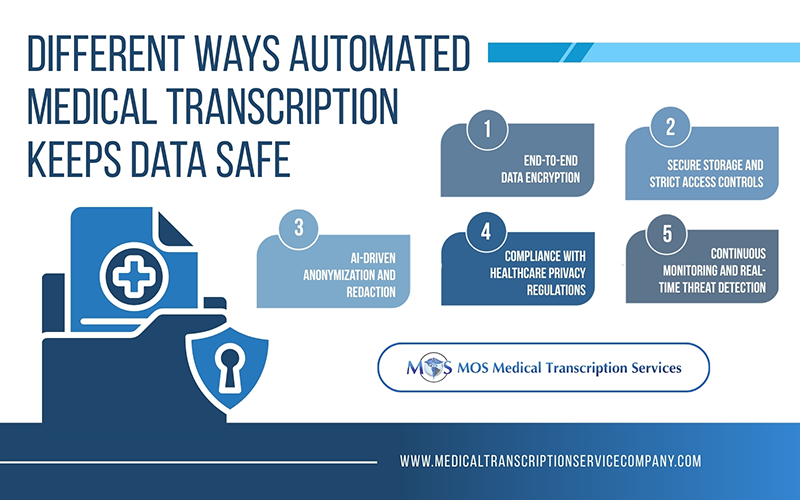
Many tools don’t offer the level of encryption needed to protect sensitive patient data. Using HIPAA compliant medical transcription solutions is essential to protect patient data. Additionally, integration is limited, making it difficult to connect these tools with essential systems like EHRs or telehealth platforms.
As documentation demands increase, free tools simply don’t keep up. Clinics need accuracy, reliability, scalability, and strong support—features typically available only in paid or professional healthcare dictation software.
Importance of Human Review when Using Free Transcription Tools
Ultimately, while free transcription tools can be a helpful starting point, they fall short for clinics that prioritize efficiency, compliance, and high-quality patient care. That’s why human review remains essential when using free medical transcription tools. Professional transcriptionists can catch clinical inaccuracies, ensure proper context, and maintain documentation quality and compliance standards. Associating with expert medical transcription services that use emerging technologies ensures unmatched precision and peace of mind. Professional teams bring deeper expertise, follow strict HIPAA protocols, and manage nuanced medical terminology that free tools may overlook.
Whether you rely entirely on free software or blend it with professional support, the goal remains the same: smoother workflows, cleaner documentation, and better patient care.