Physicians typically see between 25 and 30 patients a day, resulting in a workload that leaves little time for anything beyond direct patient care. Yet, accurate clinical documentation is essential for quality reporting, billing, and continuity of care. Many providers find that electronic health record (EHR) documentation takes up a significant portion of their day, impacting valuable face-to-face time with patients. Typing notes during consultations can reduce patient trust and impact the overall quality of care, while managing heavy caseloads increases the risk of burnout.
To balance these demands, many practices depend on medical transcriptionists to record findings from patient visits and assessments. However, handling documentation internally often brings a host of challenges, from transcription staffing issues and turnaround delays to higher operational costs. This is why more healthcare providers are rethinking their approach and turning to advanced medical transcription services for accurate, efficient, and cost-effective documentation support.
Let’s take a look at the challenges of managing in-house medical transcription teams and how partnering with a tech-enabled medical transcription company makes the difference.
In-house Medical Transcription Challenges and How External Partners Add Value
Below are 5 challenges that come with managing medical transcription in-house and the advantages of delegating the documentation task to an external provider:
Costs
For practices, managing transcription internally can be much more expensive than it seems. The cost of in-house medical transcription is quite substantial as it involves hiring, training, salaries, benefits, office space, equipment, transcription software licenses, data security measures, and ongoing supervision. Additionally, staff absences or turnover can increase administrative overhead and slow down documentation workflows.
Choosing a technology-enabled medical transcription service could ensure the same or better accuracy and faster turnaround with cost savings of 30–40%, without the added expenses of recruitment, HR management, or software maintenance.
Healthcare Documentation Efficiency
Accuracy is critical in medical documentation. Errors in patient notes, medication details, or diagnostic findings can lead to serious consequences, from billing denials to compromised patient safety. However, maintaining high-quality medical documentation is one of the biggest challenges of in-house transcription.
Workload pressure and the rush to meet tight turnaround times can lead to typos, missing information, or misinterpretation of dictations. Lack of advanced editing, standardized quality checks, and speech recognition tools can affect documentation consistency and precision. Many in-house setups do not have the resources for continuous quality monitoring. Over time, these documentation lapses can affect clinical decision-making, compliance, and even a practice’s credibility.
Professional transcription partners that use multi-tier quality assurance processes and AI-driven proofreading to prevent EHR data entry errors. Each transcript goes through a thorough review by experienced proofreaders and editors before it is delivered.
Patient Data Security
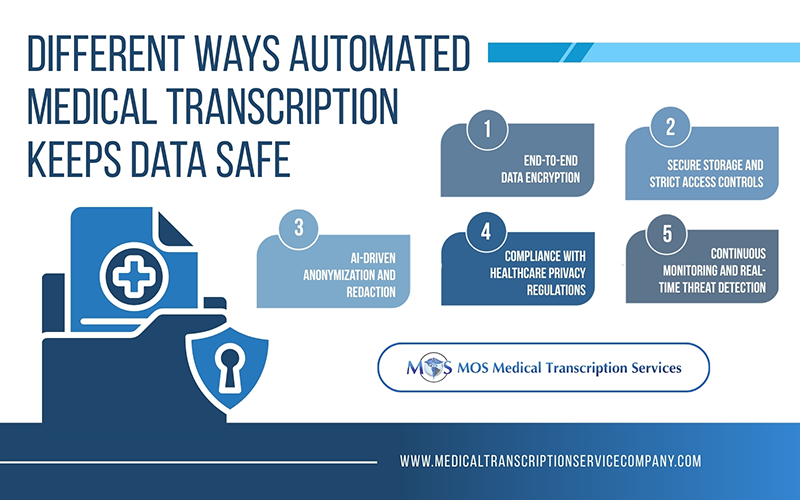
Data security is a major concern for healthcare providers managing transcription internally. In-house teams work with patient health information (PHI) stored across multiple local computers or shared drives, increasing risk of unauthorized access, data leaks, or accidental loss. Some practices allow their scribes to take work home or log in outside of the secured practice network.
Small practices may lack the IT infrastructure or expertise needed to implement end-to-end encryption, secure data transfer, access logs, and regular security audits, increasing risk of cyber threats. Without robust security protocols, even a simple lapse can expose sensitive patient data and lead to HIPAA compliance issues.
One of the key advantages of partnering with a reliable medical transcription vendor is the high level of data security and HIPAA compliance that they maintain. With encrypted data transmission channels, secure login portals, role-based access controls, and regularly updated firewalls, they ensure that every stage of the documentation process is secure and confidential. They also conduct periodic security audits and staff training programs to ensure compliance with evolving healthcare data privacy standards.
Turnaround Time
Managing transcription internally is impacted by factors like staff availability, working hours, and workload fluctuations, affecting the turnaround time of completed reports. Other factors that contribute to documentation delays include manual workflow bottlenecks, outdated transcription software, and lack of workflow automation. These issues can affect both patient care and administrative efficiency.
When multiple physicians dictate notes simultaneously or transcriptionists are absent due to illness or vacation, report turnaround can slow considerably. Consider a mid-sized orthopedic clinic with four physicians and two in-house transcriptionists. On a typical day, each physician dictates notes for 20–25 patients. With limited staff, the transcriptionists can only complete half of the reports by the end of the day, leaving the rest pending for the next 24–48 hours.
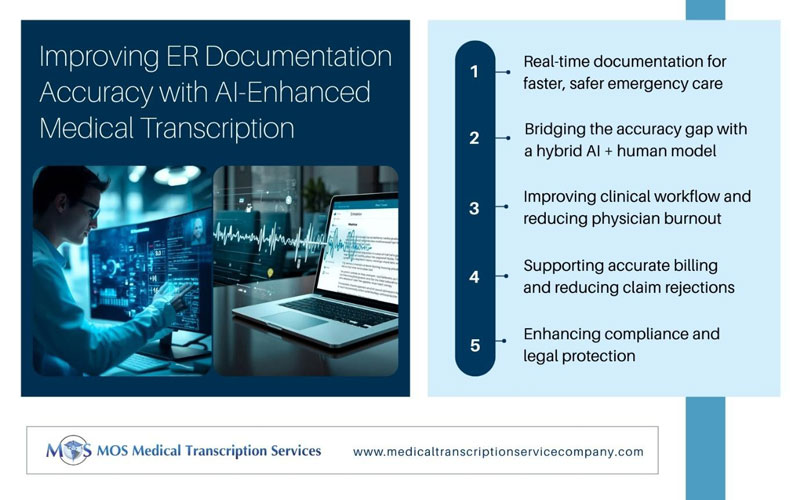
Unlike in-house setups, external vendors have dedicated teams and scalable resources, allowing them to manage high transcription volumes without compromising accuracy or delivery speed. Leading vendors leverage AI-assisted speech recognition and automated workflow management systems that streamline the transcription process, cutting turnaround time significantly while maintaining quality assurance through human review. For physicians, this means faster access to accurate clinical documentation, timely updates to patient records, and improved continuity of care. In the situation mentioned above, a technology-enabled external transcription service with a scalable team can complete all patient reports within 12–24 hours, ensuring timely documentation, faster billing, and uninterrupted patient care.
Focus on Patient Care
When physicians or staff spend significant time managing or performing in-house transcription tasks, they have less time for direct patient interaction.
In-house transcription can affect care due to delays in updating patient records. Late or incomplete documentation may affect clinical decision-making, coordination among care teams, and timely follow-ups. Errors or omissions in notes can further compromise patient safety, especially when multiple providers are involved in treatment planning. Additionally, the stress and workload pressure associated with in-house transcription can contribute to physician burnout, which studies show negatively impacts patient satisfaction and outcomes.
By partnering with technology-enabled external transcription services, physicians can ensure accurate, timely, and complete documentation and focus on what matters most: patient care and clinical decision-making.
Focus on Patient Care: Partner with a Reliable Medical Transcription Service Provider
In-house medical transcription poses a variety of challenges for healthcare providers, from high operational costs and staffing issues to delays, documentation errors, and security concerns. These obstacles don’t just affect your administrative efficiency, but also impact patient care, your productivity, and revenue cycle management.
Many practices are now rethinking their approach and turning to technology-enabled transcription services. By partnering with an external medical transcription service provider, you can benefit from faster turnaround times, improved accuracy, secure handling of patient data, HIPAA-compliance, and reduced clinical documentation burden. By improving clinical documentation accuracy and speed, their value-added support allows you to focus on what matters most: delivering high-quality patient care.