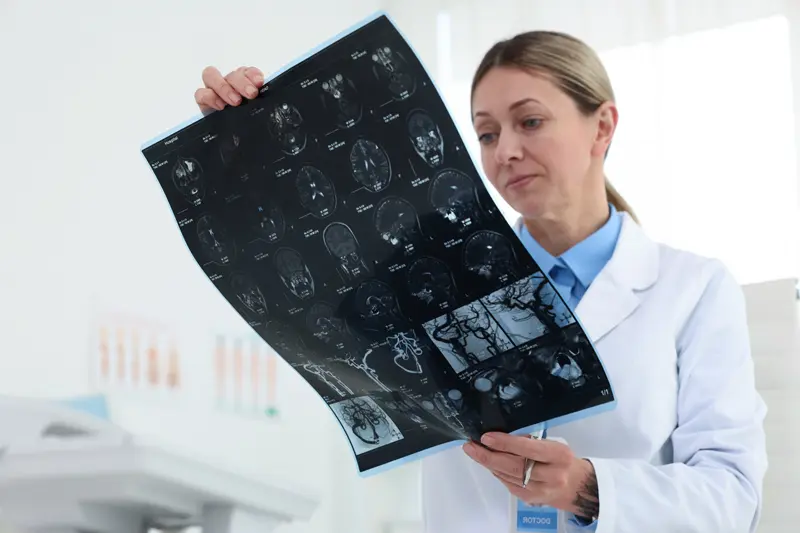
A well-crafted radiology report is essential for effective communication between radiologists and referring physicians. It serves as an essential guide for patient care by summarizing image capture, providing a clear interpretation, and offering meaningful observations and recommendations. Radiology transcription services support this process by ensuring that findings from imaging studies are documented accurately and made easily accessible for clinical decision-making.
So, what makes a good radiology report?
Key Components of a Comprehensive Radiology Report
Standard patient imaging reports have the following components:
- Patient and Exam Information – Includes patient demographics, referring physician, exam date, and type of study performed.
- Clinical History / Indication – Brief summary of symptoms, relevant medical history, and reason for the study.
- Technique / Imaging Protocol – Details of how the study was performed, including modality, contrast use, sequences, and any limitations.
- Comparison Studies – Notes about prior imaging used for comparison, if applicable.
- Findings – Clear, structured description of observations, organized by anatomical region; free of ambiguity and unnecessary technical jargon.
- Impression / Conclusion – Concise summary of key findings, most likely diagnosis, and differential diagnoses if needed.
- Recommendations – Suggested follow-up imaging, clinical correlation, or next steps in patient management.
Top-quality radiology reports play a vital role in how radiologists communicate findings to physicians, ensuring that critical details are conveyed clearly and support timely clinical decision-making.
Characteristics of Top-Notch Radiology Reports
Understanding what makes a high-quality radiology report is essential for ensuring clear communication, accurate diagnosis, and seamless collaboration between radiologists and referring physicians.
- Accuracy
A radiology report must accurately describe the findings observed in the imaging study. This includes precise measurements, correct identification of abnormalities, and the use of appropriate medical terminology. Every word matters because radiologists need to communicate key details clearly and concisely so that clinicians can make informed decisions.
- Clarity
Reports should be easy to read, understand, and grasp. Radiologists must use widely accepted and well-defined terminology and clear language that referring physicians can follow. Proper grammar, correct spelling, descriptive wording, and logical flow are all essential.
To ensure clear diagnostic impressions, radiologists must avoid noncommittal words and phrases and reduce ambiguity by avoiding vague terms such as “evidence of” unless they are truly warranted. For e.g., instead of “no evidence of pneumothorax” (which implies it might be present but not seen), state “no pneumothorax”. Terms like “appears,” “concerning,” “significant,” or “overt” should be avoided. Additionally, using active voice offers better clarity and conciseness. Improved readability directly enhances patient care.
- Organization
A well-structured report uses clear headings and subheadings and includes key elements such as patient information, imaging technique, findings, and impressions.
According to the American College of Radiology (ACR) handbook for residents, a standard report contains six sections: examination, history/indication, technique, comparison, findings, and impressions.
Typically, a report begins with objective findings, then presents possible differential diagnoses and management suggestions.
- Descriptive but Concise
The findings section should thoroughly assess relevant anatomy or pathology and describe any incidental findings with clinical significance. The goal should be to provide brief, informative statements about both normal and abnormal findings while avoiding redundancy, over-interpretation, or overly subjective terms.
Clearly labeling benign or insignificant findings helps prevent unnecessary concern among patients when they access their reports through online portals.
- Contextualization
Radiology findings should be interpreted alongside the patient’s history, symptoms, and prior imaging to ensure the report is clinically meaningful and supports an accurate diagnosis.
- Consistency
Reports should follow a consistent structure, use clear terminology, and adhere to established guidelines so that different healthcare providers can easily understand and compare findings over time. Radiologists should clearly distinguish between observations and inferences and use abbreviations carefully to avoid confusion. Standardized radiology templates further support consistency, reduce ambiguity, and make the reporting process more efficient.
- Timeliness
Timely report delivery is essential-especially for urgent cases. Many facilities have defined turnaround time expectations. Partnering with a radiology transcription service can help deliver accurate reports from X-rays, CTs, MRIs, ultrasounds, and other imaging studies within the required time frame. Prompt reporting supports efficient clinical decision-making and patient management.
- Use of Images
Including relevant images or annotated screenshots can enhance understanding, particularly in complex cases. While many reports are created in standard word-processing software, embedding clear images with proper contrast-and labels or arrows when necessary-can aid both referring physicians and patient education.
- Conclusion and Recommendations
A strong report ends with a clear summary of the findings and specific recommendations for follow-up evaluation or treatment. This guidance helps referring physicians make appropriate clinical decisions.
Boost Radiology Workflow Efficiency with Expert Documentation Support
The radiology report is both a legal and medical document that communicates the essential findings of an imaging study. Before dictating the report, radiologists must have a clear idea of the information they intend to convey. Working with a specialized medical transcription company that integrates AI with human transcriptionists specialized in radiology transcription can ensure precise and timely reports-helping clinicians reach diagnostic conclusions and plan patient care effectively. Radiologists should also remain available to collaborate with referring physicians, address questions, and provide further clarification when needed.